You Were Paid Yesterday. What Happened?
Why does your salary disappear so quickly? Explore the everyday spending habits, financial pressures, and small expenses that can turn ₦150,000 into a mid-month money crisis.
Loading...

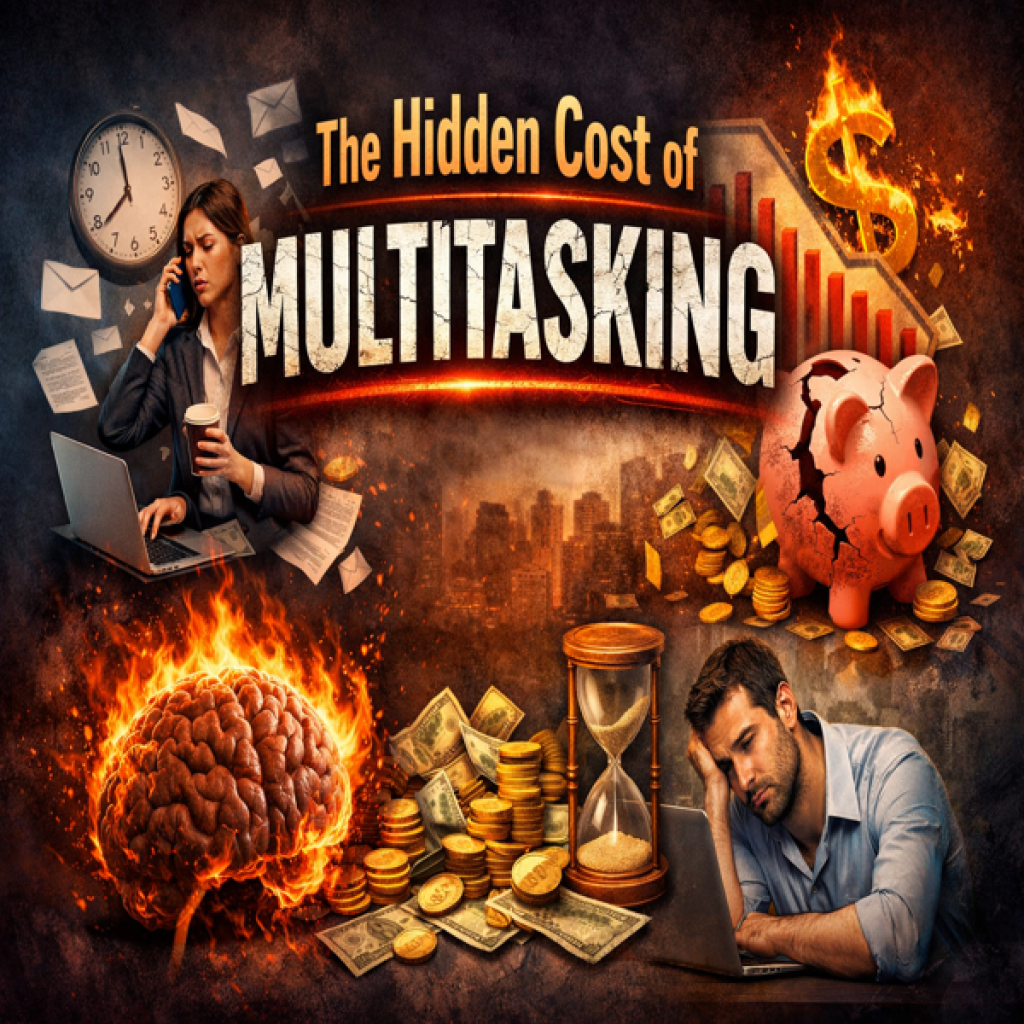
Multitasking feels productive but it’s costing you more than you think. Learn the science behind distraction and how to fix your focus for better results. Discover how it reduces productivity, drains focus, and affects your income, and learn simple strategies to stay focused and earn more.
Table of contents [Show]
Let’s be honest right now, you probably have at least seven tabs open on your browser. One of them is a YouTube video you paused three hours ago, another is a half-finished email staring at you accusingly, and your phone is sitting right next to your mouse, glowing with notifications and a tiny alarm bell that refuses to stop ringing.
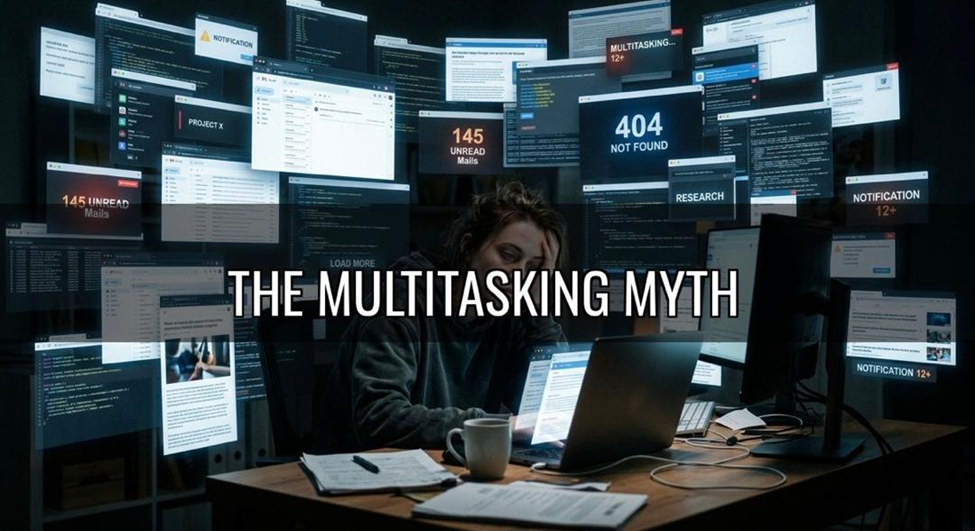
We call this being productive. These days, multitasking feels like something to brag about. We’ve almost convinced ourselves that if we’re not doing three things at once, we’re not keeping up.
But let me ask you a question. Have you noticed that the more you multitask, the more completely fried and exhausted you feel at 5:00 PM? Have you noticed that you’re working harder and faster than ever, but the big, important stuff, the projects that move the needle in your life or career never seem to get finished?
That’s because multitasking is a massive, culturally accepted lie. It’s not a superpower; it is the fastest way to wreck your focus. Today, we are going to talk about why your brain is struggling, the hidden science of distraction, and how to literally do one thing at a time again without feeling like you're missing out.
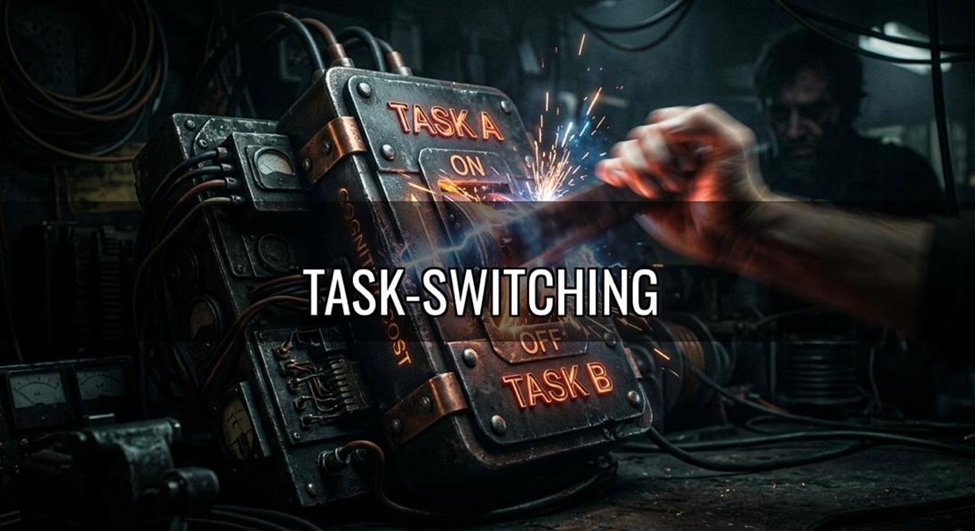
Sure, you can walk and chew gum at the same time. Though let’s be honest, some of us still trip doing that. But for anything that actually requires thought, your brain can focus on only one high-level task at a time. So, when you think you’re multitasking, like answering a Slack message while listening to your boss on Zoom, you’re not really multitasking. You are task switching.
Your brain is basically flicking a switch. Work. Phone. Work. Phone. Zoom. Email. And back again. Just the thought of this sounds exhausting.
Every single time you flick that switch, your brain will have to reload the context of what you were doing. Imagine trying to write a heartfelt letter, but every thirty seconds, someone walks into the room and forces you to solve a math equation. You have to stop, do the math, and then look back at your letter and think, "Wait, what was I trying to say here?"
That "where was I?" moment is what's killing your productivity. Scientists call this the "Switching Cost." Think of it like a tax you pay to your brain every time you change focus. This cognitive tax can eat up to 40% of your productive time every single day. It’s not that you work slowly but that your brain keeps hitting pause, and every restart takes extra time.
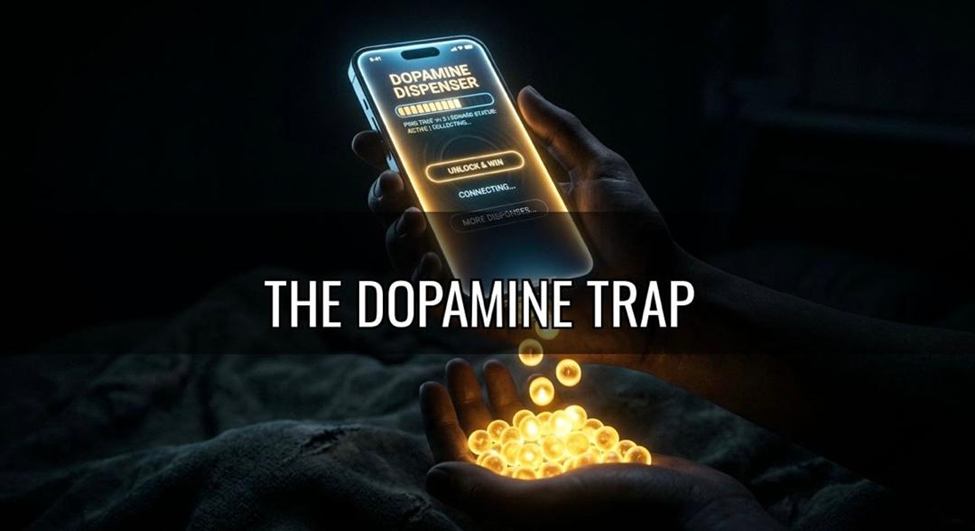
So, if task-switching is so exhausting, why is it so hard to just stop? Why do we reach for our phones the exact second they buzz, even when we’re in the middle of something incredibly important?
It’s because our technology is engineered to be a dopamine vending machine. Dopamine is a neurotransmitter in your brain that essentially acts as a reward centre. It’s the chemical that says, "Heck yes, that felt good, do it again."
Every notification like on Instagram, a text from a friend, a "breaking news" alert gives your brain a tiny, artificial hit of dopamine. It feels good like you are making progress or being needed.
Your brain doesn't care if the task was important. It just likes the "ding." Over time, we become literally addicted to that stimulation. We even start "self-interrupting." Have you ever been working on a project, and for absolutely no reason at all, you just pick up your phone and start scrolling? You didn't even get a notification! Your brain just got bored for two seconds and went looking for its next hit of dopamine.
We’ve trained our brains to have the attention span of a caffeinated goldfish. We’ve forgotten how to be bored, and because we’ve forgotten how to be bored, we’ve forgotten how to deeply focus.
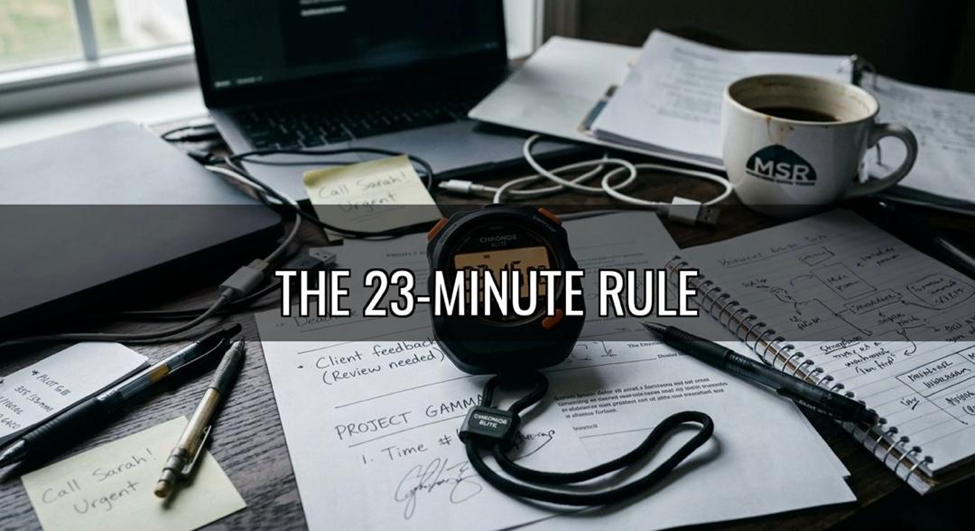
There is a famous study from the University of California, Irvine, that found a terrifying statistic. It takes an average of 23 minutes and 15 seconds to get back to deep focus after an interruption.
Think about the math on that for a second. If you’re working on a big report, and you stop to quickly reply to a text message, you haven't just lost the 30 seconds it took to type the text. You’ve just set your brain's deep-focus mode back by over twenty minutes.
If you get interrupted by emails, co-workers, or your own phone just three times an hour, you are literally never reaching full speed.
It’s not that you don't have enough time in the day; it’s that your time is being sliced into tiny, unusable, fragmented pieces.
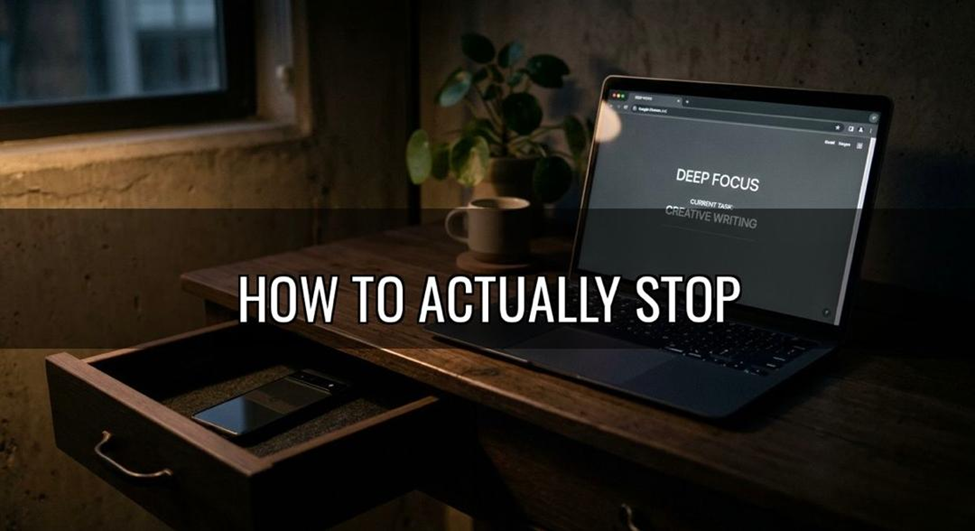
If you want to get your focus back, you don't need to move to a cabin in the woods or adopt a complicated 12-step productivity system. You just need to build some gentle boundaries to protect your brain from the noise. Here is how to do it:
The "One Tab" Rule: This is a total game-changer. For your most important task of the day, declare browser bankruptcy. Close everything else. No email tab, no Spotify (unless it's just instrumental white noise), and definitely no social media. If it’s not essential to the one thing you’re doing right now, it shouldn't be on your screen.
The Phone "Time-Out": If your phone is sitting face-up on your desk, your brain is actively burning energy trying not to check it. It’s like trying to stick to a diet with a warm box of Krispy Kreme donuts sitting open right under your nose. Put the phone in a drawer, in your bag, or in another room for just one hour. Give your brain permission to forget the internet exists for a bit. Out of sight, out of mind.
Batch Your Chaos: You don't have to be off the grid all day to be productive. Just stop being available every single second. Start your communication. (Think about laundry: you don't wash your socks one at a time the second you take them off. You wait and do them all in one batch). Check your emails and messages in batches once in the morning, once after lunch, and once before you log off. The world will not end if you take two hours to reply to a non-urgent Slack message.
Give Yourself a "Brain Break": When you finish a task, don't immediately jump into the next one. Stand up. Stretch. Go look out the window at a tree for two minutes. Let your brain reset and clear its cache before you start the next thing. This acts as a cognitive palate cleanser and prevents that "fried" feeling at the end of the day.

In 2026, we’ve effectively deleted the concept of nothing from our lives. We check our phones in elevators, while standing in line for coffee, at red lights, and even in the thirty seconds it takes for the microwave to heat up our lunch. (Remember the 90s, when we used to just read the back of the shampoo bottle in the bathroom? We used to know how to be bored!)
Your brain desperately needs those quiet moments.
Boredom is the birthplace of creativity. When you constantly multitask and fill every silent second with a podcast or a TikTok video, you are cramming so much noise into your head that there is absolutely no room for an original, creative thought to breathe.
Try this instead. Next time you’re waiting for something, don't reach for the phone. Just be there. Notice the people around you. Look at the architecture. Let your mind wander. It will feel incredibly awkward and itchy at first, but it’s the best physical therapy you can do for your fractured attention span.
You were built to do amazing, thoughtful, high-quality things, one at a time.
Stop trying to do everything all at once, and start doing the right things with your full attention. Your work will get better, your daily stress will plummet, and you might actually find that you have way more time in your day than you ever thought possible.
Sometimes, this affects our financial decisions as well, the feeling of wanting to achieve 10 different financial goals at a time, wanting to start 5 businesses at a time without finding time to deeply think through the process, we might think it through as multitasking, but we can always pick it up one after the other, not all at once giving the brain a task to focus and review the outcome of all at once.
Before taking that huge financial decision, you need to take a deep breath, and after a proper rest, give your brain quality time to reset, calculate, review, and go through a thorough thought process without interruptions the exact financial idea you have in mind. Same goes with work and daily planned activities.
Now, do yourself a favour: close your other tabs, put your phone in a drawer, and go crush your day.
Why does your salary disappear so quickly? Explore the everyday spending habits, financial pressures, and small expenses that can turn ₦150,000 into a mid-month money crisis.
Why do we spend money trying to look successful? Explore the psychology behind lifestyle spending, social pressure, and the hidden cost of looking financially fine.
Learn how credit scores work, why they matter, and practical steps you can take to improve your credit score and make borrowing more affordable.