You Were Paid Yesterday. What Happened?
Why does your salary disappear so quickly? Explore the everyday spending habits, financial pressures, and small expenses that can turn ₦150,000 into a mid-month money crisis.
Loading...

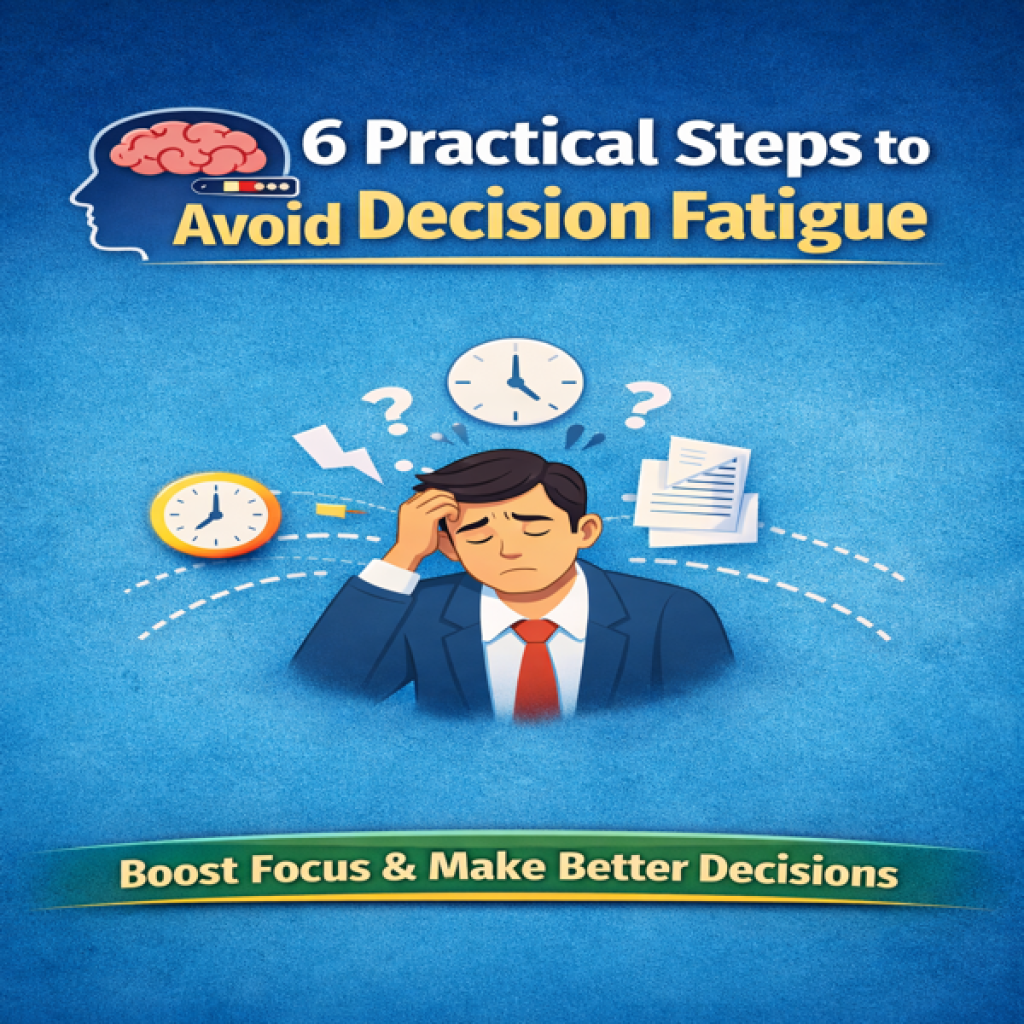
Are you constantly feeling mentally exhausted at work, struggling to make even simple decisions? You may be experiencing decision fatigue, a scientifically proven condition that affects your productivity, financial choices, and overall performance. Discover 6 practical, research-backed strategies to reduce mental overload, regain focus, and make smarter decisions throughout your day.
Table of contents [Show]
We’ve all been there. It’s 3:45 PM on a Tuesday, you’ve been staring at the same three rows in Excel for twenty minutes, and the numbers are starting to blur. Then a co-worker pops over or Slack messages you: “Hey, do you want the marketing sync at 10:00 or 10:30 tomorrow?
In a normal, rested state, this is a non-issue. But right now, your brain feels like an old laptop trying to run fifty Google Chrome tabs while simultaneously rendering a 4K video. The cooling fan in your mind is screaming. You can’t choose. You don’t care. At this point, you just want to close your eyes, slide under your desk, and pretend the concept of linear time doesn’t exist.
You might think you're just being lazy, or that you need another iced coffee. But what you are experiencing is a very real, scientifically documented psychological phenomenon.
It’s called Decision Fatigue.
If you want to stop feeling like a fried circuit board by your lunch break, you can't just try harder. You need a strategy that respects your human biology. Here is your comprehensive tour guide on how to beat decision fatigue and take your brain back.
What is Decision Fatigue?
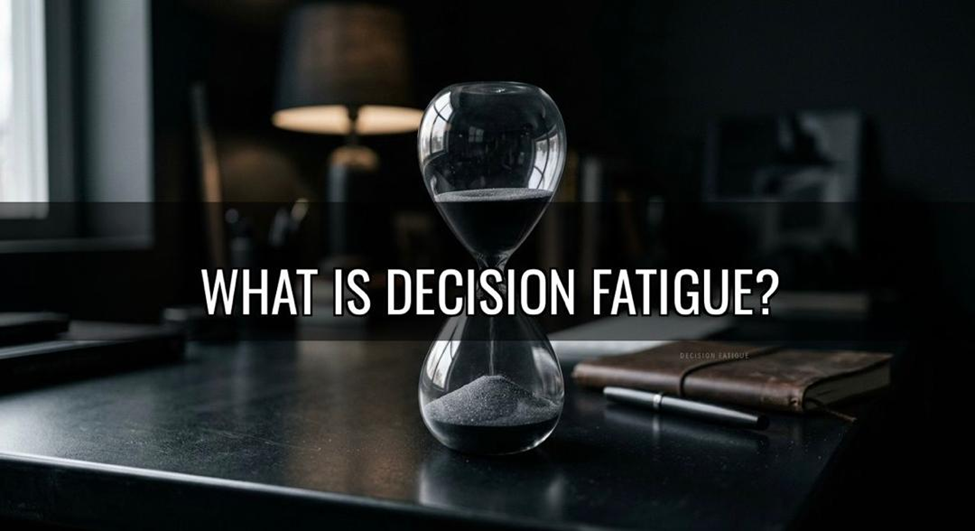
Decision fatigue is the mental exhaustion that occurs after making many decisions, which reduces your ability to make thoughtful, careful choices.
In simple terms, it’s when your brain gets tired from deciding too many things, so your decisions start to become weaker, rushed, or avoided.
In the modern knowledge economy, we aren’t usually paid for our physical, manual labour; we’re paid for our judgment. We are paid to think, to strategize, to solve problems, and to communicate. The thing nobody tells you during corporate onboarding is that judgment is a finite resource.
Think of your brain's decision-making capacity like the battery on your smartphone. You wake up at 100%. But every single choice you make from what colour to make a slide deck, to how to phrase a highly sensitive email to a grumpy client, to deciding what to eat for lunch drains that internal battery.
Psychologists call this "ego depletion." The part of your brain responsible for executive function and self-control (the prefrontal cortex) literally gets tired. By the time you get to the "big," important stuff in the late afternoon, you’re running on 2% power. Your brain enters power-saving mode, which means you either start making reckless, impulsive decisions, or you avoid making decisions altogether. So, what can be done about this?
Think about your typical morning for a second. From the exact moment your eyes open, you are pelted with a relentless barrage of tiny, annoying choices.
Should I hit snooze or get up? What should I wear today? Is it going to rain? Should I have the Greek yogurt or make oatmeal? Should I check my work email now, or wait until I have coffee? Which podcast should I listen to on the commute?
By the time you sit down at your desk and open your laptop, you’ve already made thirty to forty micro-decisions. You’ve used up a massive chunk of your daily judgment points on things that do not actually matter to your life or your career.
This is exactly why so many high performers from Steve Jobs with his iconic black turtlenecks to modern-day CEOs and creatives tend to wear the exact same outfit every day or eat the exact same breakfast. They aren't just boring, and they don't lack fashion sense; they are fiercely protective of their cognitive energy. It's known as practicing Decision Minimalism.
The most effective way to beat decision fatigue is to ruthlessly automate your morning. You want to put your first two hours of the day on autopilot.
How to do it
Create a few simple defaults so you don’t waste mental energy on tiny decisions. Prep the night before by laying out your clothes, packing your gym bag, and placing it by the door so your morning runs on autopilot. Have a go-to breakfast and lunch you eat most days, so you don’t have to think about it. And set a simple commute rule by choosing one playlist or audiobook for the week instead of scrolling through music for ten minutes in the driveway.
The goal is simple. Fewer small decisions mean more mental energy for the things that actually matter.

There is an old, slightly gross saying often attributed to Mark Twain: "If it's your job to eat a frog, it's best to do it first thing in the morning. And if it's your job to eat two frogs, it's best to eat the biggest one first."
In the modern office, your frog is that one task you are absolutely dreading. It’s the complex, messy, ambiguous project that requires the most intense brainpower. Let’s call it the proposal you need to write from scratch, or the difficult performance review you have to draft.
Because the frog is ugly and intimidating, most of us do the exact opposite of what we should do. We sit down at 9:00 AM, open our laptops, and decide to ease into the day.
We tell ourselves we’re getting settled or clearing the decks, but this is a trap called the Productivity Illusion. You feel busy, but you are actually spending your absolute peak mental energy on low-value, administrative tasks. By the time you finally turn your attention to the big, scary frog project at 2:00 PM, your decision-making tank is half-empty. You stare at the blinking cursor for ten minutes, get overwhelmed, and say, "I'll tackle this tomorrow." The strategy is simple but hard. Do your most complex task in the first 90 minutes of your day.
Do not try to scroll through vids. Your brain is at its absolute sharpest, most creative, and most resilient when you first wake up. Use that pristine clarity for the hard stuff. Save the mindless, repetitive emails for 3:00 PM when you’re already running low on steam and don't need peak cognitive function to type "Sounds good, thanks!"
Have you ever tried to pick a restaurant on a delivery app with your partner, scrolling past 500 different options for forty-five minutes until you are both so hungry and angry that you just eat cereal over the sink?
That exhausting feeling has a name. Psychologists call it the Paradox of Choice. We are conditioned to believe that having endless possibilities is a good thing, but the human brain hates it. When we have too many options, our brain locks up in analysis paralysis.
The exact same thing happens at work, both to you and to the people you communicate with. We think presenting endless data and possibilities makes us look thorough, but it just fatigues everyone involved.
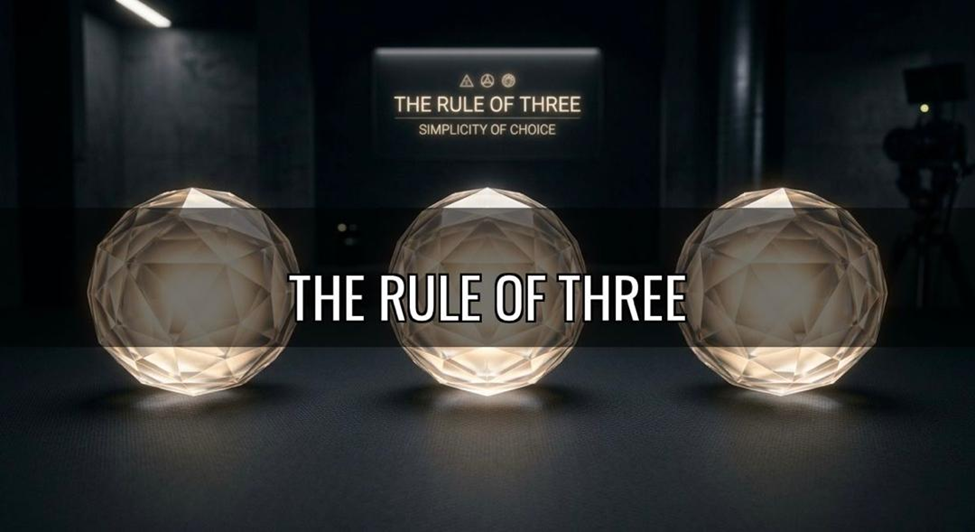
To fix this, you need to adopt the Rule of Three.
Whether you are presenting an idea to your boss, pitching a client, or trying to figure out a project path for yourself, never, ever give more than three options.
If you’re designing a logo, don't show the client twenty variations. Pick your top three.
If you’re scheduling a call with a busy executive, don't say, "When are you free next week?" Offer three specific time slots: "I can do Tuesday at 10, Wednesday at 2, or Thursday at 11."
If you are trying to solve a supply chain issue, bring your manager three potential solutions, with your recommendation on which one is best.
By artificially narrowing the field, you turn a massive, exhausting searching task into a simple selecting task. It is infinitely easier for the human brain to compare three things and pick the best one than it is to invent a solution from scratch out of a hundred variables. You will save your own energy, and your co-workers will love you for making their lives easier.
Think about how much mental energy you waste every single week on recurring, tiny, repetitive decisions.
Should I reply to this email now or later? Should I file this document or delete it? Should I accept this meeting invite?
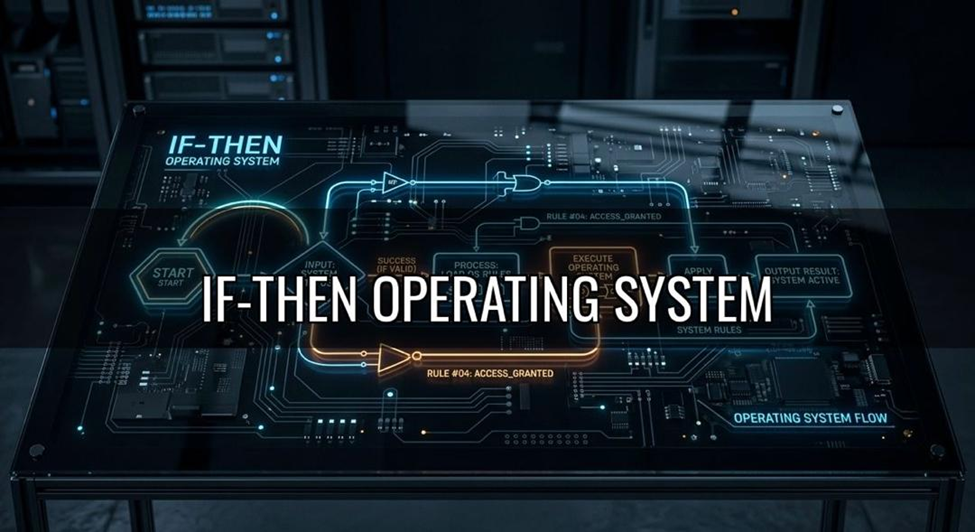
Every time you stop to ponder these questions, you are leaking battery power. This is where "If-Then" logic—a concept borrowed from computer programming becomes your absolute best friend.
Instead of deciding what to do every single time a familiar situation pops up, you create a hard and fast rule for it in advance. You build your own internal Standard Operating Procedure (SOP). When the situation arises, you don't have to decide anything; you just execute the rule.
Here are some highly effective "If-Then" rules you can steal for your own workday:
The 2-Minute Rule: IF an email or task takes less than two minutes to complete, THEN do it immediately right now. Don't file it, don't snooze it. Just do it.
The Meeting Rule: IF someone sends me a calendar invite without an agenda or a clear goal, THEN I will politely reply asking for the agenda before I click accept.
The Late-Day Rule: IF it is after 4:00 PM, THEN I will not start any brand-new creative work or open any complex spreadsheets.
The CC Rule: IF an email chain goes back and forth more than three times without a resolution, THEN I will pick up the phone and call the person to solve it in two minutes.
When you have these rules firmly in place, you keep your brain from spinning its wheels in the mud over administrative nonsense. This is because you aren't deciding; you are just following your own brilliant playbook.
5. Declutter Your Digital Vision (Close the Tabs)
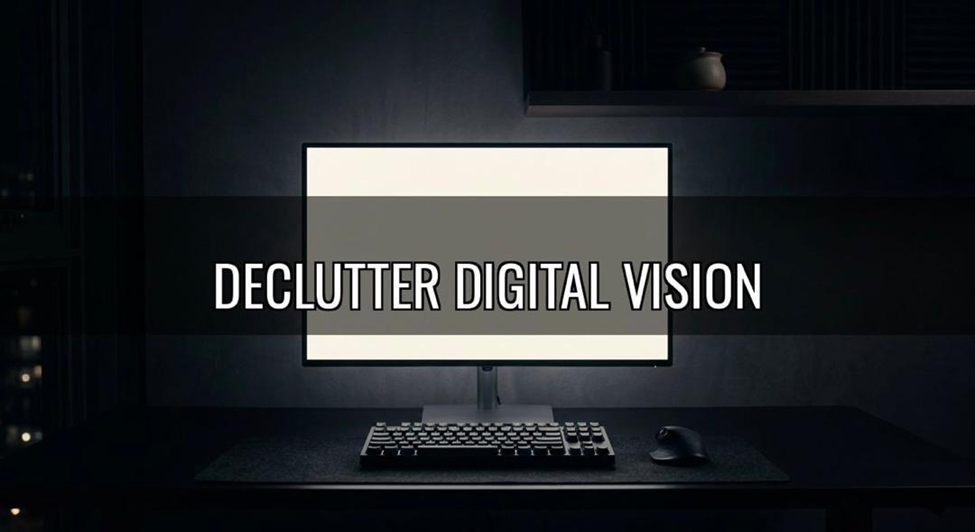
Your computer screen is a psychological minefield of distractions, and it is draining your energy even when you aren't actively looking at it.
Every red notification dot on your Slack icon, every unread email badge, every bouncing app in your dock is a tiny digital voice screaming at you: "Should you look at me? Am I important?
Every single time your eyes dart to one of those notifications, your brain has to make a micro-decision. Even if you choose to ignore it, the act of deciding to ignore it costs you energy.
Furthermore, there is a psychological concept called the Zeigarnik Effect, which states that human beings remember uncompleted or interrupted tasks better than completed ones. When you have 40 browser tabs open, your brain subconsciously views every single tab as an open loop or an unfinished task. It is silently draining your mental RAM in the background, causing a low-level hum of anxiety.
How to fix your digital vision:
Ruthless Tab Closing: If you aren't actively using a browser tab right this exact second for the specific task you are working on, close it. Bookmark it if you must but get it off your screen. Closing tabs is like giving your brain a deep, cleansing breath.
Neutralize the Red Dots: Turn off every single notification that isn't a direct message from a human being who needs you right now. You do not need a pop-up banner telling you that someone replied to a company-wide email thread.
Go Full Screen: When you are writing or analysing data, put the application in full-screen mode. Hide the clock, hide the taskbar, hide the chaos.
By decluttering your digital environment, you remove the shiny distractions that force your brain to make unnecessary choices, keeping your focus locked on the work that matters.

There is a very good reason you shouldn't go grocery shopping when you’re starving, and there is a very good reason you shouldn't make big life choices when you’re exhausted.
By the end of the workday, your judgment is officially compromised. Studies of judges have shown that they are significantly less likely to grant parole late in the afternoon compared to early in the morning. Why? Because granting parole is a complex, risky decision. Denying it is the safe, easy default. When the judges got tired, they took the path of least resistance.
You must set a "Decision Cut-Off" time.
For most people, this is around 3:30 or 4:00 PM. Accept that your brain is cooked. Stop trying to force yourself to do deep, strategic work when your tank is empty. Instead, use your late afternoon for low-stakes administrative work.
File your expense reports. Organize your digital folders. Clean off your physical desk. Update your to-do list for tomorrow. Do the stuff that requires absolutely zero creative brainpower.
Productivity expert Cal Newport calls this a "Shutdown Ritual." It is a set of simple, mindless tasks you do at the end of every day to signal to your brain that work is over. By honouring your human limits and accepting that you’re done making choices for the day, you actually make yourself infinitely more productive for tomorrow. You won't have to spend your Tuesday morning fixing the messy, tired mistakes you made on Monday evening.
At the end of the day, we need to remember one fundamental truth: We are not machines. We are biological creatures, and we were simply not built to process a thousand micro-decisions, notifications, and complex data points every single hour of the day.
Experiencing decision fatigue isn't a sign that you aren't tough enough, or that you aren't cut out for your job. It is simply a sign that you are human, and that you have reached the natural limit of your cognitive battery.
Protecting your mental energy isn't selfish; it is the ultimate professional responsibility. You’ll find that you have more energy, significantly less stress, and you will produce much higher quality work. And most importantly? You might have enough brainpower left at 6:30 PM to decide what you want for dinner without having a total existential meltdown in front of the open refrigerator.
Now, close your extra tabs, take a deep breath, and go eat that frog.
Why does your salary disappear so quickly? Explore the everyday spending habits, financial pressures, and small expenses that can turn ₦150,000 into a mid-month money crisis.
Why do we spend money trying to look successful? Explore the psychology behind lifestyle spending, social pressure, and the hidden cost of looking financially fine.
Learn how credit scores work, why they matter, and practical steps you can take to improve your credit score and make borrowing more affordable.