You Were Paid Yesterday. What Happened?
Why does your salary disappear so quickly? Explore the everyday spending habits, financial pressures, and small expenses that can turn ₦150,000 into a mid-month money crisis.
Loading...

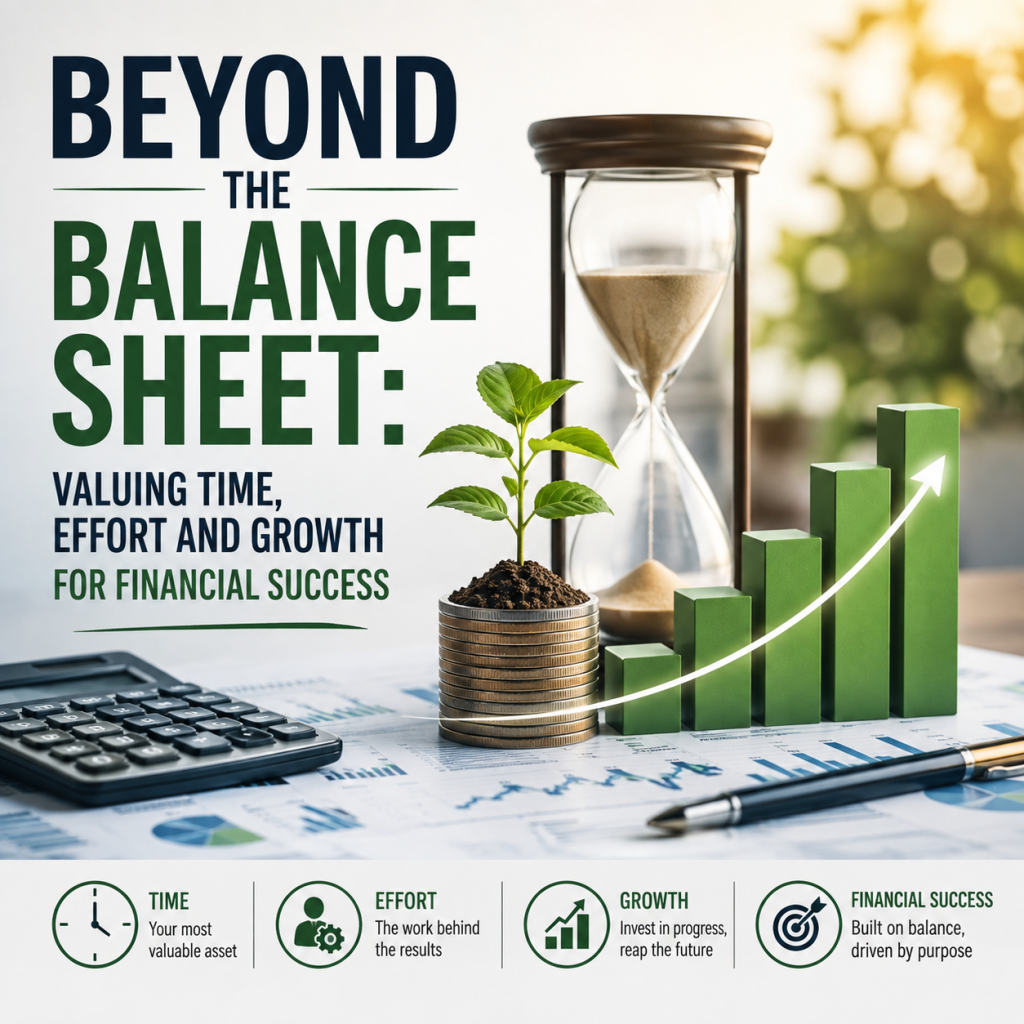
Financial success goes beyond the balance sheet. Discover how valuing time, effort, productivity, and personal growth can reveal the true drivers of sustainable financial success.
I’ve been thinking about financial statements quite a bit lately.
That probably isn’t unusual for someone who spends a lot of time around finance as numbers have a way of becoming familiar. It’s almost like you can recognize when margins begin to tighten, and you can usually tell when a business is healthier than it was six months ago.
What has surprised me is where my attention keeps drifting. I still read the numbers. They’re invaluable yet I keep finding myself thinking about everything that happened before those numbers existed.
As a person yielding towards financial success, I believe that a financial statement is wonderfully honest about the destination. It can tell you what the business earned, what it spent and where it finally arrived. What it can’t do is explain the journey. It can’t show the morning someone spent chasing an approval that should have taken five minutes nor does it capture the afternoon an entire team lost moving information between systems that should have been speaking to each other years ago.
I don’t think we talk about that enough.
We spend an extraordinary amount of time discussing revenue, profitability and growth, yet far less time discussing the conditions that made those numbers possible even though the most important decisions were made weeks or months before anyone opened a spreadsheet.
The longer I sit with that thought, the more difficult it becomes to separate financial success from the environment that produced it.
That’s the part I’ve become interested in and we’ll talk about them in a jiffy.
Time Is Literally Money (But Not in the Way You Think)
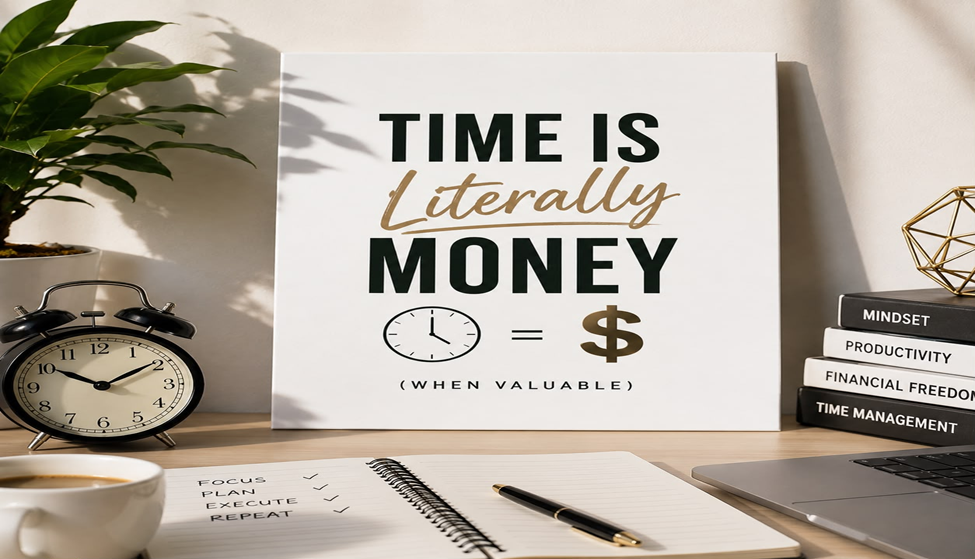
We've all heard the phrase "time is money." It's basically a cliché at this point. But I don't think most people really mean it when they say it. Money has always fascinated me because of how carefully we measure it.
We are always curious to know how much comes in every month, how much goes out, what we owe, what we own, and whether this year’s figures are better than last year’s. Infact, we build entire businesses around tracking every naira because we believe that whatever gets measured stands a better chance of being managed.
On the other hand, time rarely gets the same attention.
It slips by whether we use it well or badly, and by the time we notice how much of it has gone, it has already become part of yesterday. I keep coming back to that because the more I think about financial success, the more I wonder why time is treated as though it sits outside the conversation when so much of our financial lives depend on it.
If a company loses ten million naira, you’ll notice how everybody wants an explanation for that loss. Yet if the same company can lose hundreds of hours every month because people are waiting for approvals, correcting avoidable mistakes, or repeating work that should have been simplified long ago, nothing would be done about it and that's honestly sad if I must say.
Time has a habit of disappearing in ways that are easy to ignore. The longer I sit with that thought, the more I see time behaving like money.
That has changed the way I think about financial decisions. It is not only something we spend but rather one of the first investments we ever make. It is that valuable. I still want to save money, but I have become just as interested in protecting my time because every hour has the potential to become something else. It can become knowledge that increases my earning capacity or a better system that saves hundreds of hours in the future. Even rest has a place in that conversation because a clear mind usually makes better financial decisions than an exhausted one.
That is why I find it difficult to think about financial success without thinking about time first. So long before a balance sheet records the outcome, time has already determined much of the story it is about to tell.
Let’s talk Effort
If time is the resource that gives us the opportunity to create value, effort is what turns that opportunity into something tangible.
An hour on its own has very little value until something is done with it. For instance, two people can spend the same amount of time on the same task and still walk away with completely different results because it is totally dependent on the quality, direction, and consistency of the effort invested during those hours.
It is possible to work incredibly hard without moving very far, especially when that effort is spent repeating inefficient processes, or solving the same problems over and over. Effort becomes valuable when it is directed towards something that continues to create value long after the work itself has been completed.
For me, it’s impossible to separate financial success from the effort that makes it possible. What makes effort different from money is that it cannot be transferred.

You can inherit wealth, receive funding, or borrow capital, but nobody can give you the effort required to build judgment, discipline, or competence. Those things have to be developed personally, and once they are, they continue creating opportunities in ways that are difficult to measure but impossible to ignore.
I have also realized that effort protects financial success just as much as it creates it. While earning money is one thing, the ability to continue with that learning process, adapting and improving, is often what keeps that income from disappearing especially when circumstances change. As a matter of fact, the people who continue investing effort into growing with those changes usually place themselves in a better financial position than those who rely only on what they already know.
Learn To Value Growth

A little story time….
A friend of mine runs a small agency, and one thing her team absolutely dreaded was invoicing because every single week they spent hours entering the same information and making sure every figure matched. You see, it wasn’t difficult work, as every member of the team could do it but the problem was how it quietly consumed hours, they could have spent on work that needed the business to grow.
Eventually, she decided to automate the whole process, and that saved her a lot of time. This time around, they had enough time to improve their proposals, reach out to new clients, and think more intentionally about where they wanted the business to go because they were no longer spending all their energy just keeping up.
And I noticed how she didn’t expand by hiring more people but because the people she already had could now spend their time on work that created more value instead of getting stuck doing tasks that a system could handle. I felt so proud of her for such progress.
Now that is what growth entails. It commences the moment a person stops spending their time on things that don’t deserve most of it, and start giving that time to the work that creates real value for yourself and business.
Growth is the gradual increase in our ability to create, manage, and sustain value. It happens when we know more than we knew before, solve problems we couldn’t solve a year ago, or build systems that allow us to do more with the same resources. Those changes don’t always produce immediate financial results, but they increase our capacity to produce them later. Growth tells us what is becoming possible and that is why it is considered a financial value.
The more I think about it, the more I realize that growth is one of the few financial assets nobody can truly take away from you.
As much as a person can lose their money, and as much as businesses can fail, notice how the knowledge, experience, judgment, and perspective you’ve gained through growth stay with you. Those things don’t disappear when your bank balance changes. If anything, they’re often the reason you’re able to recover, rebuild, and make better decisions the next time around.
I’m sure you’ve experienced this in your own life too. Maybe you lost money on something that didn’t work out, or maybe a plan completely fell apart. Even then, you came away knowing something you didn’t know before, and that knowledge influenced the choices you made afterwards.
So as much as a balance sheet can tell us how much wealth exists today, it cannot measure our ability to create more tomorrow. That is where making good use of our time, appreciating worthwhile effort, and pursuing continuous growth become some of the most valuable investments we can ever make.

Why does your salary disappear so quickly? Explore the everyday spending habits, financial pressures, and small expenses that can turn ₦150,000 into a mid-month money crisis.
Why do we spend money trying to look successful? Explore the psychology behind lifestyle spending, social pressure, and the hidden cost of looking financially fine.
Learn how credit scores work, why they matter, and practical steps you can take to improve your credit score and make borrowing more affordable.