


You Were Paid Yesterday. What Happened?
Why does your salary disappear so quickly? Explore the everyday spending habits, financial pressures, and small expenses that can turn ₦150,000 into a mid-month money crisis.
Loading...

Why do we spend money trying to look successful? Explore the psychology behind lifestyle spending, social pressure, and the hidden cost of looking financially fine.

Table of contents [Show]
Money happens to be one of the easiest ways to create that impression because people can see the things we buy, the restaurants we visit, the clothes we wear, the cars we drive and the places we travel to, while they cannot see the savings account sitting quietly in the background, or the financial anxiety that comes with knowing your next income is still two weeks away.
The interesting part is that you may have a perfectly reasonable explanation ready for every one of these decisions. So, you can look like you are doing extremely well while wondering how you are going to make the rest of the month work. The mighty question becomes.
Why do we spend money trying to look like we are doing fine?
There are several reasons, and most of them have less to do with the actual things we buy and more to do with what those things represent. Let’s talk deeper.
One of the simplest reasons people spend beyond what they can comfortably afford is the desire to belong. Human beings naturally want to feel accepted by the people around them, and because money affects where we go, what we do and what we can participate in, it can quietly become part of how we maintain that sense of belonging.
Think about what happens when your friends decide to go somewhere expensive, and you already know the place is outside the amount you planned to spend. You could say so, of course, but then you start wondering how it will sound. Will they think you are broke? Will they assume you cannot keep up? Will you be left out the next time they make plans?
So, you go.
Then everybody orders.
You look at the menu, realize the cheaper option is sitting there looking like the sensible choice, but something in you says, please, do not be that person today, and before you know it, you have ordered something you were never planning to buy in the first place.
And the purchase was not entirely about the food.
You were also paying for the feeling of belonging.
That is why spending can become complicated when it is connected to relationships. Saying no to an expensive outing can feel strangely similar to saying no to the people themselves, even though those are two completely different things. You can love your friends, enjoy their company and still decide that a particular outing does not fit your budget.
The people who genuinely care about you should be able to understand that. If you constantly have to spend beyond your means to prove that you belong, then count that as a problem especially, because the people you are trying to impress are unlikely to be around when the money is gone, and you are left wondering what happened to your account balance.

Then there is comparison, which is probably one of the easiest ways to make perfectly reasonable spending start feeling inadequate.
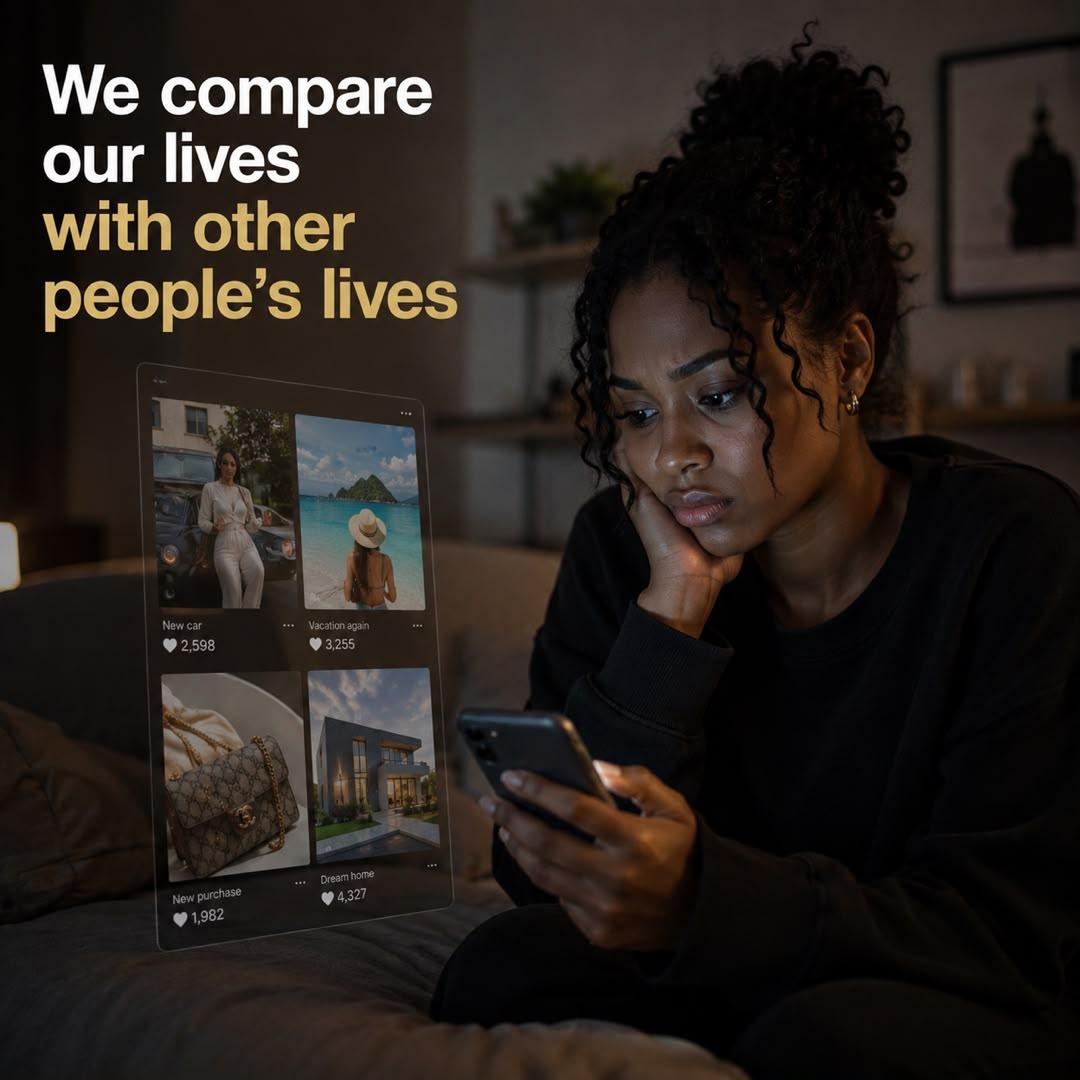
Social comparison simply means judging where you are in life by looking at where other people seem to be, and humans do this naturally because we are constantly trying to understand where we stand in relation to the people around us. The problem begins when someone else’s visible lifestyle becomes the measuring stick for your own life.
Someone gets a new phone, another person moves into a beautiful apartment, somebody else starts travelling every few months, and another person seems to have a different outfit for every occasion, and after seeing enough of it, you start wondering whether you are somehow behind.
No, because this is where comparison gets ridiculous.
You know everything about your own financial situation. You know what is in your account, what bills are waiting for you, what you are trying to save, what debt you are paying, and which expenses have been quietly eating into your income. When you look at somebody else, however, you usually see the finished picture they have decided to show you.
You do not know what is happening behind it.
That person may earn more than you, receive support from family, have saved for months before making the purchase or be spending money they should probably be keeping. They could even be struggling financially while doing an excellent job of making themselves look comfortable.
You simply do not know.
Yet somehow, we compare our complete financial reality with somebody else’s highlights.
That is where the trouble starts because once another person’s lifestyle becomes your definition of what “ doing well ” looks like, you can begin spending money to close a gap that may not even exist.
You eventually upgrade your phone because everybody around you has a newer one, start going to more expensive places because you do not want to feel left behind, or buy clothes you would never have considered because your current wardrobe suddenly seems embarrassing.
And somehow, you are now spending money because somebody else’s life made yours feel insufficient.
A healthier comparison is much less glamorous, but it is far more useful. Look at where you are now compared with where you were before. If your savings are growing, your debt is reducing, your income is improving or you are becoming more disciplined with your spending, those are signs that things are moving in the right direction even if nobody can see them in a photograph.

There is also the fear of being seen as someone who cannot afford things, and this one can be particularly powerful because money is often treated as a measure of success, whether we admit it or not.
You get invited somewhere expensive and immediately know it is outside your budget, but saying so feels uncomfortable. Someone asks you to contribute to something and you give more than you planned because you do not want people thinking you are stingy. Your financial situation changes, but you continue spending the way you used to because you are worried that people will notice the difference.
Look, I understand the feeling.
There is a strange embarrassment that can come with saying, “ I cannot afford that right now, ” especially when people have become accustomed to seeing you spend freely. Trust me, I’ve been there a lot of times. It can feel as though you are announcing a personal failure when, you are simply describing your current financial situation.
Your income may have changed, or your responsibilities may have increased. But none of these things make you less successful.
You can have a good income and still decide that something is too expensive. You can be hardworking and still have a financially difficult month. You can even be doing extremely well financially and deliberately choose a cheaper option because you would rather put the difference towards something more important.
Being able to say no to something you cannot comfortably afford is not an embarrassing confession. In many cases, it is evidence that you understand your finances well enough to make a decision that works for you instead of making one that looks good to everyone else.

This is where spending and status become particularly interesting because some of the clearest signs of financial health are completely invisible, while many of the things that signal spending are right there for everyone to see.
People can see the new car, the nice apartment, the designer clothes, the expensive restaurant and the holiday pictures, but they cannot immediately see that you have six months of living expenses saved, that you have paid off your debt or that you have been consistently putting money towards an important financial goal.
So, we naturally start using visible things as evidence of success.
Someone driving an expensive car looks financially comfortable, while someone driving an older car can easily be assumed to be struggling, even though the reality could be the complete opposite. The person with the expensive car might be dealing with huge monthly payments, while the person with the older car might own it outright and have substantial savings sitting elsewhere.
The same thing happens with clothes, homes, holidays and restaurants.
A person wearing simple clothes may be deliberately living below their means because they have a larger goal they are working towards, while somebody wearing expensive clothes may be spending more than they can comfortably afford. Someone eating at expensive restaurants every weekend may have more than enough money to do so, or they may be putting the entire lifestyle on credit.
We do not know.
Yet visible spending is often easier to admire than invisible financial discipline, which is unfortunate because financial security is usually built from the things nobody sees.
The emergency fund sitting untouched in your account is not particularly exciting. Paying off debt does not make for a dramatic photograph. Choosing to keep your old phone for another year will probably not get anyone’s attention. But those silly decisions can matter far more to your financial future than looking successful for a few minutes.

Sometimes the audience is not even other people.
Sometimes it is us.
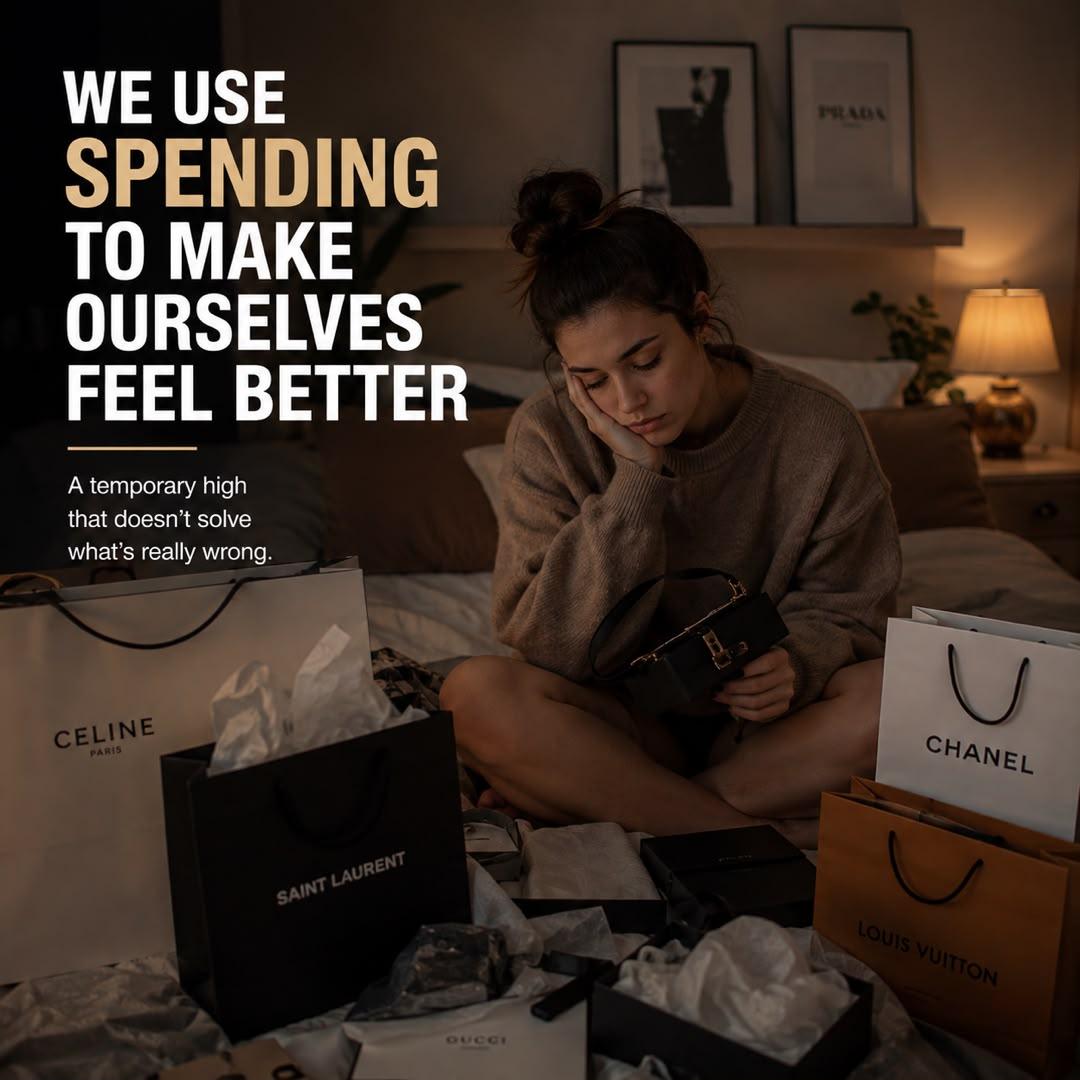
Maybe you’ve had a terrible week, so you buy something nice because you feel that you deserve it. You feel like everybody around you is moving forward while you are standing still, and buying something expensive gives you a temporary sense that you are moving too.
There is nothing wrong with enjoying your money or rewarding yourself. Please, life is already expensive enough without turning every enjoyable purchase into a moral crisis. The problem comes when spending becomes one of the main ways you deal with difficult emotions.
That is why it can help to ask yourself what you are really trying to change when you feel the urge to spend. Are you buying something because it genuinely adds value to your life, or are you hoping the purchase will make you feel more successful, happier, less stressed or less behind?
The answer will not always stop you from spending, and it does not have to. It simply gives you more information about what is happening before you hand over the money.

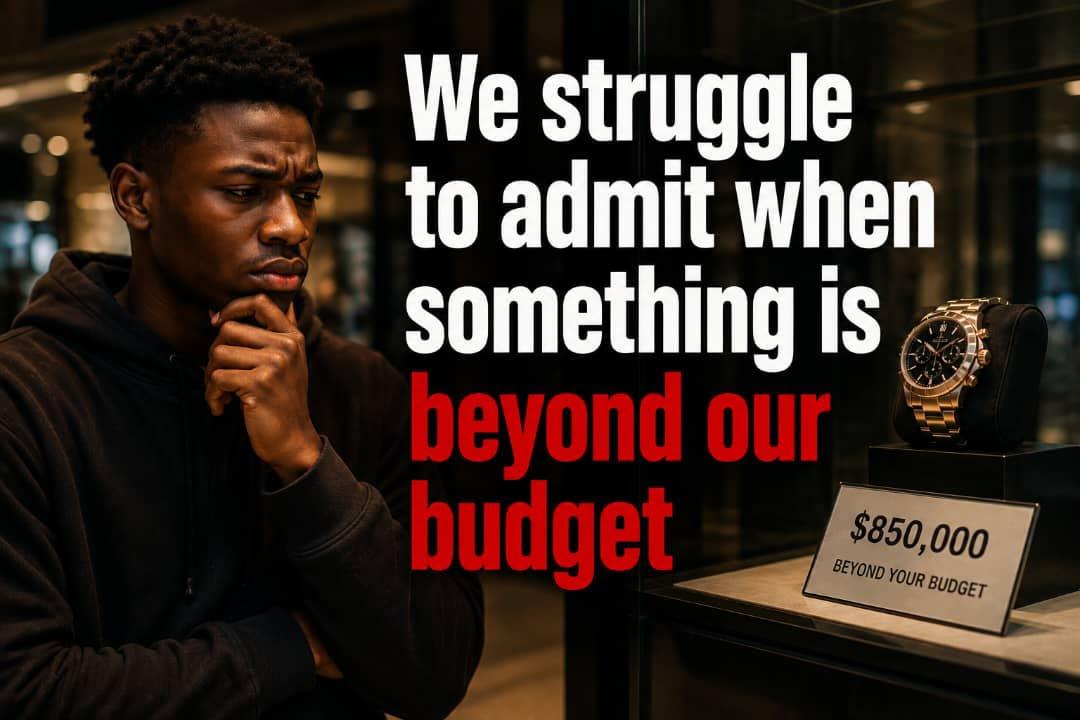
Sometimes, we know perfectly well that we cannot comfortably afford something; we simply do not want to admit it.
You look at the price and immediately understand that buying it will put pressure on your finances, but saying, “ That is outside my budget, ” feels uncomfortable, particularly when people have become used to seeing you live a certain way.
Perhaps you used to earn more than you do now, or your responsibilities have increased, or your priorities have changed, but your spending has not caught up with the new reality.
So, you continue. Life has seasons, and your finances can have them too.
There are periods when you can comfortably spend more and periods when you need to pull back, and adjusting your lifestyle to match the season you are in is not failure. It is awareness.
You do not have to maintain an old lifestyle simply because people became accustomed to seeing you live that way. In fact, there is something quite freeing about realizing that you are allowed to change your spending without giving everybody an explanation.

This one can be tricky because it often looks like a good thing.
When you finally start earning more money, and naturally, you want your life to reflect the improvement, there’s a possibility you may move into a nicer apartment, upgrade your phone, buy better clothes, eat at better restaurants or start travelling because you feel that you have worked hard and you should be able to enjoy the results.
And just maybe, you should. Don’t get me wrong.
There is nothing wrong with improving your lifestyle when your income improves. The problem comes when every increase in income immediately becomes an increase in expenses.
You earn more, so you spend more. Then you earn more again, so you spend more again, and somehow, several years later, you are making considerably more money than you were before while still wondering why you never seem to have enough.
Imagine someone earning ₦300,000 a month and managing to live on ₦250,000, leaving ₦50,000 for savings or other goals. Later, their income rises to ₦500,000, which sounds like a major improvement, but instead of allowing some of that extra money to strengthen their finances, their lifestyle expands until they are spending ₦450,000 every month.
They are earning ₦200,000 more than before, but their financial breathing room has barely changed.
This is what lifestyle inflation means. Your spending rises as your income rises, which means that although you are earning more, your financial breathing room may not improve by much.
One question that can be surprisingly useful is, “If nobody could see this purchase, would I still want it?”
It is not a perfect test because there are plenty of things we enjoy privately and enjoy sharing with people, but it can reveal when other people’s opinions have become part of the decision without you realizing it. Let’s take for instance.
Would you still order the expensive meal if nobody at the table knew what you ordered?
Would you still buy the outfit if nobody would ever see you wearing it?
Would you still upgrade your phone if nobody around you had a newer model?
Would you still contribute that amount if nobody knew how much you gave?
These questions are not designed to make you feel guilty about spending. They are there to help you notice the difference between spending because something matters to you and spending because you are trying to manage somebody else’s perception of you. When you get to see the difference, your decisions become much easier to understand.
There is nothing wrong with wanting nice things, dressing well, celebrating your progress or enjoying experiences that matter to you. The problem begins when you are funding an image that your actual finances cannot comfortably support.
The people watching you spend are usually not the people who will deal with the consequences afterwards. You will be the one dealing with all of that. Some of the best financial decisions you will ever make will probably be completely invisible to everybody else.
So, the next time you feel pressure to spend because you want to look like you are doing fine, pause and ask yourself what you are really paying for. If you are paying for something that genuinely improves your life and fits comfortably within your finances, enjoy it without guilt. But if you are mainly paying for an image, especially one built around the fear of what other people might think, it may be worth keeping the money and allowing people to form whatever opinion they choose.
Because they are not the ones paying your bills, building your savings or dealing with the consequences of your financial decisions.
You are.
Why does your salary disappear so quickly? Explore the everyday spending habits, financial pressures, and small expenses that can turn ₦150,000 into a mid-month money crisis.
Learn how credit scores work, why they matter, and practical steps you can take to improve your credit score and make borrowing more affordable.
Discover 6 common reasons why budgets fail and learn practical, realistic strategies to create a budget that actually works, lasts, and helps you reach your financial goals.

These cookies are essential for the website to function properly.
These cookies help us understand how visitors interact with the website.
These cookies are used to deliver personalized advertisements.