You Were Paid Yesterday. What Happened?
Why does your salary disappear so quickly? Explore the everyday spending habits, financial pressures, and small expenses that can turn ₦150,000 into a mid-month money crisis.
Loading...


Learn how credit scores work, why they matter, and practical steps you can take to improve your credit score and make borrowing more affordable.
Table of contents [Show]
Nobody really sits you down and explains how credit works before you need it. You earn your money, spend it, save when you can, borrow when you have to, pay people back and generally try to keep your financial life from catching fire, so it is easy to assume that once a loan has been paid off or a bill has been settled, that is the end of the story.
Then you apply for a serious loan and discover that somebody has been keeping score all along, quietly collecting pieces of your financial life that you probably never thought much about, and now this number you barely knew existed has a say in whether you get the money, how much you get and, in some cases, how expensive that money becomes. Hmm, wait, because when did borrowing money come with a permanent record?
That is essentially where a credit score comes in.
A credit score is a number built from information about how you have handled credit, particularly your history of borrowing and repaying money. Lenders use that information to help them decide how risky it might be to lend to you, because before a bank or other financial institution gives you money, it wants some reasonable indication that the money will come back.
And honestly, when you think about it from their side, the question is quite simple: if we lend this person money, what does their financial history suggest they will do with the repayment?
Your credit score does not know that you are a good person, and it certainly does not know that the reason you missed a payment was because three different expenses landed in the same week while your salary decided to arrive late. It sees the financial behaviour that was recorded, which is useful for a lender but can feel painfully impersonal when you are the person behind the record.
For a lot of people, credit remains an abstract financial concept until the day they need it. You can hear people talking about credit scores, credit reports and interest rates for years without paying much attention, but once you are applying for a loan to sort out something important, the whole thing becomes considerably more interesting.
You might apply expecting to be approved because you have a job, your income comes in regularly and, as far as you are concerned, you can pay the money back. Then the lender offers you less than you expected, attaches a higher interest rate to the loan or rejects the application altogether, and you are left wondering what exactly they saw that you did not.
This is where your credit history starts making sense, because lenders are not only looking at what you say you will do with the money; they are looking at what your past behaviour suggests you are likely to do.
Two people can walk into the same financial situation wanting the same amount of money and still walk away with completely different offers. One may receive better terms and more flexibility, while the other pays more over the life of the loan or struggles to get approved in the first place.
The frustrating part is that both people may feel equally deserving of the opportunity.
You know what I mean?
One person is thinking, “But I can afford this repayment,” while the lender is looking at a history that says, “Hmm, we have some questions.”
This here is the uncomfortable thing about credit. That your intentions do not carry as much weight as your patterns.

There are several things that can influence a credit score, although the exact formula depends on the credit scoring system being used, so I would be careful with anyone who tells you there is one universal formula that applies everywhere.
Payment history is one of the big ones because, quite simply, lenders want to know whether you have been keeping up with your financial obligations. If you consistently pay what you owe when you are supposed to, that creates a very different picture from someone whose payments are frequently late or missed.
And yes, I know life happens.
Sometimes the money is coming late, an emergency has swallowed what you had saved, or an expense you never planned for suddenly becomes the most important thing in the world, but the record itself may not contain all those details. It records what happened financially, which means a pattern of missed payments can eventually become a problem even when every individual incident had a perfectly understandable explanation.
Then there is the amount of credit you are already using, because having access to ₦500,000 does not necessarily mean you should be sitting at ₦499,000 every month wondering why money feels tight.
No, because why do we do this?
There is a difference between having access to credit and depending heavily on it, and lenders can take your existing debts and obligations into account when deciding whether giving you more money makes sense.
Your credit history also matters because time gives lenders more information. Someone who has managed credit responsibly over several years gives a lender a longer trail to look at than someone who has only recently started borrowing.
There can also be an impact from applying for new credit, particularly when several applications happen within a short period, depending on how the relevant credit system treats those applications.
All these things come together to form a picture, and that picture is what lenders are trying to understand when they assess your creditworthiness. It is less about one isolated decision and more about the story your financial behaviour has been telling over time.
Most financial problems do not arrive wearing a sign that says, Hello, I am about to ruin your finances.
They usually arrive looking reasonable.
You need money for something important, so you take a loan. Another expense appears, so you take another one. You are supposed to make a repayment this week, but something else becomes urgent, so you tell yourself you will sort it out next week. Then next week arrives with its own problems, and before long you are using one financial decision to create room for another.
The funny thing is that each decision can make sense when you look at it on its own. The problem is what happens when you put them all together.
You may not even notice the pressure building at first because the money keeps coming in and the immediate problems keep getting solved. It is only when you look at your income and realize that a large part of it already belongs to rent, debt repayments, bills and other commitments that you begin to wonder where exactly your money went.
This is why borrowing itself is not necessarily the problem. Credit can be useful, and there are situations where borrowing money makes complete sense, especially when the alternative is allowing an important need to go unattended.
The issue comes when borrowing becomes the only way to make your normal financial life work.
If every month requires another loan to cover expenses from the previous month, then the problem has moved beyond the individual loan. At that point, you are no longer using credit to handle an occasional need; credit has become part of the machinery keeping your finances running.
That is where things can become difficult very quickly.
The answer is almost annoyingly ordinary.
Pay what you owe on time.
I wish I could give you something more exciting, some clever trick that would make your credit score shoot upward while you sleep, but financial systems tend to be much less interested in clever tricks than we are. Consistent repayment behaviour matters, and that means keeping track of your due dates, knowing what is leaving your account and making sure the money is available when the repayment is due.

Setting reminders can help, and where automatic payments are available and appropriate, they can remove some of the risk of forgetting. There is nothing particularly impressive about setting a reminder for a bill, but if that reminder saves you from missing a payment, I’m sorry, but impressive is not really the point.
You also want to know what you owe.
Write the balances down, look at the repayment dates, understand what you are paying and have a clear idea of how long each debt is expected to last. It can be uncomfortable to see everything in one place, especially when the numbers are not where you want them to be, but avoiding the numbers does not make the debt disappear; it only makes it harder to make good decisions about it.
Reducing existing debt can also help your overall financial position, because the less of your income that is already committed to repayments, the more room you have to deal with other responsibilities without constantly reaching for another loan.
And this is where I think people need to be careful with the idea of “qualifying” for credit.
A lender offering you a loan does not mean the loan is automatically affordable for you. Please, those are two completely different questions.
The lender is asking whether you meet its requirements for borrowing, while you should be asking whether the repayment fits comfortably into your actual financial life. If the answer to the second question is no, then the fact that someone is willing to give you the money should not magically turn the loan into a good idea.
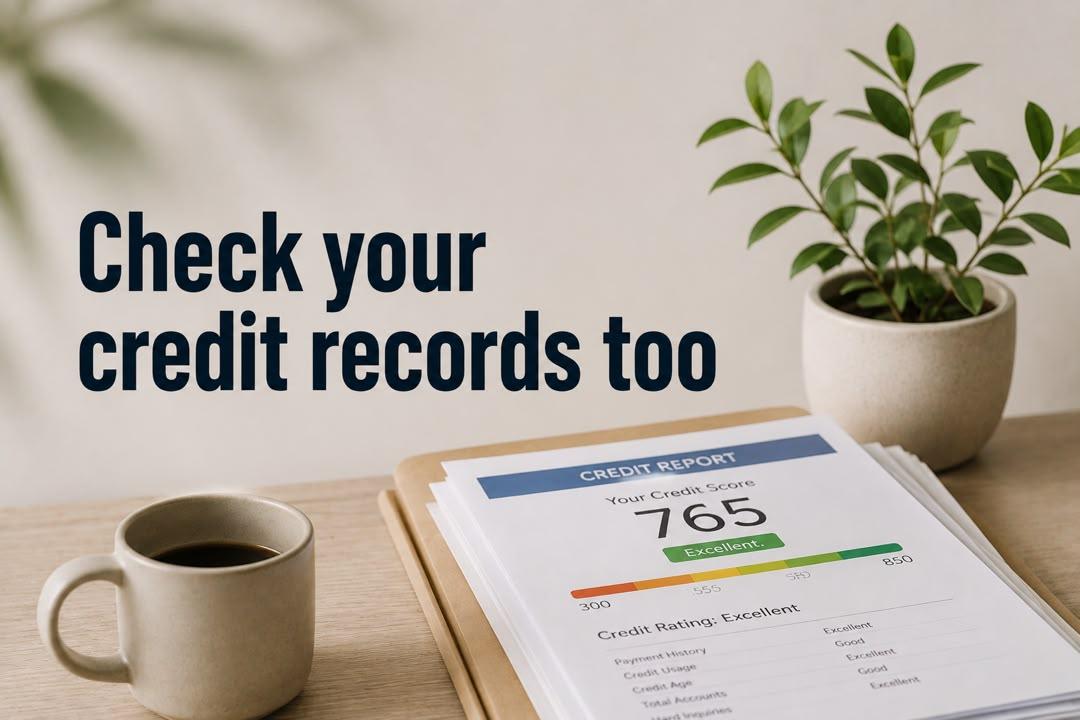
There is another part of this that people sometimes overlook, which is checking the information attached to your credit profile.
Mistakes can happen, accounts can be reported incorrectly and information you do not recognise may sometimes appear on a credit report, so if you have access to your credit records, looking through them from time to time can help you catch problems before they become a bigger headache.
The worst time to discover an error is probably when you are sitting in the middle of an important loan application wondering why something you never did is suddenly attached to your name.
I wish I were kidding.
Checking your records gives you a chance to understand what lenders may be seeing and, where something is inaccurate, to take the appropriate steps to have it investigated or corrected.
It also gives you something else that is surprisingly valuable with money: awareness.
A lot of financial stress comes from not knowing. You do not know exactly how much you owe, you do not know when the payments are due, you do not know where your money went last month and you do not know what a lender sees when they look at your credit history.
Once you start looking, some of the mystery disappears.
This is where people can become discouraged because you can start doing everything differently and still not see an immediate change.
You make your payments on time, reduce your balances, stop taking unnecessary credit and become much more careful about what you sign up for, then you check your credit information expecting some dramatic evidence that all your hard work has finally been recognised.
And the number has barely moved. Ugh. I’m sorry, but that is one of the least satisfying parts of improving anything financial.
Credit history is built over time, so your recent behaviour becomes part of a longer record rather than replacing everything that came before it overnight. If your previous financial habits created problems, those problems may take time to fade from the picture, depending on the type of information and the credit reporting system involved.
That does not mean your effort is useless. It means the system is looking for a pattern, and patterns require repetition.
The same thing that made your financial situation worse over time can work in your favour when you reverse it. A payment made on time may not feel like a major financial achievement, but when you keep making those payments, month after month, you are building evidence that your behaviour has changed.
The progress can be so quiet that you barely notice it while it is happening.
Then one day, you realise you are carrying less debt, missing fewer payments and thinking more carefully before taking on something new, and the financial decisions that once felt like emergencies are beginning to feel like decisions again.
That difference matters.
I think we sometimes make credit sound far more frightening than it needs to be, because credit itself is not evil and borrowing money does not automatically mean that someone is financially irresponsible.
Sometimes borrowing is the sensible thing to do. Other times, it is the worst thing you could do.
The difference is usually found in the reason for borrowing, the cost of the borrowing, your ability to repay it and what the repayment does to everything else in your financial life.
If taking a loan allows you to handle something important without creating an unmanageable burden afterward, that is one situation. If the loan only gives you enough breathing room to reach the next month before another loan becomes necessary, that is a very different situation.
And I know which one I would rather build my finances around. Credit works best when it gives you options rather than when it becomes the thing your finances depend on to survive.
That distinction is easy to miss because borrowing can feel like relief. When money enters the account, the immediate problem disappears and you can breathe again, but the repayment does not disappear with it and that can be frightening.
If your credit history is already in good shape, the goal is not to become obsessed with a number and start treating every financial decision as though you are preparing for an examination.
If it is not where you want it to be, the goal is not to panic either.
Start with what you can see.
Find out where you stand, understand what you owe, check your records, keep up with repayments and think carefully before taking on new debt. If there are problems in your credit history, deal with what can be dealt with, and give yourself time to build a different pattern.
You cannot rewrite the financial decisions you made three years ago, and spending every morning regretting them will not make the balance smaller.
What you can do is make the next decision differently.
Then the one after that.
Then the one after that. Just like that.
I know that sounds almost painfully ordinary, but most meaningful financial changes are ordinary while they are happening. That is most often how the story changes.
Eventually, the number that once felt like some mysterious financial gatekeeper becomes easier to understand because you know what sits behind it. I mean, years of choices, repayment habits, borrowing decisions and the way you have handled money when nobody was standing over your shoulder asking what you were doing.
And that, really, is the part worth paying attention to.

Why does your salary disappear so quickly? Explore the everyday spending habits, financial pressures, and small expenses that can turn ₦150,000 into a mid-month money crisis.
Why do we spend money trying to look successful? Explore the psychology behind lifestyle spending, social pressure, and the hidden cost of looking financially fine.
Discover 6 common reasons why budgets fail and learn practical, realistic strategies to create a budget that actually works, lasts, and helps you reach your financial goals.