You Were Paid Yesterday. What Happened?
Why does your salary disappear so quickly? Explore the everyday spending habits, financial pressures, and small expenses that can turn ₦150,000 into a mid-month money crisis.
Loading...

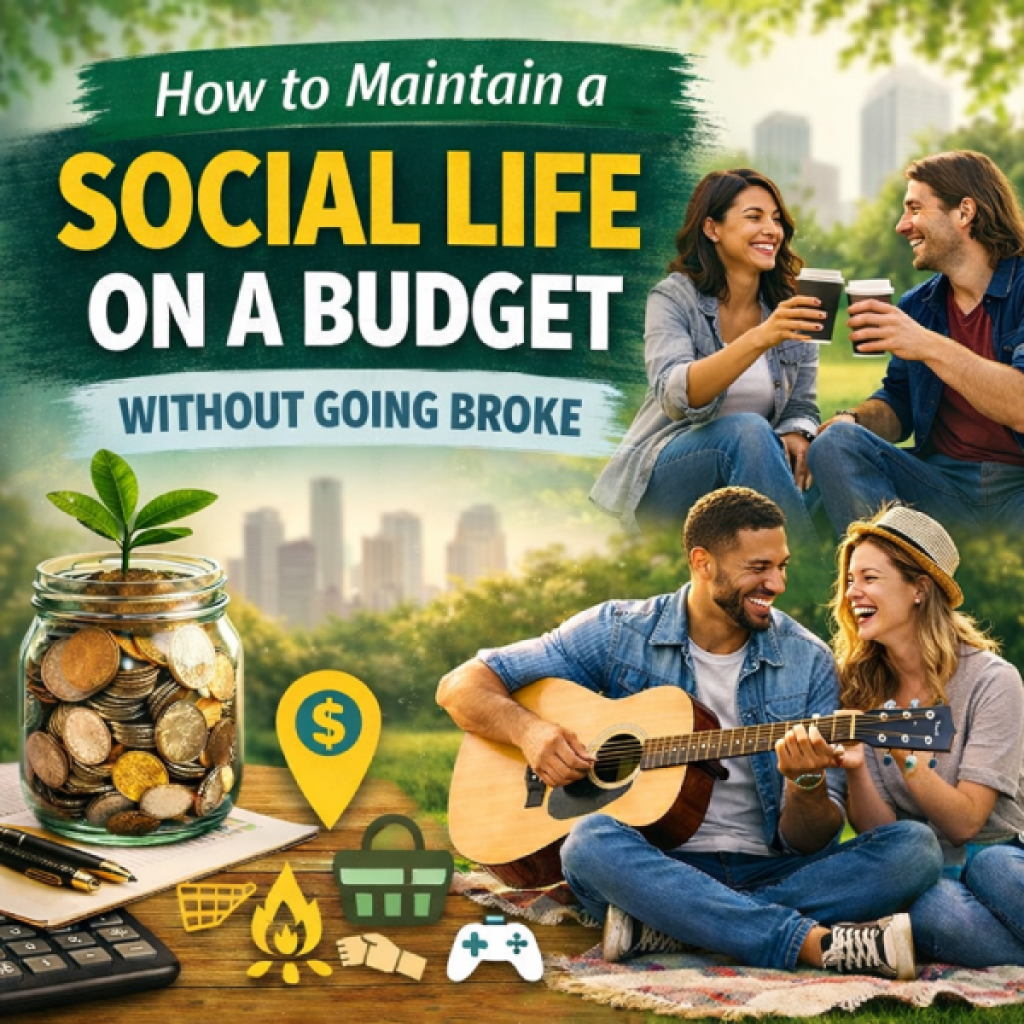
Trying to save money, pay off debt, or build wealth can make social life feel expensive and exhausting. In this guide, learn how to maintain meaningful friendships and stay socially connected without overspending. Discover practical ways to rethink your social life, enjoy relationships, and protect your finances at the same time.
Table of contents [Show]
Let’s set the scene. It’s a Wednesday afternoon. You are sitting at your desk, feeling pretty good about your week. You’ve packed your lunches, you’ve tracked your spending, and you are finally feeling like you have a grip on your financial life. You are in the driver's seat.
Then, your phone lights up. It’s the group chat.
"Hey guys! Let's do brunch this Sunday at that new spot downtown to celebrate Sarah's promotion!"
Someone drops the menu link in the group chat. You click it. The avocado toast is $22. The bottomless mimosas are $35. And you already know how this end. By the time tax is added, a 20% tip goes on top, and the group decides to “just split the bill evenly,” that two-hour brunch is easily going to cost you about $80.
Almost instantly, that familiar knot forms in your stomach. The financial anxiety creeps in again.
Now you’re stuck with a frustrating choice. Do you spend the $80 and throw off the budget you were trying so hard to stick to? Or do you send some awkward excuse, stay home on a Sunday morning, and end up watching your friends laughing and clinking glasses on Instagram stories?
If you are trying to build wealth, pay off debt, or just survive in this economy, this is the hardest battle you will fight. It isn't the grocery bill or the rent. It is the suffocating feeling that friendship, connection, and love have a cover charge that you can no longer afford.
We live in a culture that has completely commodified human connection. We have been brainwashed to believe that the only valid way for adults to interact is to sit across from each other in a loud, dimly lit room and hand a corporation our credit cards.
It feels like you have to choose between being broke with friends or being rich and completely alone.
I am here to tell you that this is a false dichotomy. You do not have to choose. Today, we are going to completely dismantle the way you view your social life. We are going to talk about how to maintain deep, beautiful, hilarious, and intimate relationships without sacrificing your financial future.
Consider this your masterclass in rethinking your social life on a budget.

To change our social lives, we first have to understand how we got trapped in the first place.
Think about how you socialized when you were a kid. You went to your friend's house. You sat on the floor of their bedroom. You played video games, you walked around the neighborhood, you sat on the hood of a car and talked about your dreams. It cost absolutely nothing. The connection was the entire point of the hangout.
But somewhere in our twenties, the default setting for friendship shifted. We stopped inviting people in, and we started inviting people out.
It became more about grabbing drinks, eating out or going for a concert. We outsourced our socializing to the hospitality industry. And because of this, we accidentally created the "Pay-to-Play" friendship model. In this model, your ability to maintain a relationship is directly tied to your disposable income. If you can't afford the $15 cocktail, you don't get to hear about your best friend's new relationship. If you can't afford the $300 weekend trip, you slowly fade out of the inner circle.
Over time, this creates a quiet kind of resentment. You end up going to dinners you didn’t really want to attend. You order something small, like a side salad and tap water, trying to keep your spending low. But when the bill comes, the group decides to split it evenly even though someone else ordered steak and several margaritas.
Suddenly, you’re paying around $60 for a meal you barely ate. You still pay it because you don’t want to seem cheap or make things awkward. So, you hide the anxiety, hand over your card, and leave the restaurant feeling uneasy and a little sick to your stomach.
Here’s a big, freeing truth that almost nobody talks about, most of your friends are probably just as stressed about money as you are.
We’re all walking around acting like everything is fine financially, playing along with this quiet illusion of wealth. Many people are struggling behind the scenes. The friend who suggested that expensive brunch might be buried in credit card debt. The friend who keeps ordering another round of drinks might secretly be worried about how they’ll pay rent next month.
But no one says anything, because nobody wants to be the first person to admit that keeping up with it all is simply too expensive. To escape the Pay-to-Play trap, someone must be brave enough to break that illusion and sometimes, that someone has to be you.
You must realize that true friendship is not built over $22 eggs. True friendship is built in the quiet moments of shared vulnerability. If a friendship requires a constant stream of expensive transactions to survive, it is not a friendship; it is a subscription service. And it is a subscription you need to cancel.
When you finally step off the spending treadmill, you quietly give your friends permission to step off it too.
You might be surprised by how many people later pull you aside and say something like, “Honestly, I’m so glad you said that. I’m trying to save money too, and I’ve been stressed about spending this weekend.”
Sometimes all it takes is one person being honest for everyone else to feel relieved enough to admit they were struggling with the same thing.
The reason we hate saying "no" to social invitations is because of the language we use.
When someone invites you out and you reply, "I can't, I'm broke," or "I can't afford that right now," you are adopting a victim mindset. You are signaling to yourself and to your friends that you are powerless, deprived, and missing out. It makes the conversation awkward, and it makes people feel pity for you.
We need to completely change the story we tell ourselves. You’re not a victim of your bank account. You’re the CEO of your own life, making deliberate decisions about where your money goes and directing it toward the future you want.
To protect your budget and your friendships, you must master a communication technique I call The Joyful Pivot.
The Joyful Pivot has two simple rules:
You never use the words "I can't afford it." You use the words "I am prioritizing…"
You never just say "no." You say "no," and immediately offer a compelling, low-cost alternative.
Let's go back to the group chat asking you to the $80 Sunday brunch.
Instead of saying: "I can't go, I'm too broke this week."
You use the Joyful Pivot: "Ah, I'm on a strict financial sprint this month because I'm aggressively saving for my siblings also! I'm going to skip the restaurant brunch, but I would love to see you guys. Why don't you all come over to my place around 2:00 PM after you eat? I'll make a huge pot of French press coffee and we can hang out on the patio!"
Do you see the difference?
When you use the Joyful Pivot, you become the architect of your social life rather than a passive participant. This acts as a filter for your relationships.
Your true friends, the people who love you for your mind, your humor, and your soul will happily pivot with you. They will come over for coffee and will want to go for the walk. They just want to be in your presence.
But not everyone will adjust. Some people may stop inviting you out. Others may slowly drift away. And that’s okay.
If someone only wants to spend time with you when you’re helping fund an expensive lifestyle, they were never really your friend to begin with. They were just drinking buddies. Losing those connections isn’t a tragedy. Sometimes it’s simply clearing space for the kind of people who value your presence, your character, and your heart, not your wallet.

If we are going to stop going out to expensive restaurants and bars, we have to replace that behavior with something else. We have to bring back the lost art of hosting.
For a lot of people, the idea of hosting a gathering in their home triggers a massive wave of anxiety. We have been poisoned by Pinterest and Instagram. We think that to invite people over, our apartments need to look like a spread in Architectural Digest . We think we need to cook a flawless, four-course meal from scratch, have a perfectly curated tablescape, and serve expensive wine.
Because we can't afford to do that, we just don't host at all.
We need to lower the bar for what it means to invite people into our space. Hosting isn’t about putting on a perfect show. It’s about connection. When you invite people into your home, it’s not a performance. It's an act of openness and vulnerability. In many ways, it’s simply another way of showing love.
When you invite someone into your home, you’re really saying, “This is my real life. The couch might be a little messy, the kitchen might be small, but you’re welcome here and you’re safe here.”
There’s a kind of closeness in a home gathering that a restaurant simply can’t recreate. At a restaurant, you’re often talking over loud music, getting interrupted by waiters, and constantly aware of the clock because the table will eventually need to be cleared for the next guests.
In your living room, time feels like it slows down. People kick off their shoes, settle into the couch, and get comfortable. The conversations become deeper, the laughter gets louder, and the whole atmosphere feels more relaxed.
You can play whatever music you like, talk for hours, and stay up until 2:00 AM without anyone bringing a bill to the table.
For instance, you could tell your friends you’re hosting a “board night.” You provide the space, put on some music, and maybe mix up a simple signature drink like a big pitcher of sangria. Then each person brings a “board.” One friend might bring a charcuterie board, another brings a dessert board, and someone else shows up with a French fry board.
Before long, the table is full of different foods, everyone is sharing and laughing, and the night feels fun and effortless. You might only spend about $15 on the sangria ingredients, while the rest of the food comes from everyone pitching in. It becomes a relaxed, memorable night without anyone spending a lot.
Stop waiting until you have the perfect, massive house before inviting people over. Your friends aren’t thinking about the size of your place. What they really remember is how comfortable and welcome you make them feel.

Navigating friendships on a budget is hard but navigating dating on a budget feels like walking through a minefield blindfolded.
Modern dating has started to feel like an expensive audition process. There’s a strong social expectation that a “good date” means a nice dinner, pricey drinks, and someone picking up a big bill. If you’re single and actively dating, it’s surprisingly easy to spend around $300 a month just on first dates (many of them with people you may never see again).
If you are looking for a genuine, long-term partner, leading with your wallet is the worst thing you can possibly do. When you date on a budget, you are forced to strip away the performative nonsense. You are forced to connect.
When you ask someone out, take the pressure off the wallet and put the focus on the connection. “I’d love to take you out. I know this great little coffee shop near the park. Let's grab a coffee and walk the trail."
A walk-and-talk date can actually feel much more natural than a formal dinner date.
When you’re sitting across from someone at a dinner table, it can start to feel like a job interview. You’re staring directly at each other, the pressure is high, and you’re stuck there until the check finally arrives.
But when you’re walking side by side, the pressure eases. You’re both looking at the world around you instead of just staring at each other. Pauses in conversation feel normal instead of awkward. And if the date isn’t going well, it’s easy to wrap it up after 30 minutes without waiting around for a bill.
As a relationship starts to move beyond the early stages, something deeper becomes necessary and that’s being honest about the things that truly matter. One of those things is money. This is where vulnerability becomes the ultimate filter. When you’re open about your financial goals, you quickly learn whether someone is truly aligned with the life you’re trying to build. Saying, "I really like you, and I love spending time with you, but I want to be super transparent with you. I am on a strict financial journey right now to pay off my student loans, so I'm trying to avoid expensive dinners. I'd love to cook for you at my place this weekend instead," is the ultimate compatibility test.
If the person reacts with disgust, or acts like you are cheap, congratulations! You just dodged a massive bullet. You found out early that their values do not align with yours.
But if they’re the right person, your discipline will be attractive to them. Financial responsibility, ambition, and the ability to delay gratification are very appealing qualities to a mature adult.
Instead of being turned off, they might feel relieved. They might even smile and say something like, “Honestly, I’m glad you said that. I’m trying to save money too.”
When you finally decide to rethink your social life on a budget, you are going to go through a transition period. It will feel uncomfortable at first. You will have FOMO (Fear of Missing Out) when you see the Instagram stories of the brunches you declined. You will feel a little awkward the first time you host a potluck in your small apartment.
But push through that discomfort because on the other side of that transition, is a kind of peace that’s hard to describe until you experience it.
You are not sacrificing your social life. You’re simply stripping away the parts of it that were never really meaningful to begin with (the pressure, the performance, the expensive habits that never actually made anyone happier). What’s left are the connections that are real, the conversations that go deeper, the laughter that feels effortless and the people who genuinely enjoy being around you.
Real connection doesn’t have a cover charge. Keep your money. Keep the people who truly matter. And keep building a life that feels good to live.

Why does your salary disappear so quickly? Explore the everyday spending habits, financial pressures, and small expenses that can turn ₦150,000 into a mid-month money crisis.
Why do we spend money trying to look successful? Explore the psychology behind lifestyle spending, social pressure, and the hidden cost of looking financially fine.
Having enough money to buy something doesn’t always mean you can afford it. Learn a smarter way to evaluate purchases, protect your finances, and spend with confidence.