You Were Paid Yesterday. What Happened?
Why does your salary disappear so quickly? Explore the everyday spending habits, financial pressures, and small expenses that can turn ₦150,000 into a mid-month money crisis.
Loading...

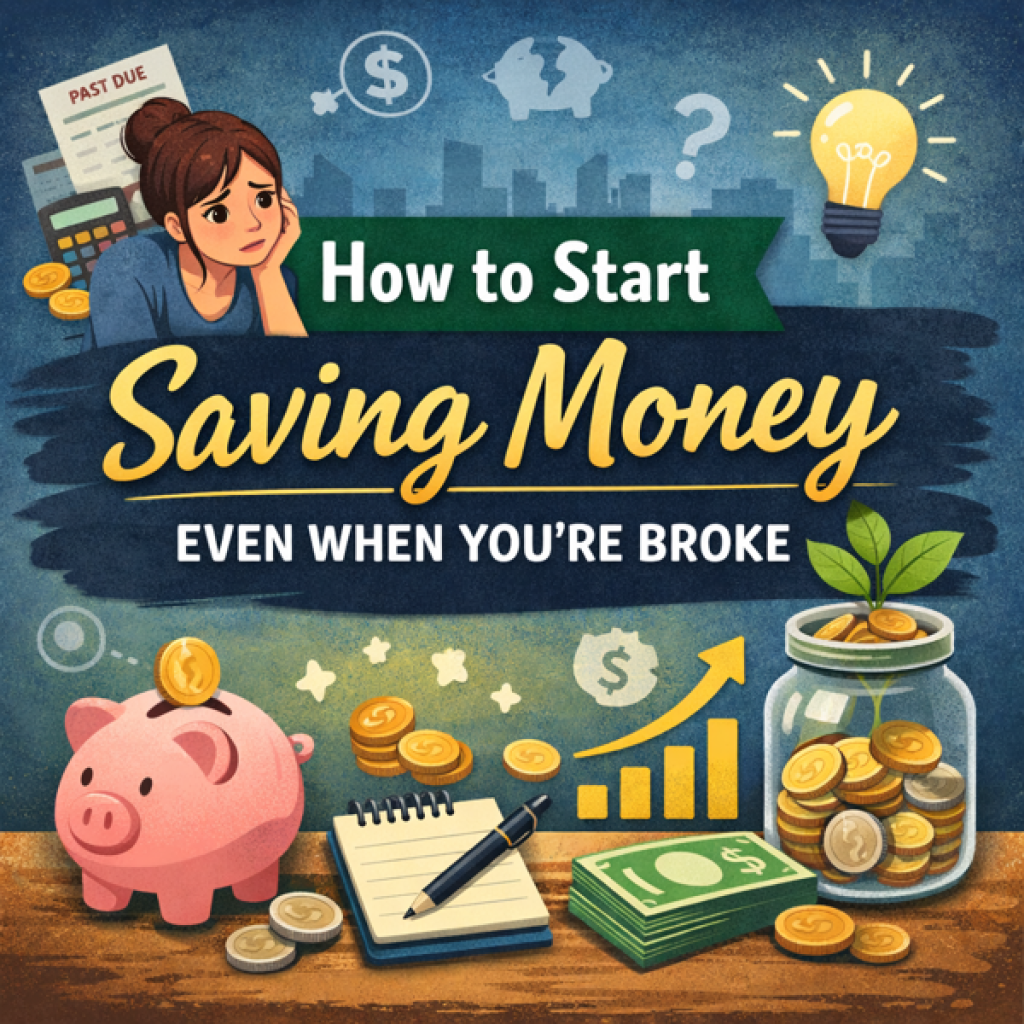
Struggling to save money? Discover simple, practical steps to start saving even on a tight income and begin building financial stability today
Table of contents [Show]
I know exactly why you’re here, and I know that look on your face. You’ve been carrying around this low-level, constant hum of anxiety about money. It’s the way your stomach drops when you check the mail or the mental math you do at 3:00 AM when you’re staring at the ceiling, trying to figure out how many days are left until payday and how much gas is left in the car.
Sometimes, you feel like no matter how hard you work, no matter how many hours you put in or how exhausted you are at the end of the week, you’re just treading water. You keep telling yourself that the idea of "saving" or "building wealth" is a luxury reserved for people who live in different zip codes, work in glass offices, or have parents who paid for their college.
I need you to take a deep breath, drop your shoulders away from your ears, and listen to me: I have been exactly where you are.
I remember feeling like a failure because I was working so hard but had absolutely nothing to show for it. It is a brutal, exhausting, lonely weight to carry. And right now, we’re going to set that weight down.
But before we get into how to save, we need to talk about the mental traps that stop most people from even starting.
The Myth That Crossing a Threshold Gives You a Clean Slate
We are constantly bombarded by society, social media, and well-meaning financial gurus with the idea that saving is something you start when you reach a magical "threshold."
We play this dangerous, self-defeating game of "When and Then."
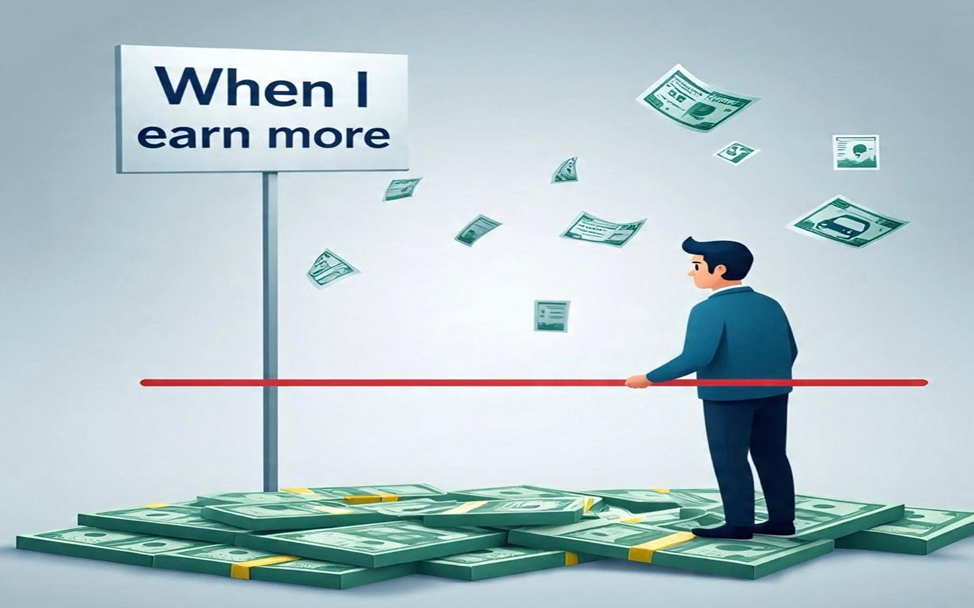
When I finally clear this credit card debt, then I’ll start saving.
When I get that promotion and make $10,000 more a year, then I’ll open a savings account.
When I move into a cheaper apartment, then I’ll get my life together.
Here is the brutal, liberating truth. Life does not move in clean, linear phases. There is no such thing as a clean slate. Life moves in chaotic, messy, overlapping cycles. The moment you get that promotion, your car transmission blows or the moment you pay off the credit card, your rent goes up. If you wait for the perfect, quiet, financially stable "threshold" to begin, you will be waiting until you get exhausted. There’s no magical income level where everything resets. If you want a different result, start making different choices now.
The Lack of Habit
The biggest barrier to saving isn’t a lack of funds; it’s the lack of the habit.
When you believe you need a large amount of money to start saving, you unconsciously give yourself permission to spend every single penny you currently have. Starting small, even if it’s just transferring $5, breaks that cycle of mindless consumption. It proves to your brain that you are no longer a passive observer of your finances, waiting for a rescue boat but rather, the pilot.
When we’re broke, or struggling, we tend to deeply internalize it. We let our bank account balance dictate our self-worth. We say, "I am broke," rather than, "I am experiencing a temporary period of low liquidity."
Do you see the massive difference there? One is a permanent identity while the other is a temporary circumstance. Consumer culture wants you to identify as a spender. It wants you to feel inadequate so you will buy things to feel whole. But when you start saving even a tiny, almost laughable amount, you start to reclaim your identity. You stop being a spender or a struggler, and you start being a builder. That shift in your internal monologue is the most valuable asset you will ever own. You begin to value your own future stability more than the immediate, fleeting dopamine hit of a purchase.
The Anatomy of "Small" (And Silencing the Ego)
So, what does "small" actually look like? It looks different for everyone, and to embrace it, you must completely strip away your ego.
For someone in Nigeria, it might be setting aside 500 Naira from a daily hustle. For someone in the US, it might be $5 a week. The actual numerical value is completely irrelevant right now. What matters is the frequency and the physical action of moving the money.
Think of it like watering a houseplant. You don’t dump five gallons of water on a succulent once a month and expect it to thrive; you’ll drown it, and the water will just run off the dry soil. You give it a little bit of water, regularly and consistently, allowing the roots to absorb it over time. Your savings account is the exact same way. It needs consistency far more than it needs volume.
I need to warn you about something. When you log into your banking app to transfer that first $5 into a savings account, your brain is going to tell you it's stupid. Your ego will scream, "This is embarrassing! You're a grown adult transferring five dollars. This is pointless, you're still poor."
You have to silence that voice. That voice is the enemy of your progress. By starting small, you are training your nervous system to prioritize your future self. It’s a way of saying, "I care about the person I will be in a year."
That is a massive, radical act of self-love and a proving to yourself that you are worth the effort, even if you’re only starting with the spare change from your pocket. A weightlifter doesn't walk into the gym and try to bench press 300 pounds on day one. They start with the empty bar. Your $5 is the empty bar. Lift it.
Start anywhere. Recognize that money is not a rigid, unmovable block of concrete; it is fluid. You can find money in places you didn't even know you had it, simply by paying attention and waking up from financial autopilot.
Start by looking at your "leaks." We all have them. That $7 streaming subscription you forgot to cancel six months ago? That’s $84 a year. That impulse snack you buy at the gas station every day at 3 PM because you’re bored and tired? That’s hundreds of dollars a year.
Now, listen to me carefully: we aren't talking about living in poverty or denying yourself all joy. I am not going to tell you to stop buying lattes or to never eat at a restaurant again. If that 3 PM snack brings you genuine, deep joy and gets you through a miserable workday, keep it!
But we must distinguish between "Yes" spending and "Just" spending. Just spending is the money that leaves your account when you aren't even paying attention. It's the stuff you buy just because it's there, and you don't even remember it two days later.
If you're buying something just because you're on autopilot, redirect that energy. Take that $5 and move it into a savings account. Every time you choose not to spend on something that brings you zero value, you are essentially buying a piece of your future freedom.
Why do we actually need to save?
We need to save because life is wildly unpredictable and often deeply unfair. When you have even a small amount tucked away, say, $500 or $1,000, you don't feel the same level of absolute terror when a bill arrives in the mail, or your washing machine makes a weird noise. You have options. And having options is the ultimate form of wealth.
There’s a particular theme I like to call the "Walk Away" fund. It’s the ability to sit in a meeting with a toxic boss who treats you terribly, and instead of feeling trapped and panicked, you feel a quiet sense of calm because you know you have two months of rent in the bank to survive a job hunt. It’s the ability to walk away from a bad relationship because you can afford the security deposit on your own apartment. It’s the ability to handle a family emergency without having to beg a predatory payday lender for a loan.
That kind of freedom, that ability to breathe deeply and stand up straight, is worth more than any designer item or luxury car you could ever buy.
Automate your savings.
Every single day, you make thousands of decisions. What to wear, what to eat, how to respond to that email, how to navigate traffic. By 7:00 PM, you are suffering from decision fatigue. Your willpower is completely drained. Do not waste your precious, finite mental energy deciding whether to save money this week or not. If you rely on your memory or your discipline to manually transfer money, you will fail.
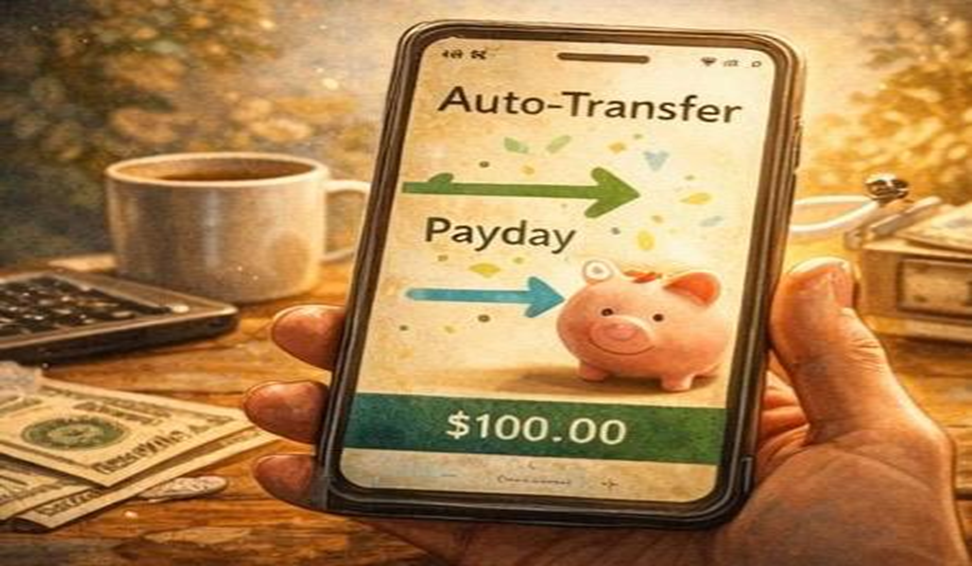
Set up an automatic transfer for the exact day you get paid. Even if it’s an amount that feels tiny. When you automate, you remove the emotional burden of the decision and before you know it, six months will pass, you’ll check your account, and you’ll realize you’ve built a foundation without even feeling the pain of the sacrifice.
Overcoming the "Everything is Expensive" Trap
I know. I see it too. The cost of living is terrifying right now. It’s easy to feel angry. It's easy to feel like the game is completely rigged against you. And in many systemic ways, it is. Your anger is completely valid.
But you must understand that your anger doesn't pay the rent. If you use the difficulty of the economy as an excuse to throw your hands up and stop trying, you only hurt yourself. The system doesn't care if you give up.
If the system is rigged, then your savings account is your ultimate act of rebellion. You are looking at a world that wants you to be a broke, dependent, stressed-out consumer, and you are saying, "No. I will not be consumed by this cycle. I will protect myself."
When you manage to save small amounts during incredibly tough economic times, you are building an anti-fragile mindset. You are proving to yourself that your happiness and security are not dependent on your ability to consume. You are building a core of resilience that will serve you long after this current economic storm passes and turning your frustration into financial self-defense.
At some point, you are going to have bad months.
You are going to have months where your car breaks down, your dog gets sick, or you have an unexpected medical bill, and you have to transfer money out of your savings account just to survive.
When that happens, the shame spiral is going to try to pull you under. You are going to think, "Well, I had to drain my savings, so what's the point? I'm back at zero. I failed."
I do not want you to feel shame. That is not a failure. That is literally what the money is there for! That is life.
The goal isn't to build a static, untouchable pile of money like a dragon hoarding gold in a cave. The goal is to build a flow. Sometimes the flow needs to go into the savings, and sometimes the savings need to flow out to cover a need. That is the exact function of the fund. It caught you when you fell. It did its job perfectly.
Don't let a moment of necessity ruin your resolve. The point is that you didn't have to go into 24% interest credit card debt to fix your car! Just dust yourself off, take a breath, and start again the next month. It’s not a race, it’s a rhythm.
Why are you doing this? If you don't have a deep, emotional "why," you won't stick with it when things get tight. A vague goal like "I should probably save money" will not survive a bad Tuesday when you really want to order a $30 pizza.
Paint a vivid picture for yourself. Whenever you feel like skipping that savings deposit to buy something you don't need, close your eyes, and visualize that goal. That’s your destination. Every small deposit is a train ticket toward that place. Don’t look at the money as "lost" to your checking account; look at it as "moved" to your dream.
I want you to do a mental exercise with me. Think about your future self maybe 5 or 10 years from now. Picture them clearly.
That version of you is out there, working hard, dealing with their own set of challenges, heartbreaks, and joys. They are older, hopefully wiser, and they are relying on you. Doesn't that person deserve a thank you? Doesn't that person deserve the security and peace that you are capable of building right now?
When you save money, you are communicating across time. You are sending a gift to the person you are becoming. It is one of the most generous, loving things you can possibly do wrapping your arms around your future self and saying, "I've got you."
Start small. Start anywhere. Don't overthink it. Don't wait for a better salary, a better job, or a "better time." The best time to plant a tree was twenty years ago; the next best time is right now.
And know this; You are so capable. You are so much more resilient than you think. You have the power to change your entire trajectory, starting with the very next dollar that comes into your hands.
Now, do me a favor. Tonight, or whenever you get your next bit of money, move a small amount whatever feels comfortable, even if it feels ridiculously small into a separate account. And then, just keep going. One step at a time. I’m proud of you for even deciding to have this conversation and face this head-on. That’s more than most people ever do. You’ve taken the first step.
Now, just keep walking.
Why does your salary disappear so quickly? Explore the everyday spending habits, financial pressures, and small expenses that can turn ₦150,000 into a mid-month money crisis.
Why do we spend money trying to look successful? Explore the psychology behind lifestyle spending, social pressure, and the hidden cost of looking financially fine.
Having enough money to buy something doesn’t always mean you can afford it. Learn a smarter way to evaluate purchases, protect your finances, and spend with confidence.