You Were Paid Yesterday. What Happened?
Why does your salary disappear so quickly? Explore the everyday spending habits, financial pressures, and small expenses that can turn ₦150,000 into a mid-month money crisis.
Loading...

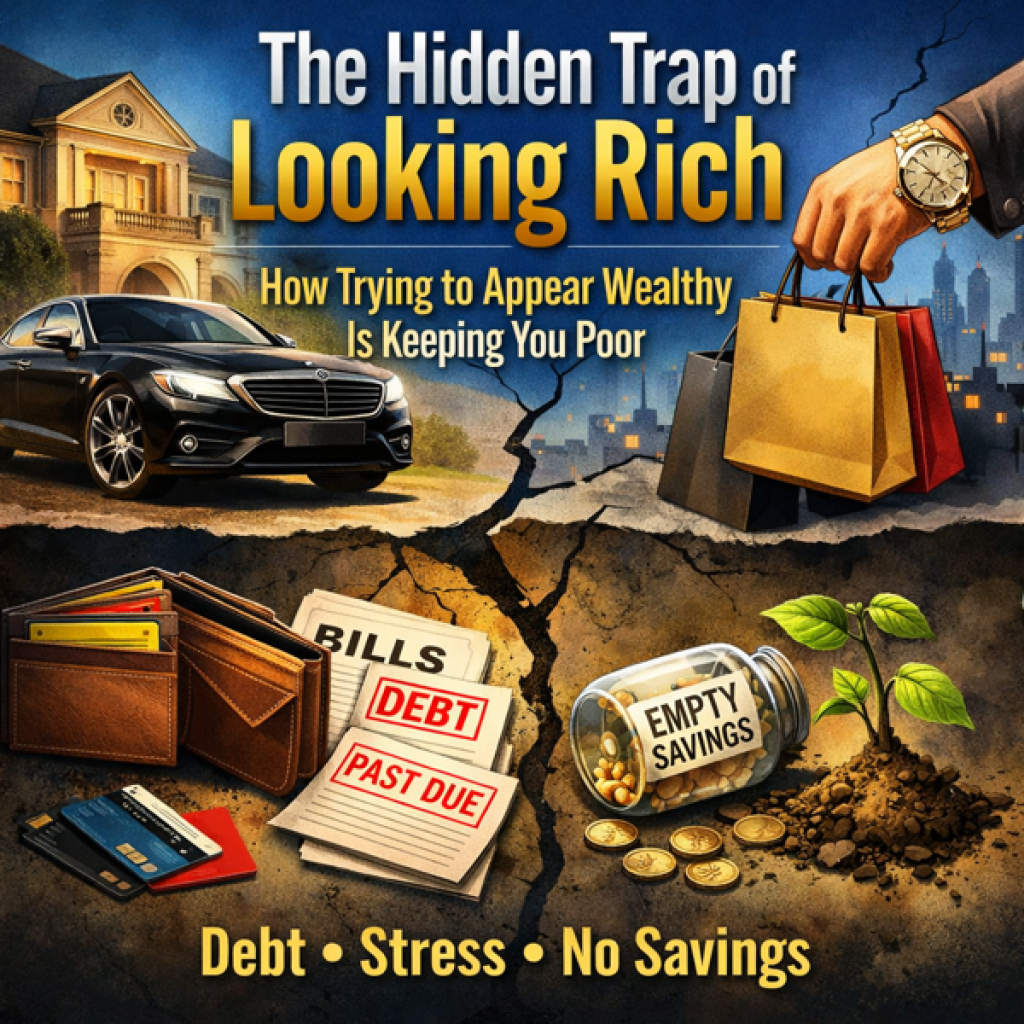
In a world driven by social media, luxury brands, and status symbols, it’s easy to confuse looking wealthy with actually building wealth. Trying to look rich could be the very reason you’re broke. Discover how lifestyle inflation, status spending, and fake wealth sabotage true financial freedom.
Table of contents [Show]

We live in a world that is very good at tricking us. Everywhere we look on our phones, on television, even just walking down the street, we see people who look like they have it all figured out. We see the shiny new cars parked in driveways. We see the big houses with perfectly manicured lawns. We see people wearing clothes with famous logos and watches that cost as much as a small family vacation. And when we see these things, our brains automatically tell us a story. We think, "Wow, that person must be doing really well. They must be rich. They must be successful."
But here is the secret that nobody tells you: looking rich is not the same thing as being rich. In fact, looking rich is often the very thing that stops people from ever actually becoming wealthy.
Think about money like a seed. If you were a farmer, you would know that your seeds are the most precious thing you have. If you plant them in the ground and take care of them, they will grow into crops that can feed you and your family for years. But if you eat all your seeds right now because you are hungry or because you want a fancy meal to show off to your neighbours, you will have nothing left to plant. You will have a full stomach for one night, but you will starve next winter.
Spending money to look successful is exactly like eating your seeds. When you buy a luxury car to impress your co-workers, or you buy a big house just so your family looks important, you are taking the money that could have grown into your future freedom and you are destroying it. You are trading your safety and your peace of mind for a costume. You are dressing up as a rich person, but underneath the expensive clothes, your bank account is empty.
To understand why this happens and how to stop it, we need to look at the specific traps that catch almost everyone.
There is a fancy term for this called "lifestyle inflation," but let’s just call it "the upgrade trap." It happens to almost everyone, and it is very hard to see when you are in the middle of it.
Here is how it works: You get a new job or a raise at work, and you feel good. You think, "I worked hard for this, I deserve a treat." So, you trade in your reliable old car for a newer, more expensive one with a monthly payment. You move into a slightly nicer apartment or house that costs a bit more each month. You start buying brand-name groceries instead of the store brand.
At first, this feels great. You feel like you are moving up in the world. But very quickly, that new car just becomes "your car." That nice house just becomes "your house." The excitement wears off, but the bills do not. The monthly payments stay the same. Suddenly, you realize that even though you are making more money than before, you don't have any more money left over at the end of the month. You have simply raised the cost of your life to match your new income. You are running faster on a treadmill just to stay in the exact same place.
This is dangerous because it makes you fragile. If you lose your job tomorrow, or if you get sick and cannot work, all those fancy things, the car, the house, the clothes become heavy burdens. They become chains that tie you down. You cannot take a break. You cannot retire early. You cannot help your children or your parents because every dollar you make is already spoken for by a bill collector. You look like a master of the universe to the outside world, but inside, you are a servant to your own stuff.
Trying to look successful is also incredibly stressful. It is a game that you can never win because there is always someone with a bigger boat, a faster car, or a nicer house. If your definition of success is having better things than your neighbour, you will be unhappy forever.
Imagine the mental energy it takes to maintain this image. You must worry about scratches on your expensive car. You must worry about staining your expensive clothes. You must worry about what people will think if you are seen at a discount store. It is exhausting.
Real wealth, the kind that actually changes your life is often quiet. It is often boring. It is the money you do not see. It is the money sitting in a boring bank account, slowly growing year after year. It is the old car that is paid off and runs perfectly fine. It is the modest house that feels like a home, not a museum.
The whole truth of the matter is that the truly wealthy people, the ones who stay rich for generations often look remarkably ordinary. They might wear simple jeans and t-shirts. They might drive a truck that is ten years old. Why? Because they are not trying to prove anything to anyone. They know they have money in the bank. They know they can handle whatever life throws at them. They do not need a stranger at a stoplight to admire their car to feel good about themselves. Their confidence comes from their bank balance, not their bumper.
It is helpful to understand the difference between people who look rich and people who are rich.
The Fake Rich: These people have high incomes, but they spend almost all of it. They drive the newest cars, wear the latest fashions, and go on expensive vacations. But if they stopped working for three months, they would be in big trouble. They are "rich" in things, but "poor" in freedom. They are stressed, anxious, and constantly worried about money, even though they look like they have plenty of it.
The Real Rich: These people might have high incomes, or they might have average incomes. The difference is that they save and invest a large portion of what they earn. They drive older cars. They live in modest houses. They don't care about brand names. But if they stopped working for three months or even three years, they would be fine. They are "rich" in freedom and peace of mind. They sleep well at night because they know they are safe.
Every time you spend money on something to look successful, you are giving up something else. This is called "opportunity cost."
When you spend $50,000 on a luxury car, you are not just spending $50,000. You are spending the $50,000 that could have grown into $500,000 over the next 30 years if you had invested it instead. You are trading a huge amount of future money for a piece of metal and plastic that will lose value every single day.
When you buy a big house with a huge mortgage, you are not just buying a place to sleep. You are buying 30 years of stress. You are buying the obligation to work at a job you might hate just to pay the bank. You are giving up your freedom to travel, to start a business, or to spend more time with your family.
Is looking successful worth that price? Is impressing strangers at a stoplight worth giving up your freedom?
So, how do we escape this trap? How do we stop trying to look rich and start becoming wealthy? Here are some simple, practical steps you can take right now.
1. Define Your Own Success
The first step is to stop letting other people define success for you. Defining your own success means taking a step back, looking at that script, and tearing it up. It means asking yourself a very scary but necessary question: "If nobody was watching, and if I didn't have to impress anyone, what would I actually want my life to look like?"
Success does not have to mean a big house or a fancy car. Success can mean:
Being debt-free.
Having enough savings to quit your job if you want to.
Being able to help your children with their education.
Sleeping soundly at night without worrying about bills.
Having time to spend with the people you love.
Acknowledge this, success is personal not public. One of the most powerful parts of defining your own success is figuring out your "Enough" point.
In the standard game of life, there is no finish line. If you get a raise, you are supposed to want a bigger raise. If you get a nice house, you are supposed to want a bigger house. It is a treadmill of "more, more, more."
But when you define your own success, you get to decide when you have enough. Maybe "enough" money means just covering your basic bills and having a little extra for pizza on Fridays. Maybe "enough" house means just having a safe place to sleep and a kitchen to cook in.
Once you define your "Enough," you become free. You can stop running. You can look at your bank account and say, "I have enough. I don't need to stress myself out to get more." This is a superpower. While everyone else is exhausted from chasing "more," you are relaxed and happy because you have reached your own finish line.
Here is a simple test to see if you are truly successful: The Sleep Test.
Can you put your head on the pillow at night and fall asleep within 10 minutes? Or do you lie awake worrying about bills, debt, and what other people think of you?
If you have a giant mansion but you can't sleep because you're worried about making the mortgage payment, you are not successful. You are a prisoner.
If you live in a tiny apartment but you have zero debt and six months of expenses saved in the bank, and you sleep like a baby... you are successful.
Peace of mind is the most expensive luxury in the world, and you cannot buy it at a store. You can only buy it by living below your means and refusing to play the status game.
So, how do you actually do this? You need to sit down with a pen and paper (no phones, no distractions) and write your own definition of success.
Don't use vague words like "happy" or "rich." Be specific. Describe your perfect average Tuesday. For instance.
Bad Definition: "I want to be rich." (This means nothing. How much is rich? When does it stop?)
Good Definition: "Success to me means having zero debt, owning my home completely, and having enough savings that I can work part-time at a job I love, so I can spend every afternoon gardening and reading."
Bad Definition: "I want to be famous/respected."
Good Definition: "Success to me means having a small group of close friends who trust me, being a present father to my kids, and being known as someone who keeps their promises."
Once you write this down, look at it every day. When you feel the urge to buy something stupid, or when you feel jealous of a neighbour's new car, look at your paper. Remind yourself: "That is their definition of success, not mine. I am playing a different game."
Defining your own success is the only way to win the game of life. Because if you don't define the rules, you are guaranteed to lose.
2. The "24-Hour Rule" for Spending

The 24-Hour Rule is a powerful psychological circuit breaker designed to arrest the momentum of impulse buying and protect your finances from your own fleeting emotions. At its core, this rule is a mandatory waiting period that you impose on yourself whenever you feel the urge to make a non-essential purchase. The premise is simple yet profound: whenever you see something you want to buy whether it is a new pair of shoes, a gadget, a piece of furniture, or even a small luxury item, you must force yourself to stop and wait a full twenty-four hours before completing the transaction. This is not about denying yourself the things you want forever; it is about ensuring that you actually want them for the right reasons rather than just reacting to a momentary feeling.
This cooling-off period is critical because retailers and advertisers are masters at triggering emotional responses that make you feel an urgent, almost desperate need to buy immediately. They use bright colours, limited time offers, and persuasive language to bypass your logical brain and speak directly to your emotional brain, creating a rush of dopamine that makes the act of buying feel like a reward.
Impulse buying is the enemy of wealth. Most of the time, you will wake up the next morning and realize you don't actually need it. The excitement will have faded, and your rational brain will be back in charge. This simple rule can save you thousands of dollars a year.
3. Automate Your Savings
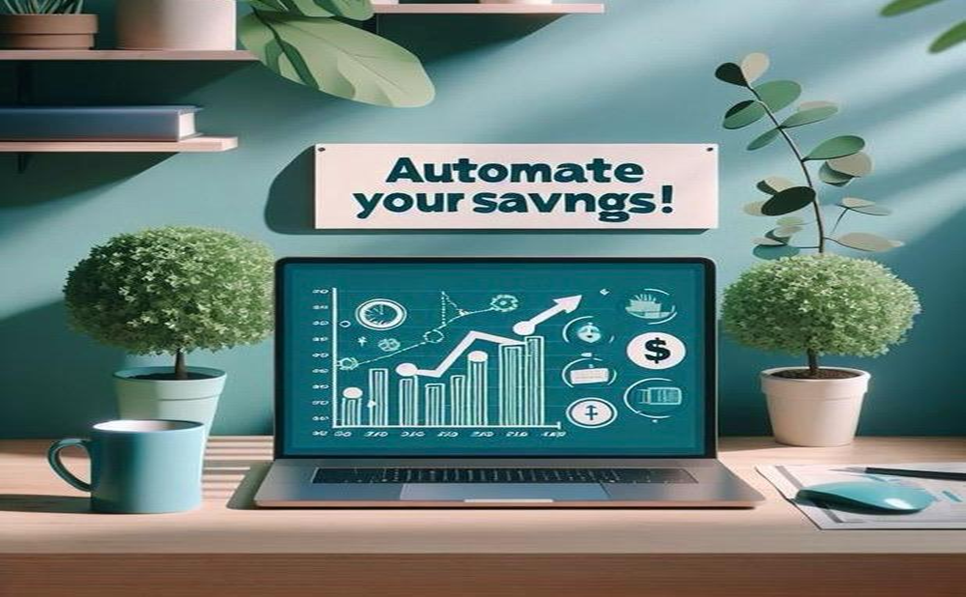
Automating your savings is the single most effective strategy for building wealth because it completely reverses the broken formula most people use to manage their money. The traditional approach is to wait until the end of the month to see what is left over after paying bills and spending on daily life, and then try to save that remaining amount. The problem with this method is that human nature almost guarantees there will be nothing left over. When money sits in your checking account, it feels available to be spent, so you naturally adjust your lifestyle to consume every dollar you see. You might buy a slightly more expensive lunch, grab an extra coffee, or make an impulse purchase simply because the balance on your banking app says you can. This is why so many people with good incomes still live paycheck to paycheck; they are trying to save using willpower alone, which is an exhaustible resource that often fails when faced with temptation.
To fix this, you must adopt the philosophy of paying yourself first by automating the entire process. This means setting up a system where a specific portion of your income is instantly transferred to a separate savings or investment account the very moment your paycheck hits your bank. By moving this money immediately, you remove it from your immediate view and access. You artificially lower your available checking balance, which forces you to adapt your spending habits to the smaller amount that remains. Psychologically, this is powerful because you learn to live on slightly less without really feeling the pinch, since you never saw that money in your spending account in the first place.
4. Practice "Stealth Wealth"
Practicing stealth wealth means intentionally choosing to live below your means and keeping your true financial status private, rather than displaying it for the world to see. It is the art of being secretly rich while looking completely ordinary to everyone else. Instead of upgrading your lifestyle every time you get a raise by buying the flashy car, the designer clothes, or the big house, you quietly funnel that extra money into investments, savings, and assets that grow in the background. Make it a game to see how little you can spend on appearances while still living a good life. Take pride in driving an older car that runs well. Brag about how little you paid for your clothes, not how much.
This approach removes the immense pressure of keeping up appearances and protects you from the envy or expectations of others who might treat you differently if they knew how much you had. By decoupling your self-worth from your net worth, you gain a profound sense of freedom and security; you know you could buy the expensive item if you wanted to, but you choose not to because you value your financial independence more than the fleeting validation of strangers.
When you stop trying to impress people, a huge weight lifts off your shoulders. You realize that nobody is actually looking at you as much as you think they are. People are too busy worrying about themselves to notice your shoes.
5. Buy Assets, Not Liabilities
This is the most important rule of all. The fundamental difference between building wealth and digging a financial hole lies in understanding the distinction between an asset and a liability.
An asset is anything that puts money into your pocket, such as a rental property, a dividend-paying stock, or a business that generates income without your constant presence. A liability, on the other hand, is anything that takes money out of your pocket, like a luxury car that requires insurance and maintenance, a large house with high property taxes and utility bills, or consumer debt that demands monthly interest payments.
Most people struggle financially because they spend their lives buying liabilities that they think are assets believing their home or car is an investment when, in reality, it is a constant drain on their cash flow. To become truly wealthy, you must shift your mindset to prioritize acquiring income-generating assets first, using the cash flow from those assets to eventually pay for your luxuries, rather than working hard just to service the debt on things that lose value every day.
Rich people buy assets. Poor people buy liabilities that they think are assets. Before you buy anything big, ask yourself: "Is this going to put money in my pocket, or take money out of my pocket?" If it takes money out, try to minimize the cost. If it puts money in, try to maximize it.
In conclusion, choose freedom. The next time you feel the urge to buy something just to show the world how well you are doing, stop and ask yourself: "Am I buying this because I need it, or am I buying this because I want people to think I am successful?"
If the answer is the second one, put your wallet away. Keep your money. Plant your seed. Let it grow. Your future self (the older version of you who wants to retire and relax) will not care about the fancy shoes you wore in 2024. But they will care very much about the money you saved and invested. They will thank you for choosing freedom over applause.

Why does your salary disappear so quickly? Explore the everyday spending habits, financial pressures, and small expenses that can turn ₦150,000 into a mid-month money crisis.
Why do we spend money trying to look successful? Explore the psychology behind lifestyle spending, social pressure, and the hidden cost of looking financially fine.
Having enough money to buy something doesn’t always mean you can afford it. Learn a smarter way to evaluate purchases, protect your finances, and spend with confidence.