You Were Paid Yesterday. What Happened?
Why does your salary disappear so quickly? Explore the everyday spending habits, financial pressures, and small expenses that can turn ₦150,000 into a mid-month money crisis.
Loading...

Nobody tells you this about making money… it’s not about working harder. Financial discipline may not sound exciting, but it is one of the most powerful drivers of long-term wealth. This blog breaks down how financial discipline works, why it matters, and how you can use it to accelerate your journey to lasting wealth
Table of contents [Show]
Let’s be honest. Financial discipline is not exactly the most exciting topic in the world. It doesn’t sound as thrilling as overnight success stories, and it doesn’t promise overnight millions from saving instantly.
And let me be clear right out of the gate. Saving is fantastic. It is the absolute bedrock of wealth. You cannot build anything lasting without it. But sometimes, the way the financial industry talks about saving makes it feel incredibly heavy. It feels like a punishment, a strict diet, or a mandate to live like a miserable hermit.
So, let’s completely shift how we look at this.
Imagine you are driving a high-powered, beautifully engineered sports car. You have a great income, that’s your fuel. You are pouring premium gas into the tank every two weeks when your pay-check hits. But despite all that horsepower, the car is sluggish. It’s shaking, it’s burning through gas, and it’s barely hitting 40 miles per hour. Why? Because you are driving with the parking brake pulled all the way up.
Same way, you have massive consumer debt, bloated lifestyle costs, subscriptions you don't use, and impulsive spending habits. That is your friction.
True wealth runs on financial discipline, and it isn't about driving slower. It is simply the art of taking your foot off the brake and moving toward your ultimate freedom without the invisible, mechanical drag holding you back. When you remove the friction, you don't need to press the gas pedal any harder to go twice as fast.
If we’re going to talk about this seriously, we need to agree on what the word "discipline" means, because modern society has given it a terrible rebrand. We usually hear the word "discipline" and immediately think of deprivation. We think of waking up at 4:00 AM to run in the freezing rain or eating plain chicken breast and broccoli for six months straight.
But that’s not it at all. Financial discipline is simply the bridge between what you want right now and what you want most.
It is the daily practice of aligning your spending with your actual, deep-down values. It’s not about saying "no" to everything; it’s about saying "no" to the stupid, fleeting, forgettable stuff so you can say a massive, life changing "YES" to the things that matter to you.
Think of it as Future-Sourcing.

Human psychology is wired to prioritize the present moment. Studies in neuroscience show that when we think about our future selves (us in 10, 20, or 30 years), our brains light up in the exact same regions as when we think about a stranger. We literally view our future selves as someone else. This is why it is so easy to blow $500 on a weekend trip today rather than investing it for retirement. Why would you give your money to a stranger?
Discipline bridges that psychological gap. Every time you choose to save instead of buying some random gadget you don't genuinely need; you aren't depriving yourself. You are literally sourcing the capital for the exact life you want tomorrow.
You are buying your 50-year-old self a random Tuesday afternoon off to go golfing while everyone else is stuck in a cubicle. You are buying your future kids a debt-free college education so they can start their lives without a heavy anchor around their necks. You are buying autonomy.
Why does this matter so much? Why can't we just focus on making more money and out-earning our spending habits? Because of one brutal, undeniable truth: Income does not equal wealth.
In the financial world, there is an acronym: HENRY. It stands for High Earner, Not Rich Yet. Many people earning $250,000 to $400,000 a year are flat broke, stressed out of their minds, and literally one missed pay-check or medical emergency away from total disaster.
How is that mathematically possible? Because their friction perfectly matches their fuel. They make a lot of money, but they spend every single dime of it trying to look like they make a lot of money. They have the massive mortgage, the two leased luxury SUVs, the private school tuitions, the country club memberships, and the designer wardrobes. Their "burn rate" is so high that despite being in the top 1% of earners, they have zero actual wealth. They are trapped on a golden hamster wheel.
On the flip side, people earning far less say $80,000 a year can build a net worth of $1.5 million through smart spending and disciplined investing. It’s not about how much you earn; it’s about how you manage it.
Financial discipline is important because it is the only mechanism that captures your hard work and turns it into permanent freedom. Without discipline, you are just a highly paid pass-through account. The money hits your bank account on Friday, and by Monday, it has been passed through to the mortgage lender, the car dealership, the credit card company, and Amazon.
Discipline is what allows you to build a fortress around your money and say, "No, this part is mine to keep." It is the ultimate boss move. It proves you are the executive director of your own life, fully in control of your impulses, rather than allowing the marketing departments of massive corporations to dictate your future.
To make this work in the real world, we need to look under the hood. How do disciplined people process the world around them? It’s not just about having a high-yield savings account or a spreadsheet; it’s a completely different psychological framework. Let's break down the four hidden mechanics of wealth velocity.

Every single dollar that enters your life has two potential paths. It can become an Employee, or it can become Waste.
An Employee Dollar is an investment. It goes out into the world, works 24 hours a day, 7 days a week, never takes a sick day, never complains, and earns more money for you. It buys shares of profitable companies, it buys real estate that generates rent, or it earns compound interest.
A Waste Dollar on the other hand is an expense that loses its value the second you swipe your card. It’s the depreciating car, the fast fashion that falls apart after three washes, the overpriced drinks at a loud bar you didn't even want to go to.
Discipline is the filter at the top of the funnel. The goal here isn't to have zero waste. We are human beings, we need to eat, travel, buy gifts for our loved ones, and enjoy our weekends. But the goal is to consciously and ruthlessly maximize your "Employee" count. Imagine every dollar bill in your wallet is wearing a tiny yellow hard hat. When you look at a potential purchase, ask yourself: "Is this dollar going to go to work for me, or is it going to disappear in a landfill in six months?"
This is exactly what researcher Thomas J. Stanley found when he spent years writing his ground-breaking book, The Millionaire Next Door. After interviewing thousands of rich individuals across the country, he found that the real millionaires in America weren't the guys driving Ferraris on Wall Street.
Stanley categorized people into two groups: PAWs (Prodigious Accumulators of Wealth) and UAWs (Under Accumulators of Wealth). The UAWs drove the luxury cars and wore the Rolexes but had very little actual net worth. The PAWs (the actual millionaires) were the guys who owned a small regional plumbing business, lived in a modest middle-class neighbourhood, drove a four-year-old Ford F-150, and wore a reliable Seiko watch.
Their specific brand of discipline was Invisibility. They mastered the Wealth-to-Waste ratio because they actively chose to be rich rather than to look rich. They understood that the money you spend to look wealthy is the exact money that prevents you from becoming wealthy. They hired dollar-employees instead of buying status symbols.

I want you to remember this rule for the rest of your life. The most dangerous moment for your long-term wealth isn't when you're broke. It’s the exact moment you get a raise.
There is a concept called Parkinson's Law, which states that "work expands so as to fill the time available for its completion." In personal finance, Parkinson's Law dictates that expenses expand to meet income.
Most people celebrate a $10,000 bump in income by immediately signing a lease for a car that costs $10,000 more. They upgrade their apartment to the building with the rooftop pool, they buy nicer clothes, and they start going to pricier restaurants. The result? They have stayed in the exact same financial spot, just with shinier toys. They are running faster on the treadmill but going nowhere. This is the Upgrade Trap. Discipline introduces a countermeasure: The "Silent Upgrade."
When you get that raise, you keep your day-to-day life the same. You don't tell anyone. You don't always get to buy a new car. You quietly dump 100% of the difference into your investments. You upgrade your net worth, your security, and your peace of mind, rather than upgrading your outward display of wealth.
Look at Sir John Templeton, one of the greatest investors in modern history. He didn't start with a massive trust fund; he started with a radical level of discipline designed specifically to beat the upgrade trap. When he and his wife got married, they made a blood pact to save exactly 50% of everything they earned. Even when they were making very little money and living in a tiny, run-down apartment with second-hand furniture, they stuck to it.
This wasn't because they wanted to suffer; it was because John deeply understood the physics of compounding capital. That early, aggressive discipline gave him the "dry powder" he needed to invest when the rest of the world was panicking. In 1939, at the onset of World War II, the stock market crashed. Because Templeton had disciplined himself to save half his income, he had the cash to buy 100 shares of every single company on the New York Stock Exchange trading under $1. He bought 104 companies. 34 of them were in bankruptcy.
Four years later, he sold those shares for a massive profit, laying the foundation that eventually turned him into a billionaire. He could only do that because he didn't upgrade his lifestyle when he started making money.

Let's be honest about the world we live in. Modern marketing algorithms are not just clever ads; they are designed by neuroscientists to hack our brain chemistry. "One-click" buying, Apple Pay, saved credit card numbers, and targeted Instagram ads are the enemies of wealth because they remove all the friction from spending.
When you see an ad for something you want, your brain releases a spike of dopamine. Interestingly, science shows that the dopamine spike happens in anticipation of the purchase, not after you own the item. You get the feel of clicking "Buy Now." Once the package arrives three days later, the thrill is already gone, and the item just becomes another piece of clutter in your house.
A disciplined system fights back by introducing Strategic Friction. You need to build speed bumps between your impulses and your wallet.
The rule is incredibly simple but highly effective. I call this the "Sleep-On-It" Protocol. Anything you want to buy over $100 (that isn't a necessity like groceries, medicine, or bills) requires you to sleep on it for at least one full night.
Put the item in the digital cart, close the laptop, and walk away. Usually, by the next morning, the artificial dopamine hit has completely faded. Your logical brain comes back online, and you realize you didn't want the item, you just wanted the fleeting feeling of buying it. Discipline is simply giving your logic a chance to catch up to your emotions.
If you want to take this a step further, delete all saved credit card information from your browser and your phone. Force yourself to physically get up, walk across the room, find your wallet, pull out the card, and type in the 16 digits every single time you want to buy something online. That tiny bit of physical friction is often enough to make you say, "You know what? It's not worth it."
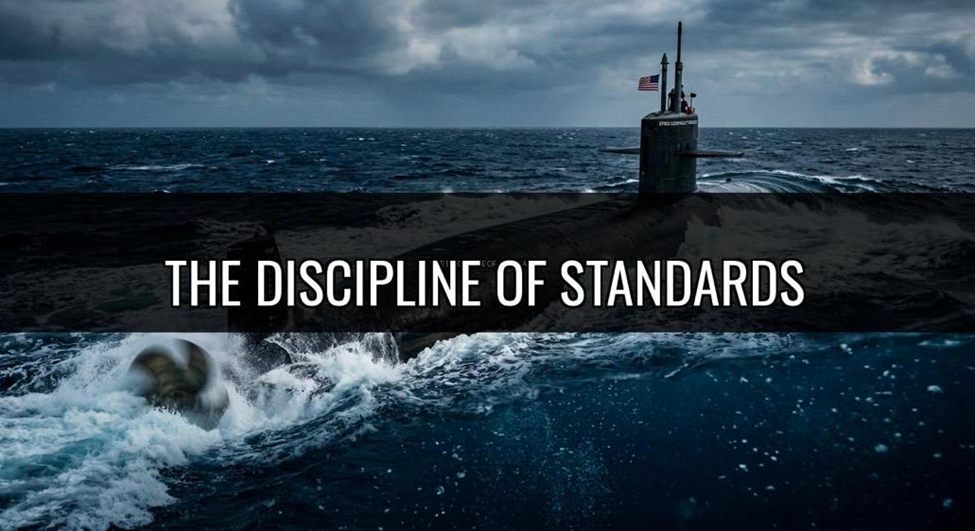
Discipline extends far beyond the checkout counter. it dictates how you protect your money once you have it. Amateurs focus entirely on how much they make; disciplined professionals focus entirely on how much they keep.
This requires a standard of extreme accountability. Admiral H.G. Rickover, known as the "Father of the Nuclear Navy," operated nuclear submarines where a single tiny mistake meant catastrophic failure and loss of life. He believed that if you aren't disciplined in the microscopic things, you cannot be trusted with the massive things. He demanded absolute perfection in the boring, mundane details of daily operation.
In personal finance, this translates perfectly. If you can't track where $10 went, you will never be able to manage $10,000. A leaky valve sinks a nuclear submarine, and a leaky budget sinks a retirement portfolio.
This is why disciplined investors care deeply about the boring details, like taxes and fees. They understand that taxes are the single biggest expense they will face over a lifetime. So, they have the patience to use "boring" vehicles like index funds, real estate, Roth IRAs, and 401(k)s instead of chasing the "hot" meme stock of the week or trying to day-trade crypto.
They realize that a slow, steady, tax-advantaged 8% return compounding quietly in the background will mathematically obliterate a flashy 20% gain that gets immediately eaten alive by short-term capital gains taxes and 2% management fees. They apply Rickover's standard of excellence to their money, ensuring they don't leave a tip for the IRS or Wall Street brokers if they don't have to.
Furthermore, this standard of discipline is what keeps them from panicking. When the stock market drops 20% in a month, the amateur panics and sells everything at the bottom, locking in their losses. The disciplined investor does nothing. They hold their standard. They keep buying and understand that wealth is transferred from the impatient to the patient.
If we’re being completely real with each other, the hardest part of this entire journey is what I call the "Middle Years."
You’ve read the books, and you’ve started being disciplined. You are also saving aggressively, tracking your net worth, and finally seeing the numbers in your accounts start to grow but you aren't rich yet. You still have to wake up to an alarm clock. You still need to go to work. You will budget for your groceries as well.
Charlie Munger, Warren Buffett's legendary business partner, famously said, "The first $100,000 is the hardest milestone, but you have to get there." He meant that the beginning of wealth building is a grind. The math of compound interest is slow at first but with time, the expected outcome will show.
This is the exact moment where 90% of people quit. They look at the massive gap between where they currently are and where they ultimately want to be, and they think, "Man, why am I even bothering? I've been saving for three years, and I only have $40,000. I might as well just blow this money, buy a nice truck, and enjoy my life right now."
But here is what I want you to remember when you hit that wall, when you feel the fatigue setting in, discipline is the only vehicle that closes that gap.
Compound interest looks like a hockey stick. It is flat and boring for a long time, and then suddenly, it explodes upward. Every single time you stay disciplined, you are shortening the timeline to reach your "Escape Velocity" point.
Escape Velocity is that magical, mathematical moment where your investments generate more passive income than your day job pays you in active income. If your investments generate $60,000 a year in returns, and your lifestyle only costs $50,000 a year, you have achieved Escape Velocity. You never have to work another day in your life unless you want to.
Once you hit that specific point, the discipline suddenly becomes effortless because you have crossed the finish line and achieved your freedom. The friction is gone, and you are cruising on the open road.
You don’t need a financial miracle. No lottery jackpot, no mysterious inheritance, and no wild crypto gamble required. You just need to keep your foot off the brake. Keep your friction low, keep hiring those dollar employees to work for you, and let the physics of time do the heavy lifting.
You’re doing much better than you think you are. Just keep going.
Why does your salary disappear so quickly? Explore the everyday spending habits, financial pressures, and small expenses that can turn ₦150,000 into a mid-month money crisis.
Why do we spend money trying to look successful? Explore the psychology behind lifestyle spending, social pressure, and the hidden cost of looking financially fine.
Having enough money to buy something doesn’t always mean you can afford it. Learn a smarter way to evaluate purchases, protect your finances, and spend with confidence.