You Were Paid Yesterday. What Happened?
Why does your salary disappear so quickly? Explore the everyday spending habits, financial pressures, and small expenses that can turn ₦150,000 into a mid-month money crisis.
Loading...

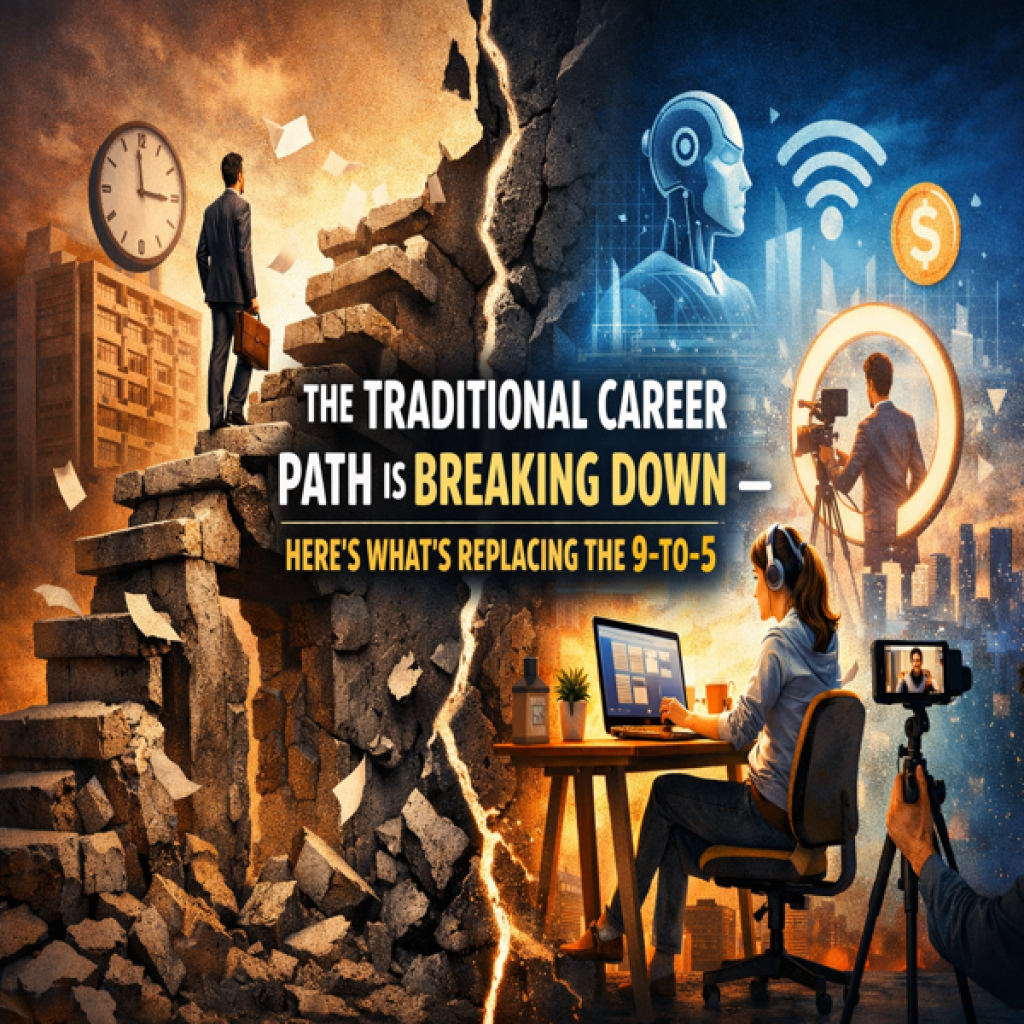
The traditional 9-to-5 career path is breaking down as layoffs, AI, remote work, and the creator economy reshape the job market. Discover what’s replacing the old career system and how professionals are adapting to the future of work.
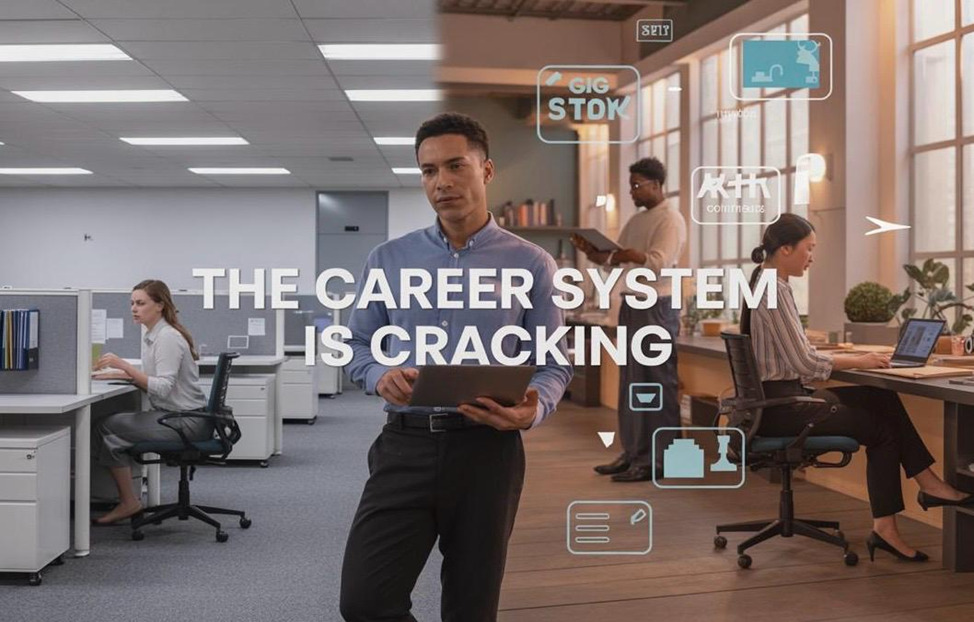
The traditional 9-to-5 career ladder that your parents climbed is falling apart. Companies are laying off thousands while scrambling to find skilled workers. Employees are job-hopping every two years, building diverse skill sets instead of climbing corporate hierarchies. The career system is cracking under pressure from technological change, economic uncertainty, and shifting worker expectations.
This breakdown affects everyone from recent graduates entering the job market to mid-career professionals watching their industries transform overnight. Remote work, AI automation, and the creator economy are reshaping how we think about professional success.
Understanding these changes matters because the old career model no longer reflects the reality of modern work.

Linear career paths are becoming obsolete.
The traditional 40-year climb up the corporate ladder has become as outdated as a fax machine. Workers today change jobs every 2–4 years on average, compared to the 10+ year tenures their parents enjoyed. That neat, predictable progression from entry-level employee to senior management simply doesn’t match the reality of modern work anymore.
If you’re building a career today, you’ve probably started to notice this yourself. Maybe you’ve seen coworkers leave after a couple of years, or you’ve realized that promotions don’t always come in the steady steps people once expected.
Companies are restructuring so frequently that entire roles can disappear almost overnight. Middle management positions are being eliminated as organizations flatten their structures, which means there are fewer rungs on that old corporate ladder. At the same time, industries are changing so quickly that even career advice can struggle to keep up.
Just think about how many job titles exist today that didn’t exist ten years ago: Growth Hacker, DevOps Engineer, Sustainability Consultant, Content Creator. These roles appeared because the market needed them, long before traditional career systems could adapt.
What this really means for you is that careers are no longer something you simply “follow.” Increasingly, you have to build them yourself.
Many professionals are now creating their own paths by combining skills from different fields. Someone might understand technology and marketing. Another person might combine design with business strategy.
In a world like this, the old advice to “stay in your lane” doesn’t help much anymore. Instead, it’s often smarter to stay curious, keep learning new things, and remain open to opportunities that don’t fit neatly into a traditional job description. Because today, careers look less like ladders and more like journeys with unexpected turns along the way.
Workers are increasingly creating their own paths by combining skills from different fields, making the old “stay in your lane” mentality increasingly irrelevant.
The promise of job security in exchange for loyalty has proven to be one of the biggest workplace myths of the past century.
For a long time, that was actually true. You gave a company 25 years of your life, and they gave you a pension, healthcare, and a gold watch. But today? That social contract has been shredded.
We’ve all seen it happen. You watch a coworker who has been at the company for a decade. Someone who worked weekends, missed family dinners, and bled for the brand got laid off via a generic, five-minute zoom call because some executive needed to hit a quarterly budget target.
Even the "safe" jobs aren't safe anymore. Government workers, teachers, and healthcare professionals are dealing with the exact same budget cuts and restructuring as the tech bros. And here is the most frustrating part about corporate loyalty today: it actively costs you money.
According to recent 2026 workforce data, over half of the workforce has one eye on the exit door. It’s not because people are lazy; it’s because staying at one company for too long often feels like a "loyalty tax." New hires are getting paid more, and the "lifers" are often the first ones let go when a new AI tool comes along. Too many companies would rather hire a "pro" from outside than train the loyal person already sitting in the chair and most people who quit say their manager hadn't asked them "How are you doing?" or "Where do you want to go?" in months.
Have you ever noticed that a company would refuse to give a loyal, five-year employee a 10% raise, but they will happily hire a brand-new person off the street to do the exact same job for 20% more money? Staying put is now financially penalized. The people who "job hop" every two or three years are the ones seeing massive salary bumps, while the loyal employees are handed a 3% cost-of-living increase that doesn't even cover the rising price of rent.
The smartest workers have realized that "job security" doesn't come from a company anymore. True security doesn't mean having a safe job; it means having a skill set that is so sharp, and a network that is so strong that if you get fired on a Friday, you can have three new job offers by Tuesday. You don't build security by clinging to one employer. You build it by making yourself undeniably valuable to the marketplace.
Mass layoffs at supposedly “stable” companies have shattered the illusion that any job is truly secure, regardless of performance or tenure.
Another major shift is the widening gap between what traditional education teaches and what employers really need.
Education systems move slowly while technology evolves rapidly. Universities sometimes teach programming languages that companies stopped using years ago, while fields like data analysis, digital marketing, and cybersecurity face massive talent shortages. This disconnect has made skills-based hiring more common.
This is a huge shift, and if you look closely, you can see exactly why the old model is starting to buckle under its own weight. We’ve been fed this narrative for decades that if you just go to school, get the degree, and collect the credentials, you’re essentially set for life that the piece of paper is the golden ticket that opens every door. But that system was built for a world that moved slowly, a world where what you learned at twenty would still be relevant when you were forty.
The reality in 2026 is that the gap between what universities is teaching and what companies really need to survive has become a canyon. Education systems are designed to be steady, careful, and slow, but technology is moving at a breakneck speed that makes traditional curriculum feel like it's perpetually stuck in the past. We’re in a strange era where universities are often still teaching programming languages that the industry effectively retired years ago, while companies are desperate for people who can navigate modern data analysis, digital marketing, or complex cybersecurity threats.
This disconnect has forced the business world to stop looking at transcripts and start looking at results. We’re seeing a massive transition toward skills-based hiring, where a manager doesn't necessarily care about the name of the school on your resume as much as they care about what you can prove you can do today. If you’re a developer who has spent the last six months building real-world projects on GitHub, or a designer who has built a portfolio of work on Behance, you’re speaking a language that hiring managers understand. They are looking for demonstrated ability for people who have spent time in the trenches solving actual, messy, real-world problems.
In this environment, your digital footprint is becoming your new resume. Whether you’re a writer building an audience online, a coder pushing updates to an open-source project, or a marketer running campaigns in real-time, you are essentially building a body of evidence that proves you are relevant right now.
And that leads to the hardest truth of all: the "half-life" of your skills is shrinking rapidly. The tools you use today might be completely replaced by an AI-driven equivalent in two years, maybe even sooner. That means the days of finishing your education in your early twenties and coasting on that knowledge for the rest of your career are officially over. To stay competitive in this new world, you have to become a permanent student. You have to constantly be "stacking" new skills and refining your approach, because in a world that moves this fast, the most valuable person in the room isn't the one who knows the most rather it's the one who can learn the fastest.
4. Portfolio Careers and the Gig Economy Are Rising
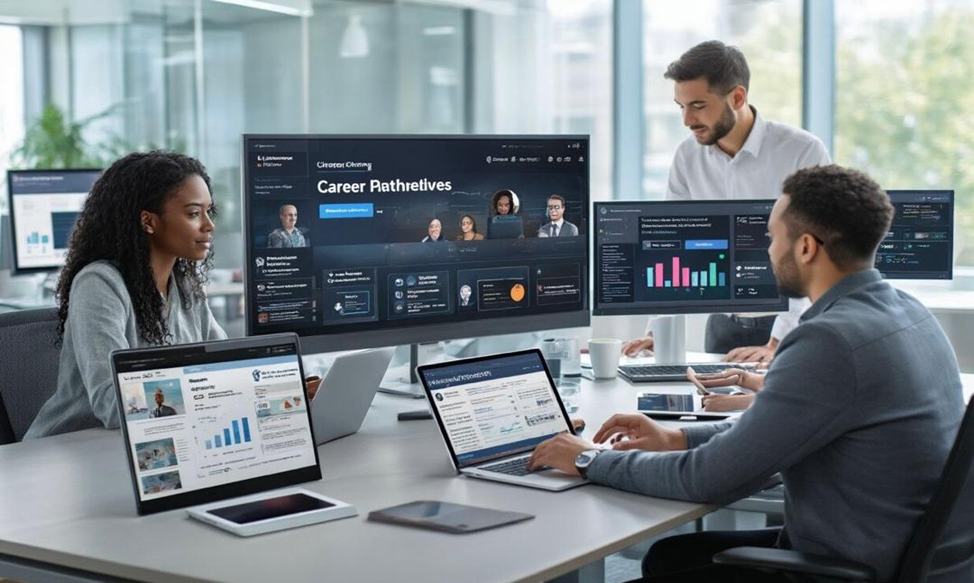
Workers today are increasingly discovering that relying on a single employer for their entire income feels risky.
The portfolio career model encourages professionals to cultivate multiple revenue streams simultaneously. Instead of relying on one job, workers may combine consulting work, freelance projects, online teaching, or digital products.
This approach creates income diversification spreading earnings across multiple clients, projects, and skill applications. When one income stream slows down, others continue generating revenue. The gig economy has accelerated this shift.
This is perhaps the biggest shift in how we think about "making a living," and it’s arguably the most empowering one. For generations, the goal was to find one employer, a single, monolithic entity and attach your entire financial well-being to their payroll. You gave them your time, your focus, and your loyalty, and in return, you hoped for a paycheck that would last until retirement. But in 2026, putting all your eggs in one corporate basket feels less like stability and more like a significant liability. People are starting to realize that true security isn’t found in a single employment contract; it’s found in the ability to diversify where your money comes from.
To be fair, the "corporate ladder" is starting to feel less like a climb toward success and more like being trapped in a hamster wheel where the company owns the hamster, the wheel, and occasionally even your soul.
That’s why we’re seeing the rapid rise of what we call the "portfolio career." Instead of being defined by a single job title, professionals are increasingly acting like their own mini conglomerates. They are building careers made up of multiple revenue streams woven together. Maybe you’re doing some high-level consulting, handling a few freelance projects, teaching a course online, or selling digital products. By spreading your work across different clients, you’re creating a buffer. If one stream slows down, you aren't left with zero; you have other parts of your "portfolio" keeping the lights on.
As the Harvard Business Review recently highlighted, the shift toward “liquid labour” where talent flows to where it is needed most is forcing companies to stop hoarding full-time employees and start renting expertise by the project. You can find more on this evolving landscape at HBR.org.
Even the companies themselves are changing their tune. Businesses are realizing that project-based hiring is far more efficient. They want to bring in a world-class specialist for a high-impact project, get the job done, and move on, rather than carrying the overhead costs of a permanent employee for a role that might change in six months.
For the worker, this is a double-edged sword that favors the bold. Yes, it requires you to be your own manager, salesperson, and accountant, but it also trades the cage of a 9-to-5 for the freedom of self-direction. You aren't waiting for a promotion; you are proactively seeking out the next challenge that fits your goals. As the futurist Alvin Toffler once famously said, "The illiterate of the 21st century will not be those who cannot read and write, but those who cannot learn, unlearn, and relearn."
In this new landscape, you aren’t just an employee, you’re a professional in business for yourself, and that is a far more resilient way to navigate the uncertainty of the modern world.

Technology is playing a central role in how careers evolve today.
When we talk about "technology" in this context, we aren’t just talking about shiny gadgets or the latest software updates. It’s much simpler than that. Technology is essentially the toolbox of the modern age. It is the collection of systems, algorithms, platforms, and digital networks that amplify human ability. It is the bridge between what you know and what you can do in the world. Whether it’s an AI tool helping you scan for your dream job, a platform that lets you publish your work to a global audience, or a community app that connects you with mentors halfway across the planet, technology is simply the leverage you use to move the needle on your own career.
Technology has completely flipped the script on how we build a career. If you’re still working off the old playbook waiting for a job posting, polishing a resume, and hoping for a call back, you’re basically trying to use a map from 2005 to navigate a city that’s already been rebuilt. It’s frustrating, sure, but it’s also a reality check: the days of climbing a linear, predictable ladder are fading into the background.
The biggest change is that we’ve stopped being passive observers in our own professional lives. We have AI tools now that act like personalized career scouts, sitting in the background and doing the heavy lifting for us. Instead of mindlessly scrolling through thousands of job boards that are mostly irrelevant noise, these new platforms look at your specific background, your unique strengths, and the things you’re interested in, to suggest paths you probably wouldn't have found on your own. Think of it like having a smart, well-connected friend who knows exactly where your skills could fit, even in industries you’ve never touched before. It’s not just about finding a job anymore; it’s about discovering how your talent can pivot into new areas that have more growth and more potential than the one you’re currently stuck in.
And let’s be honest, the old "finish school and then you're done" model is officially extinct. That way of thinking feels like trying to run brand new, high-performance software on a computer that hasn't had an update in ten years. We’re in a phase of constant, bite-sized learning now. You don't need to spend four years and a fortune on a degree to prove you can do something new. You can pick up a certification, finish an intensive bootcamp, or grind out a real project in just a few months. It’s about shifting your mindset to become a permanent student constantly adding new tools to your belt, so you don't end up obsolete by next Tuesday.
Then there’s the "show, don’t tell" rule, which has become the gold standard. These days, your digital portfolio is doing way more heavy lifting than your CV ever could. If you tell a hiring manager, you’re a great developer, they might believe you, but if you show them your GitHub, they know you. It’s the difference between someone claiming they’re a world-class chef and someone serving you a five-course meal. Recruiters are gravitating toward this because it’s actual, tangible proof of how you think, how you handle a mess, and what you’re capable of creating under pressure.
Even the way we network has had a massive glow-up. It used to be about standing in a hotel ballroom at 8:00 AM, holding a cup of lukewarm coffee, and awkwardly trading business cards with strangers you’d never talk to again. That is dead. Now, you’ve got these niche online communities, private Slack channels, and Discord groups where you can collaborate with people around the world in real-time. You’re building a "personal board of directors" instead of just a list of contacts.
As the futurist Alvin Toffler famously said, "The illiterate of the 21st century will not be those who cannot read and write, but those who cannot learn, unlearn, and relearn." Technology isn't just changing the tools we use; it’s changing the whole map of the working world. It might feel a little frantic and overwhelming at times, but it’s also giving you the power to steer your own career in a way that just wasn’t possible a decade ago. You don’t need to be the person who knows everything, because nobody can keep up with that anymore; you just need to be the person who can learn, adapt, and show their work the fastest.
In summary, the "Career System" is cracking because it’s too slow and rigid to survive in 2026. What’s replacing it is a fluid, skill-based, and decentralized model where your career is no longer defined by who you work for, but by what you can build, how fast you can learn, and how effectively you use modern technology to own your professional path. Focus on developing skills that stay relevant across different industries, embrace the flexibility that comes with multiple income streams, and use the technology available to keep learning and growing. This gives you control over your professional future.
Why does your salary disappear so quickly? Explore the everyday spending habits, financial pressures, and small expenses that can turn ₦150,000 into a mid-month money crisis.
Why do we spend money trying to look successful? Explore the psychology behind lifestyle spending, social pressure, and the hidden cost of looking financially fine.
Having enough money to buy something doesn’t always mean you can afford it. Learn a smarter way to evaluate purchases, protect your finances, and spend with confidence.