You Were Paid Yesterday. What Happened?
Why does your salary disappear so quickly? Explore the everyday spending habits, financial pressures, and small expenses that can turn ₦150,000 into a mid-month money crisis.
Loading...

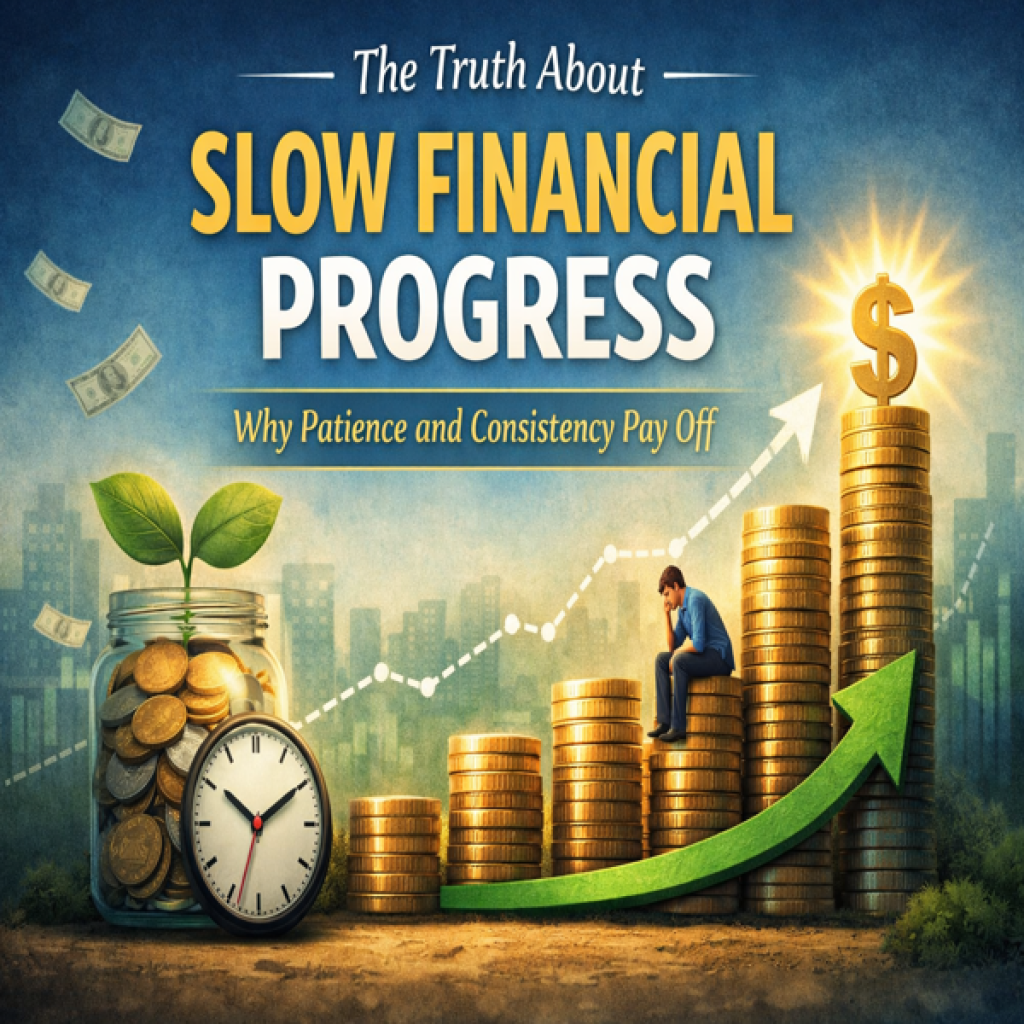
Struggling with slow financial progress? Learn why building wealth takes time, how to stay motivated, and why consistent money habits are key to long-term financial success.
Table of contents [Show]
There is a very specific, deeply relatable moment that almost everyone experiences when they finally decide to get their financial life together.
You know that moment when something just clicks, and you decide it’s time to get serious about money. So, you download a budgeting app, sit down with a cup of coffee and finally open those credit card statements you’ve been avoiding. For once, you look at the numbers instead of quickly closing the tab and telling yourself you’ll deal with it later.
Then you make a small but meaningful decision. A portion of every paycheck will automatically move into savings. This time, the plan is to save first and figure out the rest afterward.
For the first few weeks, it feels incredible. But then, usually around month three or four, a strange thing happens.
You log into your bank account, expecting to see a mountain of wealth reflecting all your hard work and sacrifice. Instead, the number staring back at you still feels small. You’ve been agonizing over your spending, packing your lunches, and doing everything right, yet your financial reality hasn't dramatically transformed. The massive progress you imagined in your head looks entirely different from the painfully incremental progress you see on your screen.
And that’s exactly when the doubt starts creeping in.
The effort suddenly feels heavy, and it’s hard not to question whether it’s even worth it. Maybe there’s some secret formula out there that somehow got missed.
Then you look around and it seems like everyone is moving ahead so much faster. People are hitting milestones, buying things, posting wins, and it quietly makes you wonder if you’re somehow falling behind.
It is incredibly discouraging. Let’s just be honest about that.
But the truth is, most financial progress doesn't look impressive while it’s happening. In fact, the early stages of improving your finances almost always feel slow, repetitive, and honestly, a little boring.
That does not mean you’re doing something wrong. It simply means you’re experiencing the real, unglamorous pace of how financial growth works.
Learning to be okay with that slow progress and learning to sit with the boredom of doing the right thing day after day is one of the most important mindsets shifts you will ever make. Let’s dive further into this.

One of the biggest reasons we struggle so much with slow financial progress is because of how success is packaged and sold to us.
We live in an era where stories travel at the speed of light, and the algorithm heavily favors the spectacular. A single, explosive success story can dominate your feed for days. Someone builds a tech company and sells it for millions. A 24-year-old claims they achieved financial freedom through a lucky crypto trade or a couple posts a viral video about how they paid off $100,000 of debt in six months.
I mean it's easy to get pulled into those stories because they are so extraordinary. But they also quietly, dangerously distort our expectations of reality.
What we are seeing in those moments is the harvest, the celebration, the confetti, the final chapter of a very long book. What we rarely see are the years of quiet, frustrating planting that came before it.
We don’t see the mistakes people made when they were first learning how to manage their money or the long, agonizing periods where their progress was slow and uncertain. We certainly don’t see the months or years where they sat at their kitchen table, staring at a spreadsheet, questioning whether their efforts were actually leading anywhere.
Most of the time, good money habits don’t look impressive from the outside. It’s just someone choosing to sleep on a purchase instead of buying it immediately, slowly putting aside fifty dollars whenever they can, and continuing to invest 10% of their income month after month without worrying too much about what the market is doing. Nothing flashy, just small decisions repeated often enough that they start to change everything.
From the outside, none of these things look particularly exciting. They won’t make headlines or impress anyone at first glance. But those quiet habits, the ones most people barely notice, are often the very things that slowly end up changing someone’s financial future.
Understanding this helps remove a massive amount of unnecessary pressure from your shoulders and reminds you that your slow progress isn’t a sign of failure. In almost every case, it’s simply the normal path.
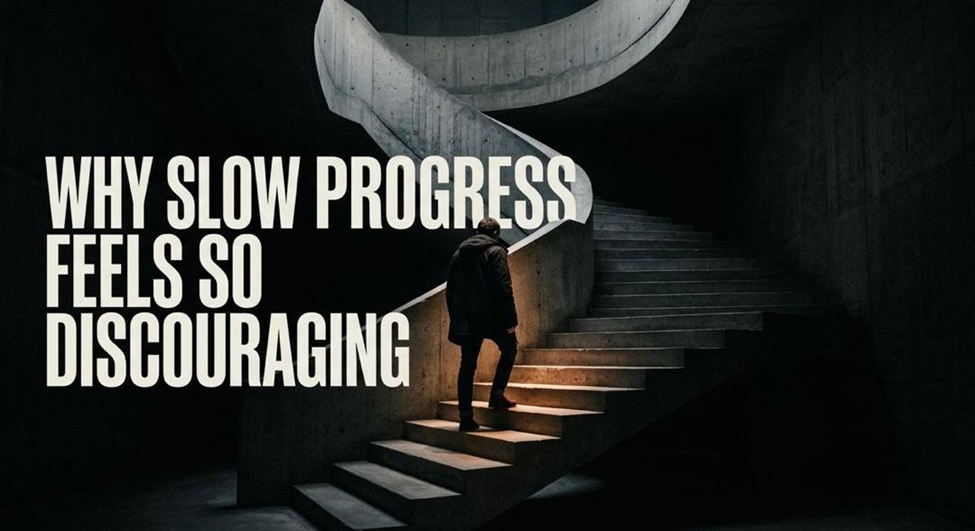
Even when we logically understand that progress takes time, it can still feel deeply frustrating on an emotional level.
Part of the reason is just basic human psychology. We are biologically wired to prefer immediate rewards. When we put effort into something whether it’s going to the gym, learning a language, or saving money, we want to see the results immediately. That instant feedback is what reassures our brains that the effort is worth continuing.
But financial progress rarely gives you that instant gratification.
If you think about it, the moment you decide to spend less, you feel it almost immediately. You feel it when you skip the dinner out, walk past the new shoes, or decide the car you already have is good enough for now. That part is very real at the moment. But the upside, the wealth you’re slowly building, it just doesn’t feel the same way. It’s quiet and easy to overlook, just like a small number on a screen inching up bit by bit over time.
At the beginning, the progress can feel almost microscopic. You might spend six months carefully saving money and still look at the total and think, that’s it? When you compare it to the big goals you have in your mind of buying a home, becoming financially independent, traveling the world, the early numbers can feel a little discouraging, almost laughably small.
This specific stage (the gap between your effort and your visible results) is where most people lose their motivation.
After a while, it’s easy for people to start wondering if the effort is really moving the needle. They begin to question whether all the small sacrifices of skipping things they want, being careful with every purchase, are worth it when their savings have only grown by a few hundred dollars.
Many financial habits start slowly but become exponentially more powerful over time. Saving regularly might feel small at first, but eventually, it creates a financial cushion that protects you from a crisis that would have otherwise ruined you. Developing discipline with your spending might not make you feel wealthy right away, but it prevents a lifetime of debt before it even starts.
The challenge is that these benefits take time to reveal themselves. And while it may look almost invisible in your early stages, never forget that invisible progress is still progress.
When people daydream about improving their finances, they almost always imagine big, dramatic events.
They imagine, let’s say, landing a massive promotion that doubles their salary or discovering the perfect hidden investment that skyrockets in value. Or making one major, sweeping decision that completely transforms their financial reality overnight.
While big opportunities do happen, and increasing your income is incredibly important, the truth is that most lasting financial improvement actually comes from much smaller actions and from everyday habits.
Most of the time, real financial progress is much quieter than people expect. It’s simply saving money regularly, even when the amount feels so small it hardly seems to matter. It’s learning to live with the moment of wanting something without immediately buying it, gradually getting more comfortable with things like taxes, investing, and interest rates, and paying attention to where your money goes instead of avoiding the numbers. None of these habits sound particularly exciting, but over time those small, steady choices begin to add up, and that’s where their real power lies.
A single good financial decision won't change your life. But hundreds of good decisions, stacked on top of each other over a decade, will completely rewrite your reality.

If there is one lesson that appears again and again in the lives of people who build real wealth, it’s this: consistency matters infinitely more than speed.
The people who eventually reach financial peace and stability are usually not the ones who moved the fastest in the beginning. They’re rarely the ones chasing the biggest risks or the smartest shortcuts. More often, they’re simply the ones who stayed consistent continuing to save even when the amounts felt embarrassingly small, continuing to learn about money even when the jargon felt confusing, and continuing to make steady, responsible decisions even when it seemed like everyone around them was spending freely and living large.
In other words, they stayed in the game.
One of the biggest mistakes people make with money is quitting too soon. They stop saving because the progress feels painfully slow. They give up on their budget because nothing seems to change right away. Sometimes they even start chasing risky shortcuts because waiting just feels too frustrating. And honestly, I get why that happens. When you’re doing your best and the results barely show, it can feel like all the effort isn’t really going anywhere.
The reality is that building your finances often feels painfully slow in the beginning. Think of it like a snowball rolling down a hill. At the beginning it’s tiny, and every push feels like work. You look at it and it barely seems bigger than when you started. It doesn’t feel impressive at all.
But if it keeps rolling, little by little it picks up more snow and begins to move with less effort. The same thing happens with money. Your savings begin to earn interest and things you’ve been learning about money start to make more sense.
Before you know it, the progress that once felt invisible becomes suddenly obvious and things that once felt far away like buying a home, starting a business, or taking time off to breathe don’t seem impossible anymore.
But that part only happens for the people who stay with it long enough. The ones who keep going even when the progress feels slow and a little boring. Because in the end, steady effort has a quiet way of turning into something real.
Learning to be okay with slow progress doesn’t mean lowering your expectations for your life, and it doesn’t mean settling for less. It’s really about understanding how growth actually works.
Real, lasting financial change almost never shows up overnight. Most of the time it grows through small, ordinary improvements repeated simultaneously for a long time. And while you’re in the middle of it, that process can feel frustrating. The early stages are always the toughest because you’re putting in a lot of effort, but the results barely seem visible.
But there’s something powerful about slow progress that fast success usually doesn’t have, it’s steady.
So, if you find yourself in that messy middle right now, doing the right things but feeling like nothing much is changing, I understand how that feels. It can be discouraging. But try not to be too hard on yourself.
If you keep moving forward, even slowly, there will come a day when you look back and notice something you didn’t see while it was happening. All those small steps, the ones you sometimes doubted, were quietly building the life you wanted the whole time.
Sometimes the most powerful financial strategy isn’t finding the fastest way forward. It’s simply having the patience and the courage to keep going.

Why does your salary disappear so quickly? Explore the everyday spending habits, financial pressures, and small expenses that can turn ₦150,000 into a mid-month money crisis.
Why do we spend money trying to look successful? Explore the psychology behind lifestyle spending, social pressure, and the hidden cost of looking financially fine.
Having enough money to buy something doesn’t always mean you can afford it. Learn a smarter way to evaluate purchases, protect your finances, and spend with confidence.