You Were Paid Yesterday. What Happened?
Why does your salary disappear so quickly? Explore the everyday spending habits, financial pressures, and small expenses that can turn ₦150,000 into a mid-month money crisis.
Loading...

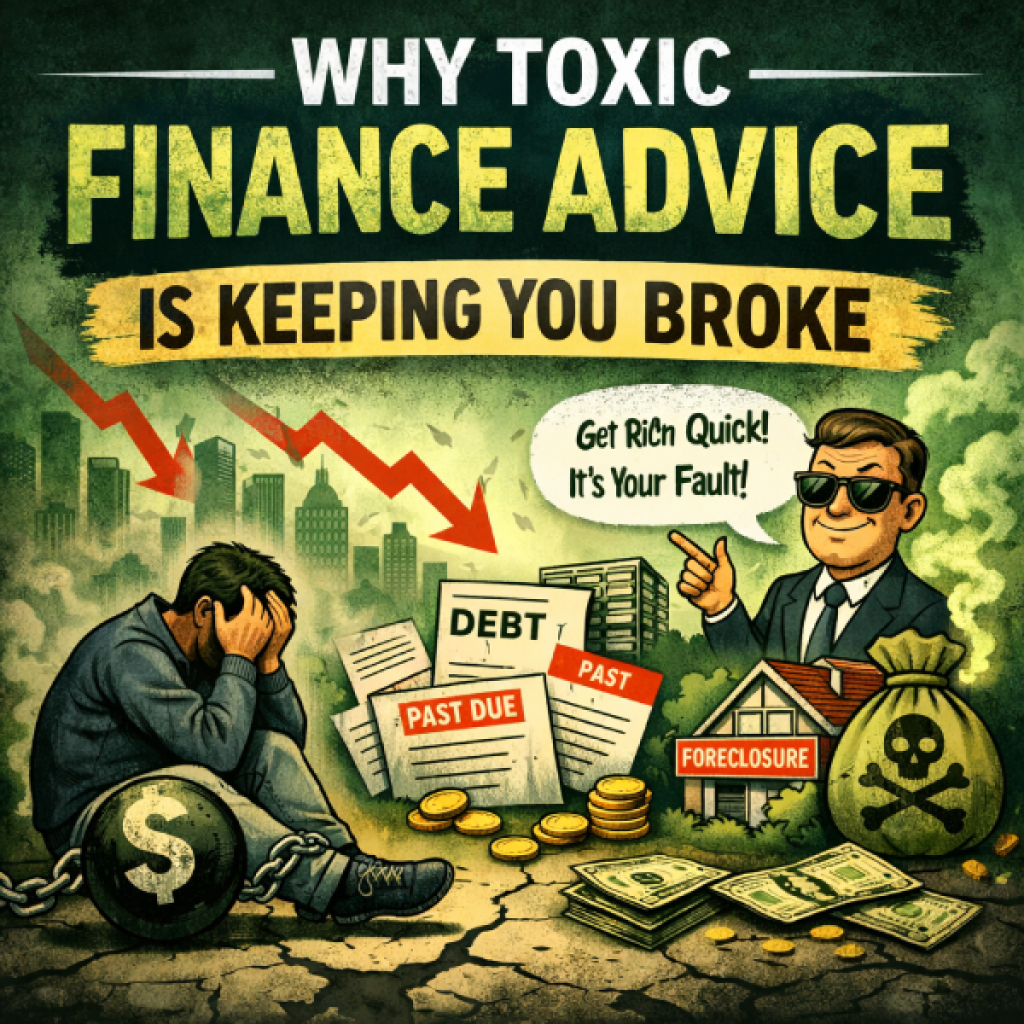
Toxic finance culture shames people for struggling with money. Discover 5 dangerous money myths you should ignore to break free from guilt and build real wealth.
Table of contents [Show]
Pull up a chair. We need to have a serious, unfiltered conversation about the financial advice you’ve been force-fed your entire life.
Picture this; You are sitting at a family holiday dinner. You casually mention how brutal the housing market is right now, or how stressed you are about the rising cost of groceries. Suddenly, an older relative called Uncle Bob leans over his plate. Uncle Bob bought a four-bedroom house in 1982 for $45,000 and has had a stable, guaranteed pension for twenty years.
Uncle Bob looks at you, shakes his head, and says, "You kids are too obsessed with salaries and money these days. When I was your age, we were just grateful to have a job. You need to remember that money doesn't buy happiness. Stop stressing so much about getting rich and just enjoy life."
You smile politely, but inside, your blood is boiling. You do the mental math. Rent is taking up 50% of your income. A single medical emergency could wipe out your savings. But despite knowing this, Uncle Bob’s comment still stings. It plants a tiny seed of guilt in your stomach. The next day, when you think about asking your boss for a raise, you hesitate. You feel a wave of shame. You think, "Maybe he's right. Maybe I am being greedy. Maybe I should just be happy with what I have."
Know this; You are not greedy. The rules of the game completely changed, but society is still trying to force you to play by an outdated, toxic rulebook.
We are living through an era of toxic finance culture. It is a culture built on shame, unrealistic expectations, and the complete denial of modern economic reality. It is designed to make you feel like your financial struggles are a personal moral failing, rather than the result of stagnant wages, exploding inflation, and a housing market that has lost its mind.
Today, we are going to take a sledgehammer to that toxic culture. We are going to debunk the five most dangerous pieces of financial advice you need to ignore immediately, so you can finally drop the guilt and start building wealth in the real world.
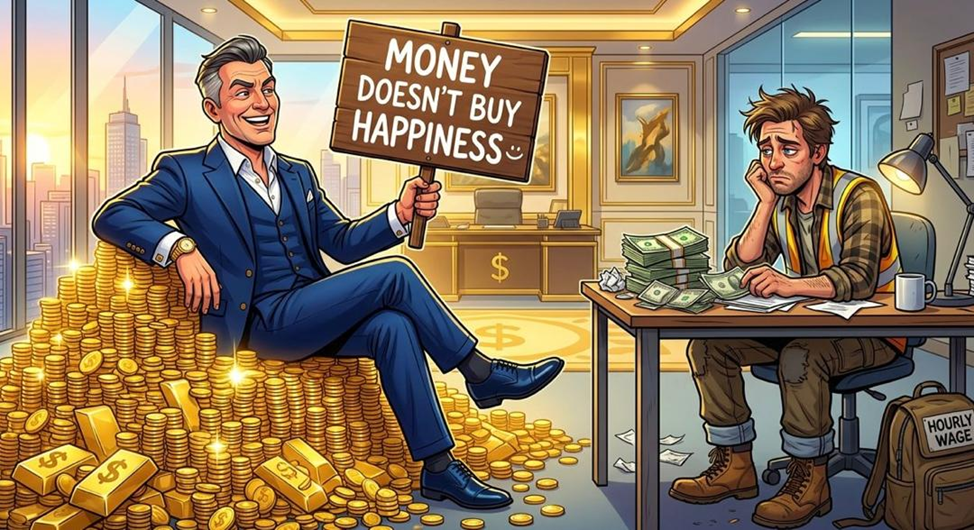
Let’s start with the most manipulative, emotionally exhausting lie in modern culture. The idea that wanting money makes you a shallow, greedy person.
We have been fed this narrative through movies, pop culture, and well-meaning relatives since we were children. We are taught to romanticize the "struggle." We are told that rich people are miserable, lonely, and corrupt, and that true virtue is found in being broke but surrounded by love.
This advice is not just misleading but psychologically destructive.
Usually, the phrase "money doesn't buy happiness" is spoken by two types of people: billionaires who already have everything they could ever want, or corporations trying to justify paying you a poverty wage.
It weaponizes your morality against you and makes you feel guilty for asking for a raise. It makes you feel greedy for wanting to build an investment portfolio and forces you to shrink your ambitions, so you don't make other people uncomfortable.
The truth is this: money doesn’t guarantee happiness, but it does provide security. And it’s hard to feel happy when you don’t feel safe.
Money gives you options. It means you can leave a toxic boss without worrying about losing your home. It helps you take care of your parents when they grow old or sick. It allows you to own a reliable car instead of standing in the rain waiting for a bus. It can pay for therapy, healthier food, and a more stable life. In many ways, money buys something very important: peace of mind.
Struggling financially isn’t noble. Being broke doesn’t make someone a better person rather, it often just makes life more exhausting.
So don’t feel guilty for wanting to be wealthy. Wanting financial freedom doesn’t make you greedy. It simply means you want stability, choices, and a peaceful life.
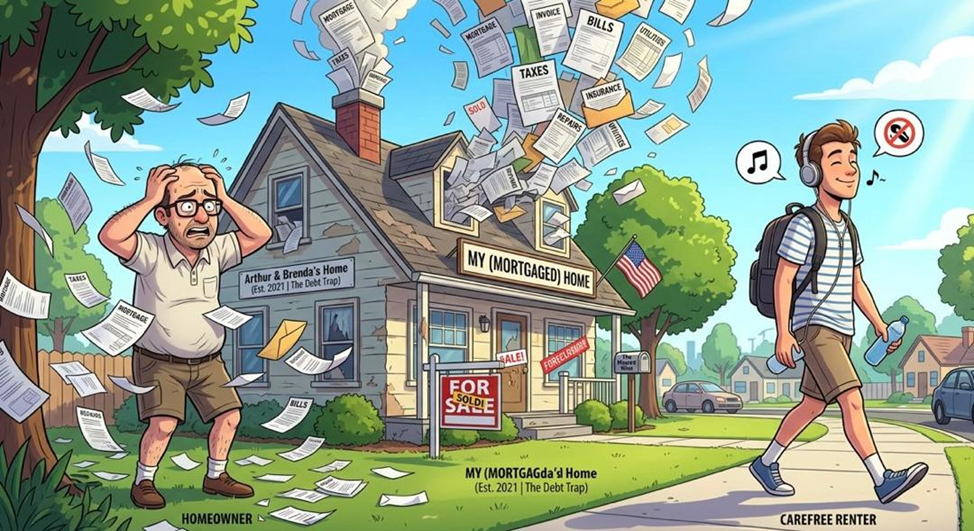
If I had a dollar for every time someone told a young person that "renting is just paying someone else's mortgage," I wouldn't need a budget at all.
For a long time, society has pushed a certain idea of success that has conditioned us to believe that homeownership is the ultimate, unquestionable marker of financial success and adulthood. We are told that renting is for college kids and people who can't get their lives together and that a house is the best investment you will ever make.
Because of this toxic myth, millions of people rush into buying homes they cannot afford, in cities they aren't sure they want to stay in, simply because they feel a ticking societal clock. They drain their emergency funds for a down payment, completely ignoring the hidden, terrifying costs of owning property.
Let’s have a reality check about homeownership.
When you rent an apartment, your monthly rent payment is the maximum amount you will pay for housing that month. If the roof caves in, you call the landlord. If the water heater explodes, you call the landlord. If the property taxes go up, that is the landlord's problem, and your financial liability is capped.
When you own a house, your mortgage payment is the minimum amount you will pay for housing that month.
Most people love to brag about how their house went up in value by $50,000 over ten years. But they conveniently forget to mention the $15,000 they spent on a new roof, the $20,000 in property taxes, the $10,000 in homeowners’ insurance, and the $60,000 they paid in pure interest to the bank. When you factor in maintenance, taxes, insurance, and interest, a primary residence is often a terrible investment. It is a lifestyle choice, not a wealth-building cheat code.
Renting isn’t throwing money away. In many ways, it’s paying for flexibility, keeping your financial risk contained, and preserving the freedom to move wherever opportunity takes you without the weight of selling a house.
If you want to buy a house because you want to paint the walls, plant a garden, and put down roots for ten years, that is a beautiful lifestyle choice. Do it. But do not let toxic finance culture shame you into buying a house just because you think renting is a failure.
Let's go back to Uncle Bob for a second. Uncle Bob worked at the same hardware store for thirty-five years. He got a gold watch, a firm handshake, and a pension that pays him every month until he dies.
Because that was his reality, he gives you advice based on that world. He tells you to put your head down, work hard, show loyalty to your employer, and eventually, the company will take care of you. He tells you that if you want a better job, you should print out your resume on nice paper, walk into the manager's office, look them in the eye, and demand a job.
If you try to do that today, security will escort you out of the building.
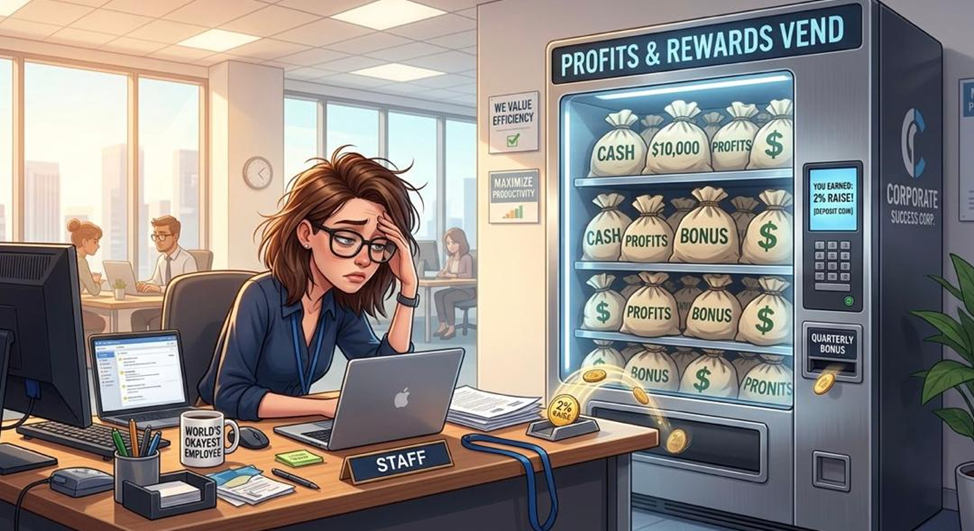
The corporate world has fundamentally, irreversibly changed. Pensions are dead and buried. Corporate loyalty is a one-way street. If a modern corporation needs to boost its quarterly stock price by two cents, they will lay off ten thousand loyal employees on a Tuesday morning via a mass Zoom call, without blinking an eye.
Yet many of us still carry a strange guilt about changing jobs. Leaving a company after two years can make us feel as though we’re doing something wrong, almost like we owe them our loyalty.
Here’s the simple math of today’s career world. If you stay at the same company, you’ll probably get a yearly raise of about 2% to 3%. But when inflation is around 4% to 7%, that raise doesn’t really help. In reality, it means your money buys a little less every year you stay.
However, data shows that employees who change companies every two to three years see an average salary increase of 10% to 20% per move.
You cannot budget your way out of a low salary. There is a floor to how much money you can cut from your expenses, but there is absolutely no ceiling to how much money you can earn. Your company is a business, and you are an employee that they pay for your work. That’s the relationship. You also must treat your career seriously and make decisions that benefit you.
If another company is willing to pay you 20% more for the same skills, choosing that job is not betrayal. It’s simply choosing a better opportunity.
So, stop feeling guilty. Keep your LinkedIn updated and stay open to opportunities. In today’s world, growing your income often means being willing to move where your skills are valued more.
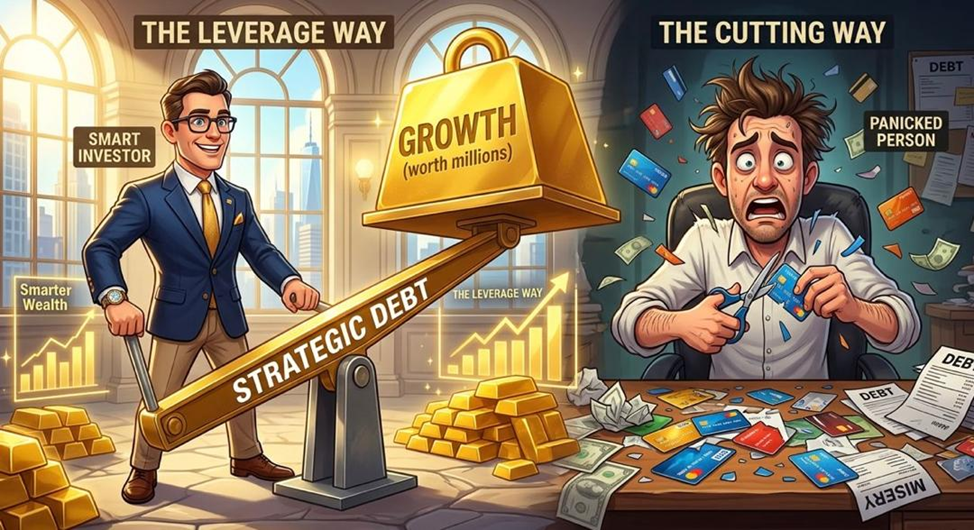
There is a very loud group in the personal finance world that talks about debt as if it were a terrible sin. They constantly tell people to cut up their credit cards, pay for everything with cash, and avoid owing anyone even a small amount of money.
But this rigid way of thinking can actually be harmful. It assumes people can’t be trusted to handle money responsibly, almost like treating adults as if they were children.
Is some debt bad? Absolutely. Carrying a $10,000 balance on a credit card with a 25% interest rate to pay for clothes and vacations is a financial emergency. It is a house on fire, and you need to put it out immediately. Consumer debt steals your future to pay for your past.
But the idea that all debt is evil is a myth that keeps the middle-class poor while the wealthy use debt to get richer.
The wealthy understand that debt is just a tool. It is leverage.
Let's say you have $20,000 in cash. You could use that cash to buy a reliable used car outright. You have zero debt. The finance gurus would applaud you. But what happens the next day? You have a car that is depreciating in value, and your bank account is at zero. If you lose your job, you have no safety net.
Now, let's look at the alternative. What if you took out an auto loan at a 4% interest rate? You keep your $20,000 in cash. You put that cash into an index fund that historically returns 8% to 10% a year.
Your investments are earning 10%, while your loan is only costing you 4%. You are mathematically making a 6% profit by holding the debt. Plus, you still have access to your $20,000 in an emergency. You used the bank's money to buy the car, and you used your money to build wealth.
This is called strategic leverage.
You do not need to be terrified of credit cards. If you use a credit card like a debit card, meaning you only buy what you already have the cash for, and you pay the balance in full, automatically, every single month. A credit card itself is a fantastic tool. It builds your credit score, protects you from fraud, and gives you free travel points.
Stop viewing debt as a moral failing. Learn the difference between toxic consumer debt (which makes you poor) and strategic leverage (which makes you wealthy).
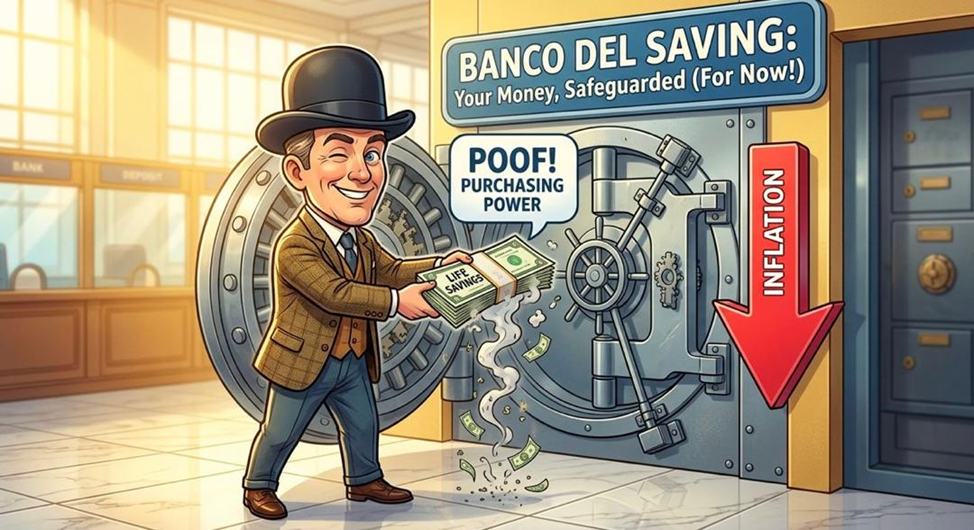
This is the final, and perhaps most insidious, piece of toxic advice. It usually comes from parents who genuinely love you and want to protect you. They tell you the stock market is a casino. They tell you it's rigged and that the only safe place for your hard-earned money is sitting quietly in a traditional savings account at your local brick-and-mortar bank.
For a moment it sounds so responsible and feels so safe. The uncomfortable truth is that playing it safe can be the most dangerous financial decision you make.
Let me introduce you to my friend, the silent thief called inflation.
Inflation is the gradual increase in the price of goods and services over time. Historically, inflation averages about 3% a year. That means every single year, your money loses 3% of its purchasing power. If you put $10,000 into a traditional savings account at a big national bank, they are likely paying you an interest rate of 0.01%.
Let's do the math. Your bank is paying you 0.01% to hold your money. Inflation is eating your money at a rate of 3%. That means by leaving your money in a "safe" savings account, you are mathematically guaranteed to lose 2.99% of your wealth every single year.
You aren't keeping your money safe and surely, it is slowly bleeding to death.
To build wealth, your money has to grow faster than the cost of living. You cannot save your way to wealth. you have to invest your way there. If you are terrified of investing, start by moving your cash out of your traditional bank and into a High-Yield Savings Account (HYSA) online. These accounts often pay 4% to 5% interest simply because they don't have the overhead costs of physical bank branches. It is the exact same money, with the exact same FDIC insurance, but it fights back against inflation.
Many people believe that working harder will automatically lead to financial success. But the reality is that effort alone is not enough. You can work long hours and still struggle financially if your work isn’t valued or paid well.
A more realistic approach is to pay attention to where your effort is going. Focus on work, industries, or skills that pay well and have room for growth. Sometimes the smartest financial move isn’t working more hours. It's working in a place where your time and skills are valued more.
We must stop letting outdated advice dictate our modern lives.
You are navigating an economy that your parents and grandparents could not have possibly imagined. You are dealing with astronomical housing costs, exploding tuition rates, and a gig economy that demands constant hustle.
If you are feeling stressed, it is not because you are lazy or because you aren't working hard enough. It is because the game is incredibly hard right now.
The moment you realize the old rules no longer work, something changes. You stop carrying unnecessary guilt. Wanting to be wealthy no longer feels wrong. Renting an apartment doesn’t feel like failure. Taking a better-paying job no longer feels like betrayal. Even the stock market stops feeling so frightening. For the first time, you can breathe a little easier.
You don’t have to get everything perfect. You simply need to understand the world as it is and make decisions that work for your life.
So, take a moment to breathe. Let go of the financial pressure you’ve been holding onto. The old rulebook doesn’t control your life anymore. Now you get to figure out your own path.

Why does your salary disappear so quickly? Explore the everyday spending habits, financial pressures, and small expenses that can turn ₦150,000 into a mid-month money crisis.
Why do we spend money trying to look successful? Explore the psychology behind lifestyle spending, social pressure, and the hidden cost of looking financially fine.
Having enough money to buy something doesn’t always mean you can afford it. Learn a smarter way to evaluate purchases, protect your finances, and spend with confidence.