You Were Paid Yesterday. What Happened?
Why does your salary disappear so quickly? Explore the everyday spending habits, financial pressures, and small expenses that can turn ₦150,000 into a mid-month money crisis.
Loading...


Financial literacy is one of the most valuable gifts parents can give their children. You can help your kids build smart saving, budgeting, and spending habits for life. If you want them to grow into financially confident adults, teaching them these 7 money lessons can make all the difference.
Table of contents [Show]
Okay, let's talk about what happens on a beautiful Saturday morning when you are off shopping with kids. And this always happens. Alright, story time. You are standing in line at the grocery store with your cart of boring things you need for your home. The cart is a little broken and it keeps pulling to the left. In front of you at a perfect height for your kids is a big display of candy and toys.
And dear heavens, you know exactly what's coming next. Your little kid grabs one chocolate from the lower counter with gracious sparkling eyes that light up like its Christmas morning and they say "Can I have this? Please? It’s only five dollars! I promise I'll be good!"
You take a deep breath, brace yourself for the potential meltdown, and say no. A very big fat no. Seeing the disappointment on their faces, you gently explain why it is not included in the budget list. Then here’s my favourite part, your kids will say something like "just go to the machine outside that rains money".
Hold that thought? Let me take a quiet guess. You are nodding your head right now. I know but trust me, you are not alone. You see, for a kid, money is simply magic. The same way Cinderella’s godmother is able to wave her magic stick up in the air and boom goes anything she thinks of, the same way they picture you. They absolutely do not understand that you need to work at your job for a time to get the money that is in your bank account. And fun part, that the money will never run out.
Money management is a vital life skill that every child needs to learn early on. Yet, it’s often completely overlooked in traditional education, leaving many young adults unprepared for financial reality. We send them off to college or out into the workforce knowing the Pythagorean theorem and the dates of historical battles, but they often have absolutely no idea how a credit card interest rate works, how to balance a checking account, or how to negotiate a salary.
As parents and caregivers, you hold the key to shaping your kids’ financial habits and attitudes that will last a lifetime. You are their first, and arguably their most important, financial advisor. The way you talk about money around the kitchen table today, will become their inner financial voice twenty years from now.
I know it can feel overwhelming, especially if you feel like you are still figuring out your own finances. But teaching your kids about money doesn't require you to be a stock market expert or need a degree in economics to raise a financially savvy kid.
I cannot be the only one in the room, who is yearning to tell my little kid sisters about money, right? I mean talking about money can be uncomfortable. Take a beautiful moment and walk with me to the beautiful old days. Did your parents talk to you about the money they paid for the house? Well probably not. You did not talk about how much money your parents made nor did you talk about how much things cost, and you certainly did not talk about money problems, in front of the children. Money was one thing people did not like discussing.
But keeping money a secret doesn't protect our kids. It rather just leaves them in the dark.
Money isn’t just about dollars and cents. That is a lot more than that. It’s more about values, choices, and responsibility. My grandma would always tell me stories about how she saved up little by little just to get a pair of the latest white sandals or fix up the dining windows. It didn’t feel like much then, but somehow it built a life. Makes me think about how the small things we do now might matter more than we realize.
When you talk to your kids about money, you're painting for them a vivid clear picture about how the money world works and responsibilities that come with it. And, when they get the basics of budgeting, saving, and spending money wisely, they feel more confident and independent.
Psychologists have said for a time that being able to wait for what you want is one of the best ways to be successful and happy when you grow up. It helps kids understand the value of money and make better choices in life. Budgeting, saving, and spending wisely are skills for kids to learn.
Starting these conversations early helps prevent future financial pitfalls like debt and poor spending decisions. If we don't teach them how to manage their money, the world will gladly step in and teach them how to spend it. By giving them a solid foundation now, you are essentially handing them a shield that will protect their peace of mind when they are twenty-five, thirty-five, and beyond.

This is the foundation of all personal finance for kids.
You cannot teach a kid about compound interest if they do not understand the difference between a need and a want. Introduce ideas like earning money, saving money and spending money in everyday situations. You do not need to sit them down for a lecture at the kitchen table with a whiteboard. The best lessons happen when you are out and about during your daily routine with the kids.
For example, when you are shopping with the kids, explain the difference between needs and wants. Make it fun for the kids. You can say, "Okay we need to buy these vegetables and this chicken because, our bodies need food to live. We want to buy these stuffed cookies because they taste good. Today our budget has money for our needs. We are going to skip the wants for now."
Show the kids how you make a budget for groceries or plan for purchases like a toy. If you are planning a family vacation to the beach, let the kids see how you plan for it. Say something like "We are choosing not to order pizza tonight because we are saving that money for our trip to the beach month." This way, money lessons are easy for the kids to understand.
You are showing them the exact behaviour you want them to have, and kids are always watching what you do closely even more than they listen to what you say.
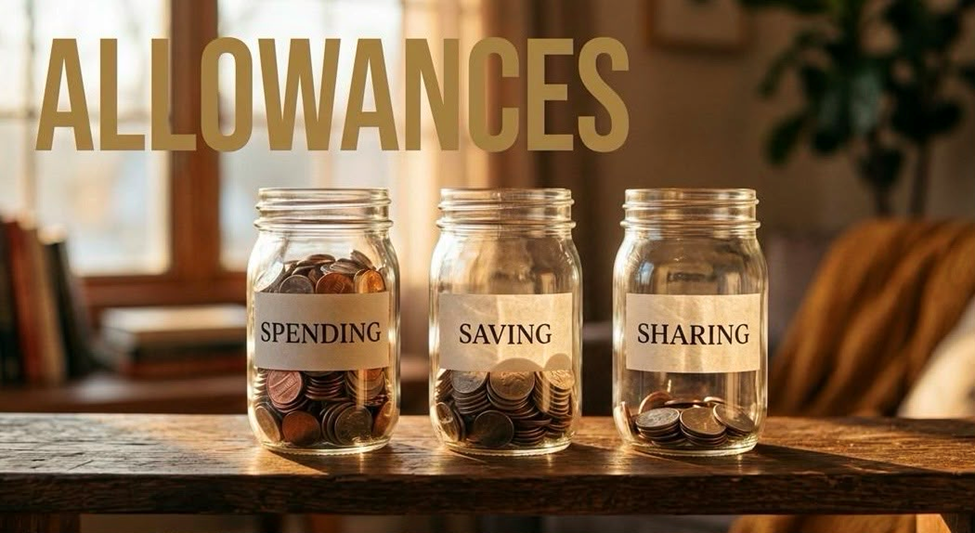
If you want a kid to learn how to manage money, they need to have some money to manage. You cannot learn to ride a bike by reading a book about bicycles. You must get on the bike, pedal, and probably fall off at times.
Giving kids an allowance can be a way to teach money management. The way you set it up is really important.
You should tell them to divide their allowance into categories: money for spending, money for saving and money for sharing with others like charity or gifts. A lot of people use the three-jar method. It works well. You get three jars, and they can see the money adding up. You can even make it fun. Spend an afternoon on it. Get some stickers and glue. Give them a chance to decorate and make their jars look fun.
The money in the Spending jar will be for things they want like a candy bar or a small toy. The money in the Saving jar is for things that they need to wait for. And the money in the Sharing jar is to help them think about others.
This way of doing things helps kids find a balance and make choices. It also means they need to think about how they spend their money, not you. When they want a toy at the store, you do not have to say no. You can just ask them if they have their spending money with them. And if they do, they can buy the toy. If they do not, they will learn a lesson about planning ahead. Money management is a thing for kids to learn and the three-jar method is a good way to teach them. It is good for both of you. It stops those annoying arguments at the store checkout.
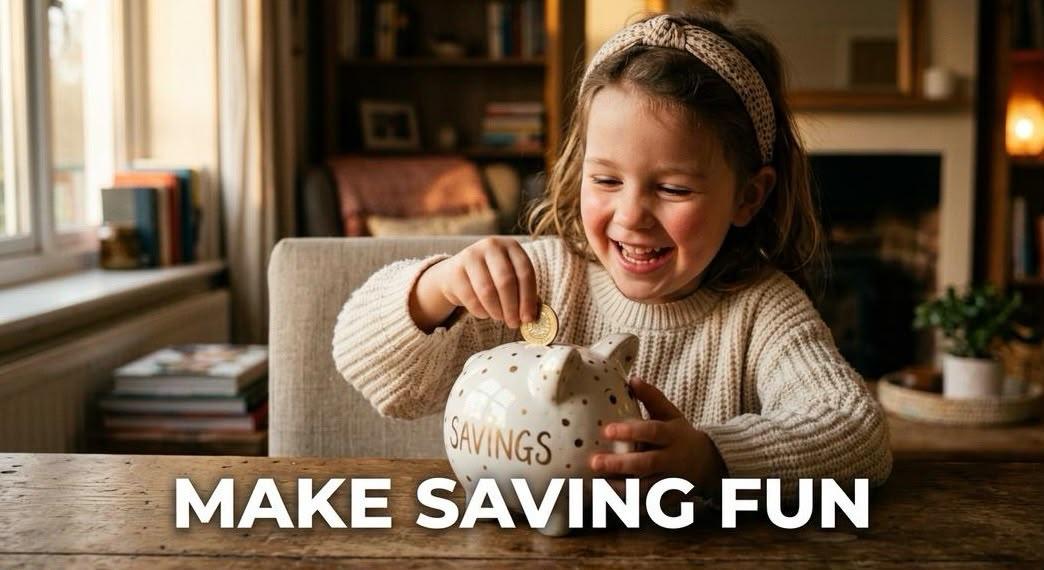
Saving money is really not fun. We are taking money that we could use to have fun and putting it away for later. For a kid, a week feels like it is a very long time away, so saving money becomes hard for them to do.
Help your child think about what they want to save money for, like a toy, a book, or a fun trip. You need to make saving money seem exciting and worth it.
You can use a jar or a phone app to see how much money they have saved. If they want a fifty-dollar Lego set, find a picture of it. Stick it on the fridge. Draw a picture of a thermometer next to it with lines for each dollar. Every time they put money in their jar they can colour in the thermometer with a marker. Kids like to see pictures and colours. It is very exciting for them to see the red line get closer and closer to their goal the Lego set.
When kids reach milestones, we should be happy for them and make them feel proud of what they have done. If they save half of what they want, we should be excited. Give them lots of praise. We can even make a game out of saving money by saying that for every dollar they save, we will add fifty cents. It really makes kids want to save their money instead of spending it. When they finally save money to buy what they want and they pay for it themselves, the happy feeling they get is the best thing. We should celebrate milestones, like this to keep kids motivated and proud of their savings.

Where does the allowance come from? Oh boy, this is a hot debate in parenting circles, isn't it? Should allowance be tied to chores, or should it just be a given?
Assign. Small jobs around the house that are suitable for their age and offer money in return. Many families find that a mix of approaches works well. Basic tasks such as making their bed, putting clothes in the hamper, or clearing their plate are just things they need to do as part of the family.
They don't get paid to load their dishwasher.
Jobs, like pulling weeds, washing the car, cleaning the baseboards, or organizing the garage can earn them some money. These extra tasks go beyond their household responsibilities.
This shows kids that money comes from work. It helps them understand that they must do something to get money. They learn that money does not just come from a card. This also helps them see that time is money. When kids think about how they must work to buy something, like a twenty-dollar video game they think twice about buying it. They have to pull weeds in the yard for three hours to get that game. This makes them ask if the game is worth it. The money they earn is connected to what they can buy, which is a lesson for kids. This lesson will help them when they are adults.

Piggy banks are wonderful for young children, but as they grow, they need to understand how the actual financial system operates.
Consider opening a savings account for your child. Make an event out of it. Visiting the bank together and showing how deposits and withdrawals work can mimic banking procedures. Allow them to sit in the big chair across from the banker. Let them hand their jar of coins and crumpled bills to the bank teller to be deposited.
This is also the perfect time to introduce the magic of compound interest. Explain to them that because they are letting the bank hold their money, the bank is going to pay them a little bit of extra money every single month as a thank you. Their money is literally going to work for them while they sleep. To a kid, this is mind-blowing. "Wait, I get paid just for leaving my money there?" Yes, exactly.
Many banks offer special youth accounts with educational resources designed for kids, complete with no fees and easy-to-read statements. As they get into their teenage years, transitioning them to a checking account with a debit card is crucial, as it teaches them how to manage invisible, digital money before the stakes get too high.

Money management is not about having money. If we only teach our kids how to get money, we are not teaching them everything they need to know. We want our kids to have money that is true. We also want our kids to be kind to others to care about people and to know what is going on in the world.
Money management is not about having money. It is also about being generous. We should tell our kids to use some of their money to help people. This is where the Sharing jar comes in the jar, we use for money management the Sharing jar is important, for teaching our kids about helping others with their money.
But don't just take the money and donate it online while they are at school; make them part of the physical process. Ask them what they care about. Do they love animals? Let them use their sharing money to buy a bag of dog food and take them to the local animal shelter to drop it off. Do they want to help other kids? Let them use their funds to buy a gift for a holiday donation drive.
This fosters empathy and a sense of social responsibility. When they physically see the impact their money can have on someone else's life, it teaches them that they have the power to make a difference, no matter how small their budget is. It also builds immense gratitude for the things they already have.

We are living in a time when everything's digital. It is very hard to stay away from screens. So, we should use this to our advantage.
There are a lot of games and apps that can teach kids about money in a way. If you like games, you can play board games. Monopoly is an old game that people still like. It teaches you that taxes can be bad, that owning property is good and that it is very bad to land a hotel when you do not have a lot of money. Financial literacy is what Monopoly and other games like it can teach kids. We have all played games with our family that ended with someone going bankrupt right? The Game of Life is also a game that shows you how the job you choose, the size of your family and things that happen by chance can affect the money you have. Financial literacy is something that kids can learn from, The Game of Life and other games, like it.
From virtual stores to budgeting challenges, these tools can complement real-world lessons while keeping kids interested. For the digital natives, look into apps like Greenlight or GoHenry. These are debit cards designed for kids, controlled by parents via an app. You can automate their allowance, set interest rates to encourage saving, and restrict where they can spend their money. The kids get their own app interface where they can track their goals and learn how to manage digital currency.
Teaching kids about money management is one of the greatest gifts you can give them. It equips them with skills that empower them to make smart financial decisions throughout their lives.
But hey, it won’t be all that easy. Take a breath in. You do not have to be an expert in finance to teach your kids about money. If you made a choice with money when you were younger, tell your teenager about it. Say, "You know I got a credit card when I was in college. I bought a lot of things I did not need. It took me five years to pay it off. It was really stressful, and I want to help you avoid that situation." Kids do not need parents who are perfect. They need parents who are honest with them.
Start early with your family's money matters. Be patient with them and lead by example. Your family's financial future will really thank you for that. It is an idea to let them make small mistakes like spending five dollars on something they do not need now so they do not make big five-thousand-dollar mistakes later on. You are doing a job with their financial future, and you have the ability to guide them, so you have got this.

Why does your salary disappear so quickly? Explore the everyday spending habits, financial pressures, and small expenses that can turn ₦150,000 into a mid-month money crisis.
Why do we spend money trying to look successful? Explore the psychology behind lifestyle spending, social pressure, and the hidden cost of looking financially fine.
Having enough money to buy something doesn’t always mean you can afford it. Learn a smarter way to evaluate purchases, protect your finances, and spend with confidence.